 Bug FAQ
Small Spreadwing
Lestes virens · Order: Odonata · Family: Lestidae
Also called: Small Emerald Spreadwing, Small Emerald Damselfly

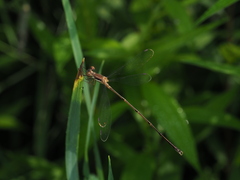
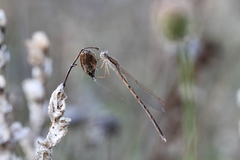
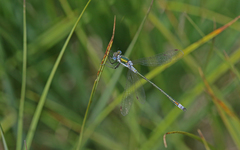
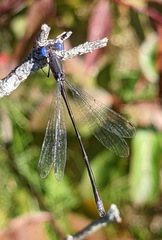
The Small Spreadwing is a metallic-green damselfly that rests with its wings spread away from its body. Adults fly from June to September, sometimes as early as April in the southern part of its range.
Source: Wikipedia
How to recognize it
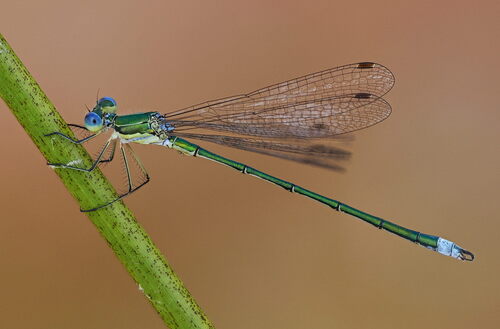
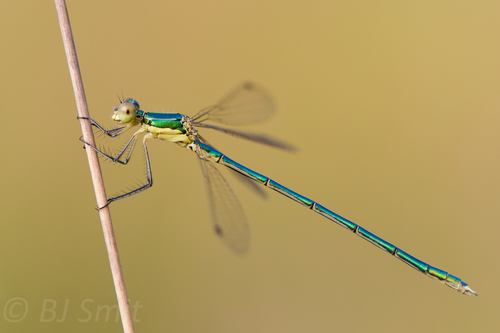
It has a metallic green body and holds its wings away from its body when at rest.
Source: Wikipedia
Size
It is smaller than the similar Lestes sponsa.
Source: Wikipedia
What it eats
It lives among dense vegetation at pond edges where it feeds, mates and lays eggs.
Source: Wikipedia
Life cycle
It has one generation per year (univoltine). After mating the female deposits eggs on plant stems above water; the eggs develop quickly then enter diapause.
Source: Wikipedia
When you see it
Adults are on the wing from June through September, but may appear as early as April in the southern part of its range.
Source: Wikipedia
Lookalikes
It looks very similar to other Lestes species.
Source: Wikipedia
More photos
Questions people ask
When can I see Small Spreadwings?
Adults fly from June to September, sometimes starting in April in the southern part of their range.
Source: Wikipedia
What habitats do Small Spreadwings prefer?
They live around still waters such as lakes, ponds, ditches and bogs with plenty of vegetation.
Source: Wikipedia
What other damselflies look like Small Spreadwing?
It resembles other members of the genus Lestes, but L. sponsa and L. dryas have black anal appendages.
Source: Wikipedia
Same family (Lestidae)

Sources
- Wikipedia: https://en.wikipedia.org/wiki/Lestes_virens
Look it up elsewhere: GBIF · iNaturalist · BugGuide · Wikipedia
Text written 2026-10-24 from the sources above and checked sentence by sentence against them. Data fetched 2026-10-22.