 Bug FAQ
Southern Devil Scorpion
Vaejovis carolinianus · Order: Scorpiones · Family: Vaejovidae
Also called: southern unstriped scorpion, Carolina Devil
Source: extension.msstate.edu, NC State Extension, entomology.ca.uky.edu
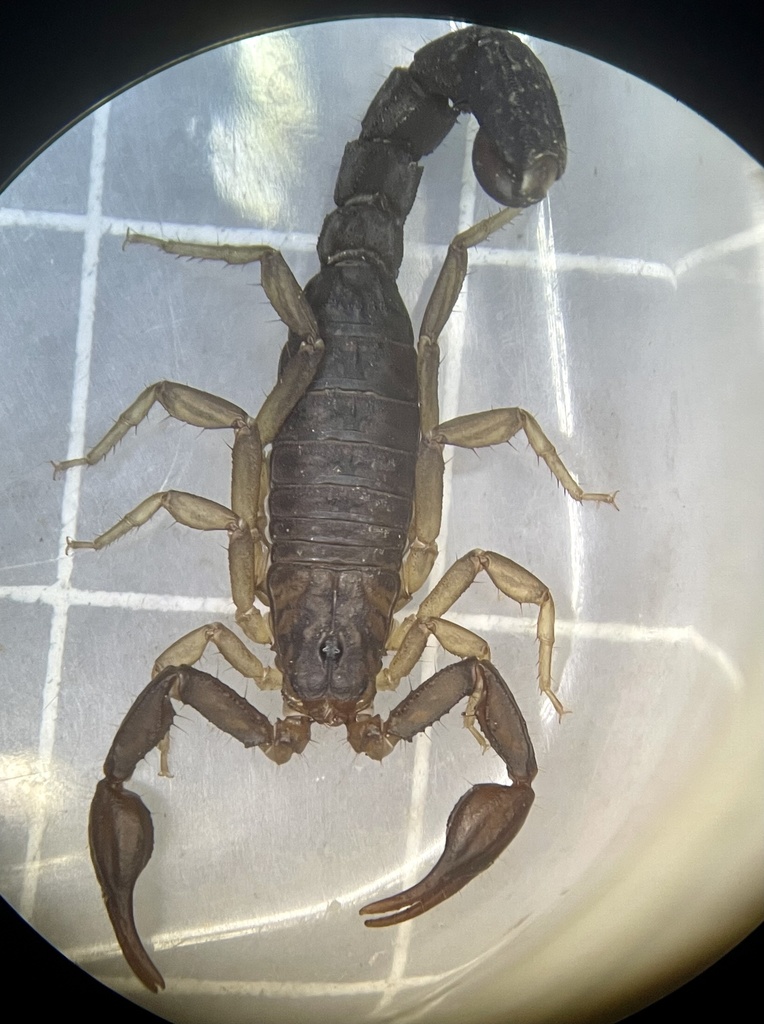
These scorpions are about 1.5-2 inches long, dark reddish-brown on the legs and claws with a nearly black body, and they prefer moist, humid woodlands. They often wander into homes through tiny cracks, are active at night from spring through fall, and their sting feels like a wasp sting but is not dangerous.
Source: Wikipedia, extension.msstate.edu, NC State Extension, entomology.ca.uky.edu
How to recognize it
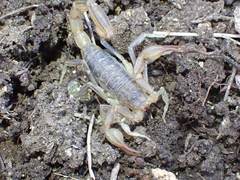
Legs and claws are dark reddish or brown, while the carapace and abdomen are almost black. Adults reach about 1.5 inches in length. They are called the southern unstriped or southern devil scorpion. Scorpions have a distinctive body with a long narrow tail ending in a stinger used for defense and catching prey.
Source: Wikipedia, extension.msstate.edu, NC State Extension, entomology.ca.uky.edu
Size
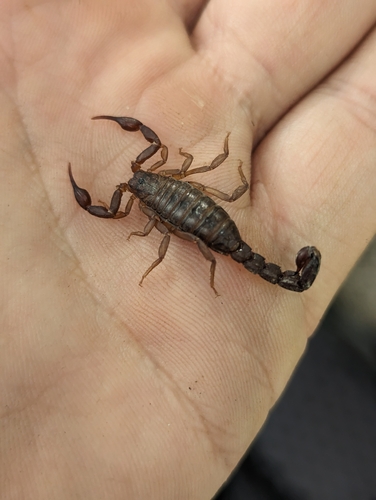
Fully grown individuals are generally under 2 inches long. Mature adults are about 1.5 inches long.
Source: Wikipedia, extension.msstate.edu
Is it a pest in the house?
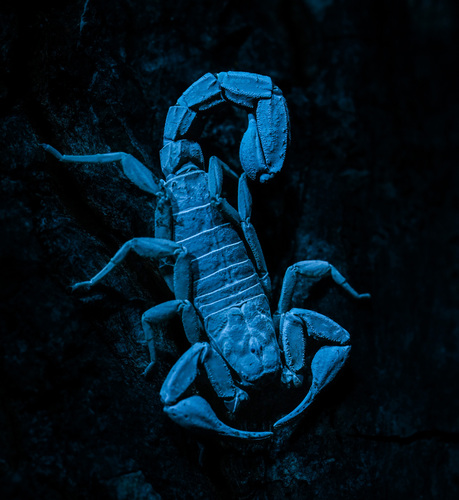
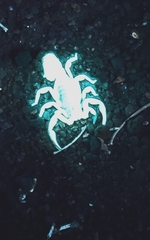
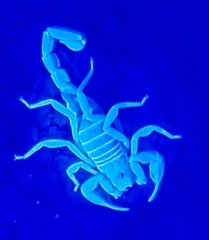
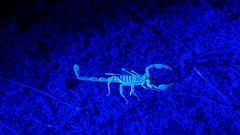
They often enter homes, hiding under debris or in cracks during the day and becoming active at night. They are attracted to moist areas like bathrooms, kitchens near sinks, and laundry rooms. Beds should not touch walls because scorpions may crawl onto them at night. They can be spotted with a blacklight due to fluorescent exoskeletons.
Source: Wikipedia, extension.msstate.edu, NC State Extension
Does it bite or sting?
Yes, they can sting; the pain is similar to a wasp sting and lasts about 15-20 minutes. Stings are painful but not medically serious, though allergic individuals may have more trouble.
Source: extension.msstate.edu, entomology.ca.uky.edu, NC State Extension
How to get rid of it
Seal cracks, weather-strip thresholds, and plug utility gaps to prevent entry. Removing debris and reducing moisture around the home helps keep them away. Professional pest control is advisable for heavy infestations. Finding and eliminating indoor and outdoor hiding places is key to control.
Source: entomology.ca.uky.edu, extension.msstate.edu, NC State Extension
Where it lives
They favor moist, humid environments such as mesic mixed woodlands, often found under logs, stones, or bark of dead trees. They readily enter homes and can squeeze through very fine gaps.
Source: Wikipedia, extension.msstate.edu
What it eats
They prey on smaller arthropods and will eat a wide variety of insects. In captivity they accept termites, mealworms, and crickets, even prey as large as themselves.
Source: Wikipedia
Life cycle
They give birth to live young. A female can produce up to 26 offspring.
Source: Wikipedia
When you see it
They are most commonly seen around houses from April through June but may remain active into the fall.
Source: entomology.ca.uky.edu
Where it comes from
Their range is mainly the southern Appalachians, especially the Carolinas, Georgia, Alabama, Tennessee, and Kentucky.
Source: Wikipedia
Lookalikes
Two similar species exist: the southern devil scorpion and the striped bark scorpion. These species are common in Alabama and Tennessee and throughout the Southeast. Other scorpions like Centruroides vittatus and C. hentzi have been introduced via moved items and could spread to new areas. The southern unstriped scorpion prefers very moist habitats where its prey is abundant.
Source: extension.msstate.edu, NC State Extension
Where it is found in the US
Recorded in 11 of 51 states and DC. Most records: Alabama, Georgia, Tennessee, Kentucky, South Carolina, North Carolina, Mississippi, Louisiana.
Darker = more records. Counts are museum and citizen-science records, not population size.
Source: GBIF
Status: endemic in United States; native in North America. Source: iNaturalist
Months it is reported in the US
Source: GBIF
More photos

Questions people ask
How can I keep southern devil scorpions out of my house?
Seal cracks, weather-strip doors, and plug gaps around utilities; also remove debris and reduce moisture near the home.
Are their stings dangerous?
Their sting hurts like a wasp sting and lasts 15-20 minutes, but it is not medically serious.
Source: extension.msstate.edu, NC State Extension
What do southern devil scorpions look like?
They are about 1.5-2 inches long, with dark reddish-brown legs and claws, a nearly black body, and a long tail ending in a stinger.
Source: Wikipedia, extension.msstate.edu, NC State Extension, entomology.ca.uky.edu
Same family (Vaejovidae)
Sources
- extension.msstate.edu: https://extension.msstate.edu/newsletters/bugs-eye-view/2018/southern-devil-scorpion-vol-4-no-30
- NC State Extension: https://content.ces.ncsu.edu/scorpions-in-north-carolina
- entomology.ca.uky.edu: https://entomology.ca.uky.edu/ef633
- Wikipedia: https://en.wikipedia.org/wiki/Vaejovis_carolinianus
Look it up elsewhere: GBIF · iNaturalist · BugGuide · Wikipedia
Text written 2026-10-23 from the sources above and checked sentence by sentence against them. Data fetched 2026-10-23.