 Bug FAQ
Swamp Cicada
Neotibicen tibicen · Order: Hemiptera · Family: Cicadidae
Also called: Black-back Cicada, Green Annual Cicada, Hump-back Cicada, Morning Cicada
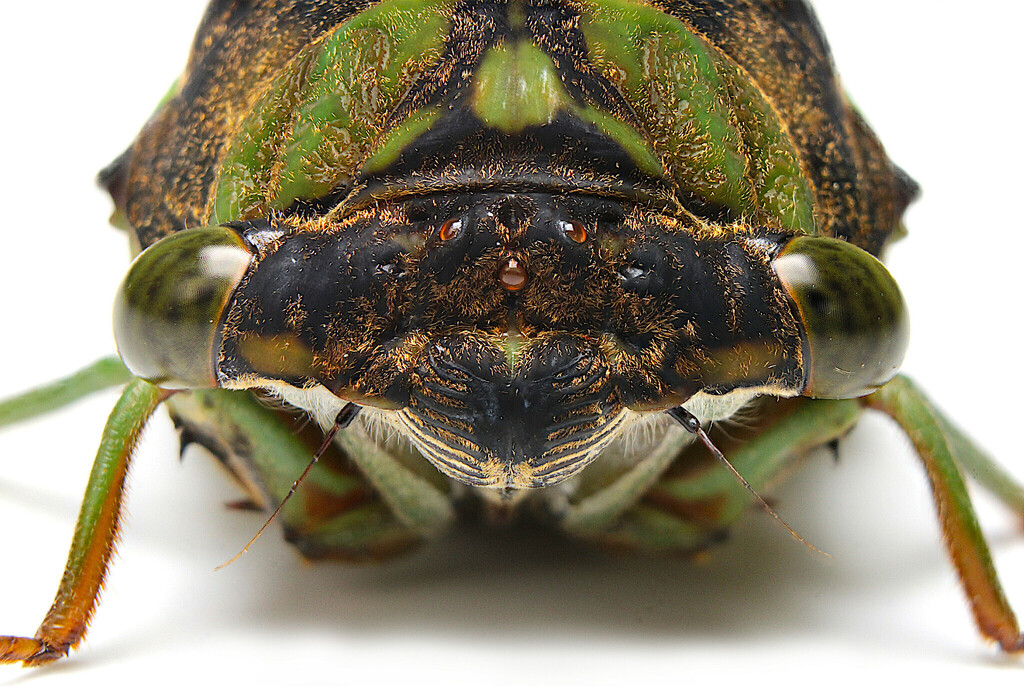
The swamp cicada is an ectothermic insect that becomes active in the morning after warming in the sun. It is common across the eastern and central United States and parts of southeastern Canada, often perching on low vegetation.
Source: Wikipedia
Where it lives
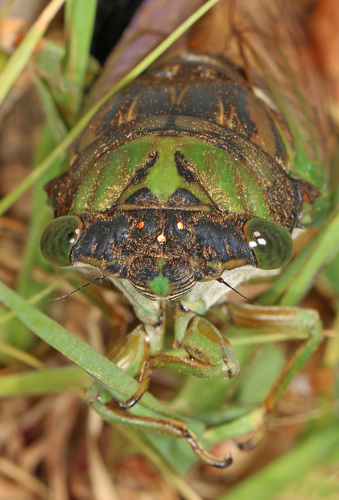
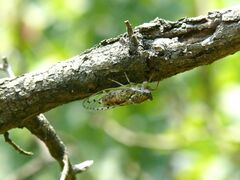
It often perches on low vegetation.
Source: Wikipedia
When you see it
It is active particularly in the morning, which gives it the common name "morning cicada".
Source: Wikipedia
Where it is found in the US
Recorded in 32 of 51 states and DC. Most records: Virginia, Ohio, Maryland, North Carolina, Mississippi, Pennsylvania, Tennessee, New York.
Darker = more records. Counts are museum and citizen-science records, not population size.
Source: GBIF
Status: native in North America; native in Canada; native in United States. Source: iNaturalist
Months it is reported in the US
Source: GBIF
More photos


Questions people ask
When are swamp cicadas active?
They are most active in the morning after warming in the sun.
Source: Wikipedia
Where can I find swamp cicadas?
They are common on low vegetation throughout the eastern and central U.S. and parts of southeastern Canada.
Source: Wikipedia
Same family (Cicadidae)

Sources
- Wikipedia: https://en.wikipedia.org/wiki/Neotibicen_tibicen
Look it up elsewhere: GBIF · iNaturalist · BugGuide · Wikipedia
Text written 2026-10-22 from the sources above and checked sentence by sentence against them. Data fetched 2026-10-22.