 Bug FAQ
True cochineal bug
Dactylopius coccus · Order: Hemiptera · Family: Dactylopiidae
Also called: cochineal insect, cochineal scale
Source: Wikipedia
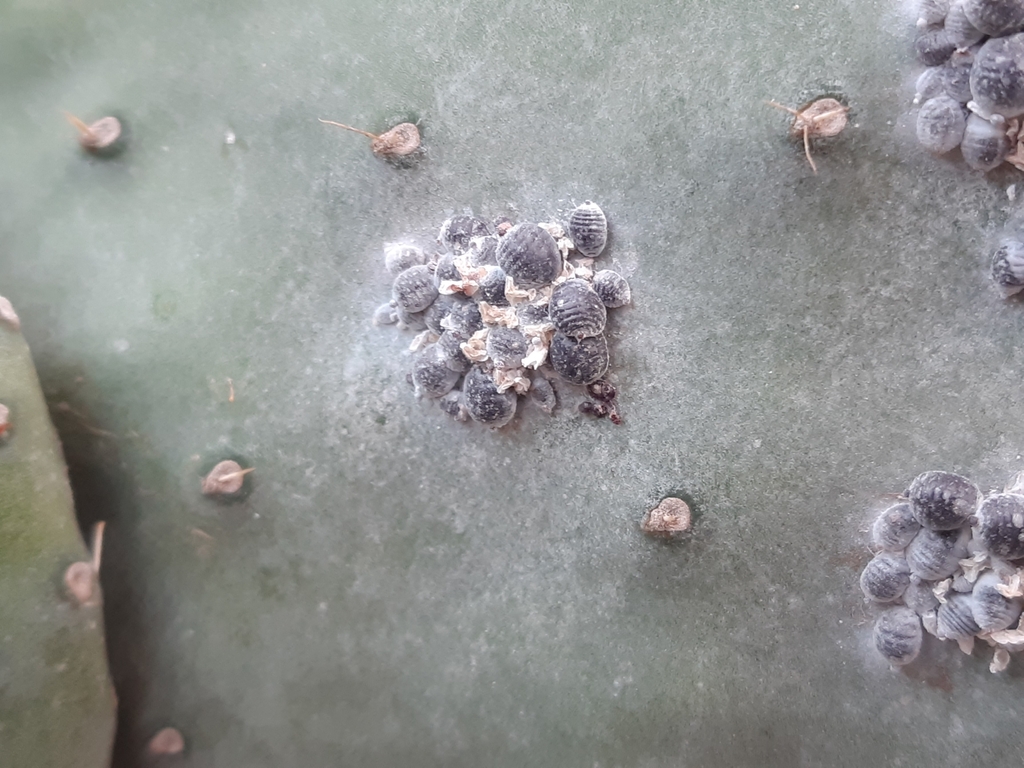
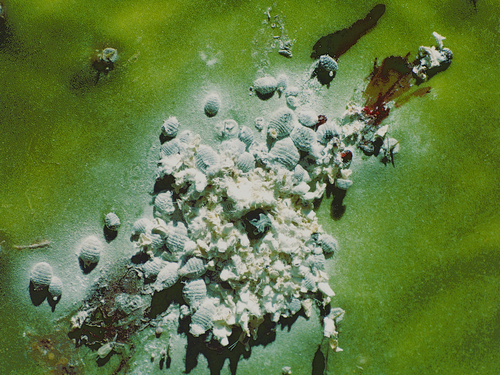
Female cochineal insects are wingless and about 5 mm long, staying still on cactus pads unless disturbed. They feed by piercing prickly-pear cacti and sucking the plant’s juices, which can weaken and eventually kill the host.
Source: Wikipedia
How to recognize it
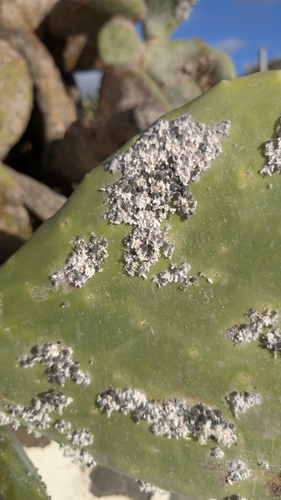
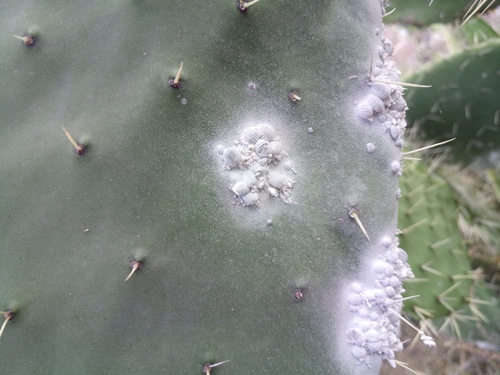
Adults stay immobile on the cactus unless they sense danger. Nymphs coat themselves with a waxy white layer to prevent water loss and sun damage.
Source: Wikipedia
Size
Females are wingless and measure about 5 mm (0.20 in) in length.
Source: Wikipedia
Is it a pest in the house?
Feeding cochineals can damage and kill the cactus plants they infest. Infestations have continued to spread even after commercial cochineal production ended.
Source: Wikipedia
How to get rid of it
For small-scale growers, manual removal is the safest and most effective control method.
Source: Wikipedia
Where it lives
They live on pads of prickly-pear cacti (genus Opuntia).
Source: Wikipedia
What it eats
They obtain moisture and nutrients by sucking the juices of their cactus hosts.
Source: Wikipedia
Life cycle
After mating, the fertilised female grows larger and gives birth to tiny nymphs. The complete life cycle takes about three months at a constant 27 °C (81 °F).
Source: Wikipedia
Where it comes from
They are native to tropical and subtropical South America and extend into Mexico and the southwestern United States.
Source: Wikipedia
Lookalikes
Other Dactylopius species look almost identical and are hard for experts to separate from D. coccus. The name “cochineal insect” is sometimes used loosely for related species, which can cause confusion.
Source: Wikipedia
Where it is found in the US
Recorded in 3 of 51 states and DC. Most records: New Mexico, Texas, California.
Darker = more records. Counts are museum and citizen-science records, not population size.
Source: GBIF
More photos
Questions people ask
How can I tell if the bug on my cactus is a true cochineal?
Look for a wingless, about 5 mm insect that stays still on the pad and may have a waxy coating if it’s a nymph.
Source: Wikipedia
What damage does cochineal cause to my prickly-pear cactus?
By sucking the plant’s juices, the insects can weaken the cactus and eventually kill it.
Source: Wikipedia
What are effective ways to control a cochineal infestation?
Manual removal works best for small growers, while larger operations use more intensive pest-control programs.
Source: Wikipedia
Same family (Dactylopiidae)
Sources
- Wikipedia: https://en.wikipedia.org/wiki/Cochineal
Look it up elsewhere: GBIF · iNaturalist · BugGuide · Wikipedia
Text written 2026-10-24 from the sources above and checked sentence by sentence against them. Data fetched 2026-10-23.