 Bug FAQ
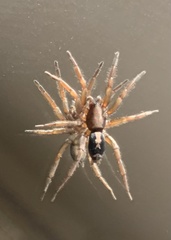
Two-lined Stealthy Ground Spider
Cesonia bilineata · Order: Araneae · Family: Gnaphosidae

The two-lined stealthy ground spider is called Cesonia bilineata. It lives in many habitats such as forests, prairies and urban areas. Females lay egg sacs under stones or leaves during summer.
Source: Wikipedia
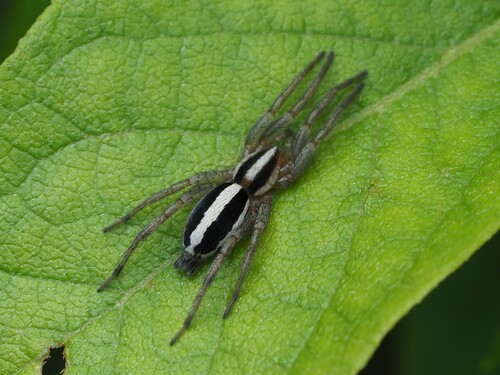
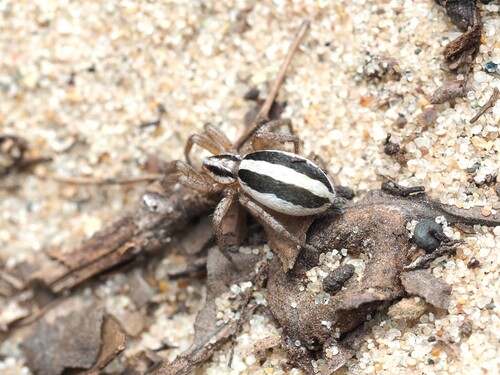
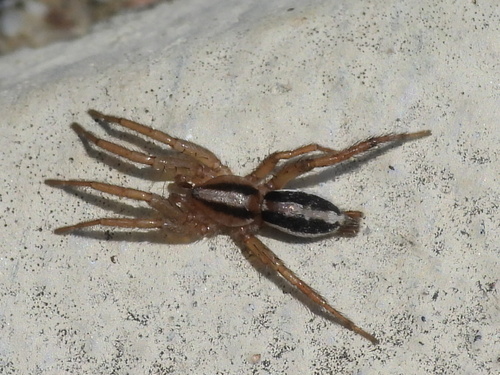
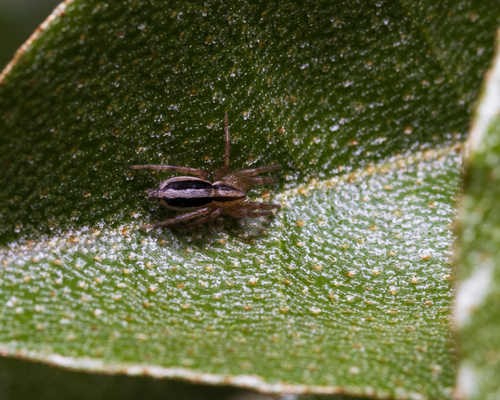
How to recognize it
Cesonia bilineata is the scientific name of the two-lined stealthy ground spider.
Source: Wikipedia
Where it lives
It occurs in forests, prairies and even in cities.
Source: Wikipedia
Life cycle
In summer, females place their eggs in a sac beneath stones or leaves.
Source: Wikipedia
Where it comes from
The species is native to North America.
Source: Wikipedia
Where it is found in the US
Recorded in 35 of 51 states and DC. Most records: Texas, Virginia, North Carolina, Massachusetts, Maryland, Tennessee, Georgia, Louisiana.
Darker = more records. Counts are museum and citizen-science records, not population size.
Source: GBIF
Status: native in North America; native in Canada. Source: iNaturalist
Months it is reported in the US
Source: GBIF
More photos
Questions people ask
Where is the two-lined stealthy ground spider found?
It lives in forests, prairies and urban areas across North America.
Source: Wikipedia
When do these spiders lay eggs?
Females lay egg sacs under stones or leaves during the summer.
Source: Wikipedia
Same family (Gnaphosidae)

Sources
- Wikipedia: https://en.wikipedia.org/wiki/Cesonia_bilineata
Look it up elsewhere: GBIF · iNaturalist · BugGuide · ITIS · Wikipedia
Text written 2026-10-24 from the sources above and checked sentence by sentence against them. Data fetched 2026-10-24.