 Bug FAQ
Welwitschia Bug
Probergrothius angolensis · Order: Hemiptera · Family: Pyrrhocoridae
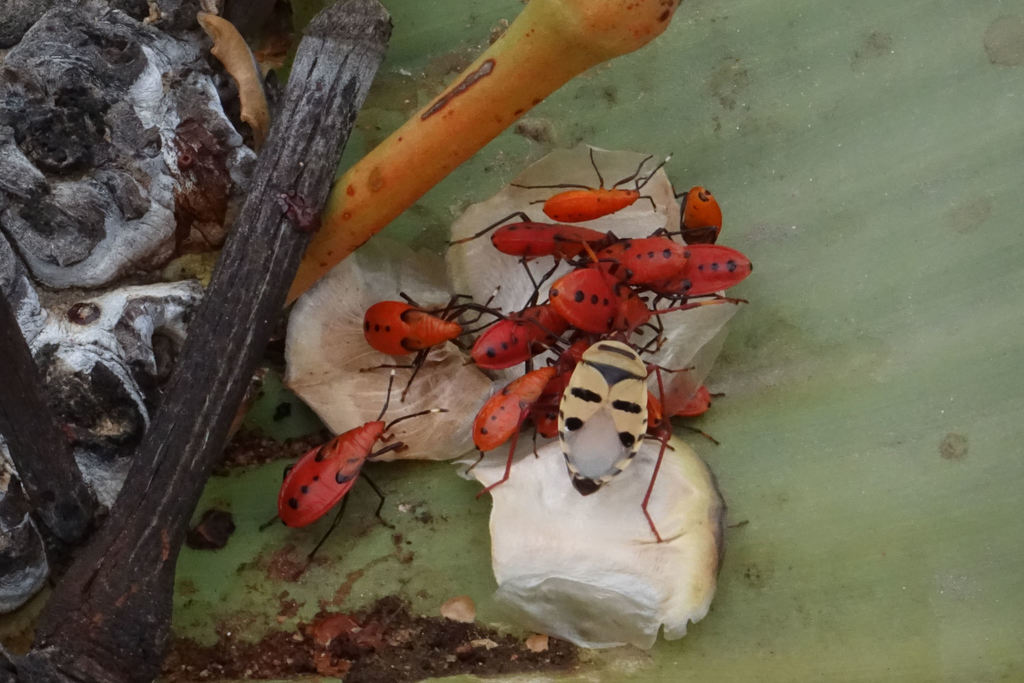
The Welwitschia bug (Probergrothius angolensis) lives in the Namib Desert and nearby areas. It is yellowish with four black spots on its wings and is often found on the plant Welwitschia mirabilis, though its role in pollination is uncertain.
Source: Wikipedia
How to recognize it
It has a yellowish body and four black wing markings.
Source: Wikipedia
Where it lives
It inhabits the Namib Desert and surrounding regions.
Source: Wikipedia
What it eats
It is closely associated with the plant Welwitschia mirabilis and may feed on its sap.
Source: Wikipedia
Where it comes from
Its range is limited to the Namib Desert area.
Source: Wikipedia
Lookalikes
It was long confused with Probergrothius sexpunctatus, a more reddish species with six wing spots that lives farther north.
Source: Wikipedia
Questions people ask
How can I tell the Welwitschia bug apart from similar species?
The Welwitschia bug is yellowish with four black wing spots, while the similar Probergrothius sexpunctatus is reddish and has six spots.
Source: Wikipedia
Where might I find a Welwitschia bug?
Look for it in the Namib Desert and nearby areas, especially on Welwitschia mirabilis plants.
Source: Wikipedia
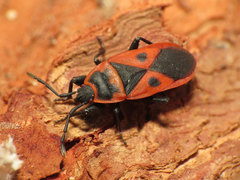
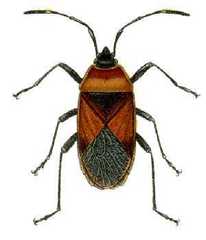
Same family (Pyrrhocoridae)



Sources
- Wikipedia: https://en.wikipedia.org/wiki/Probergrothius_angolensis
Look it up elsewhere: GBIF · iNaturalist · BugGuide · Wikipedia
Text written 2026-10-23 from the sources above and checked sentence by sentence against them. Data fetched 2026-10-23.