 Bug FAQ
Widow Skimmer
Libellula luctuosa · Order: Odonata · Family: Libellulidae
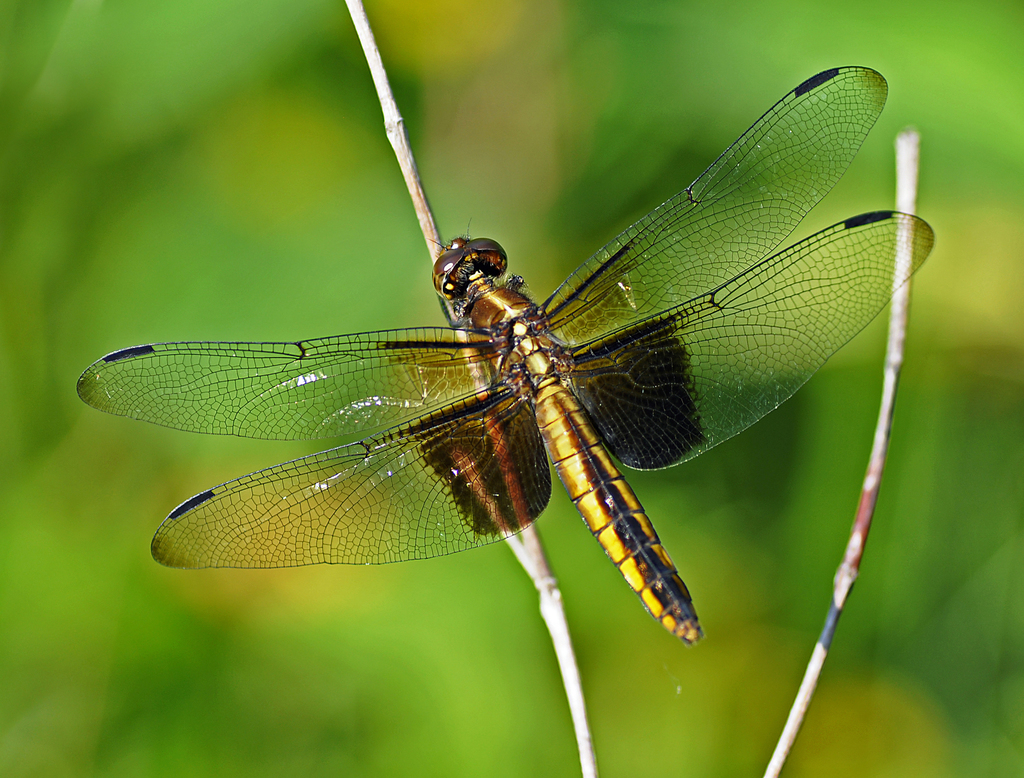
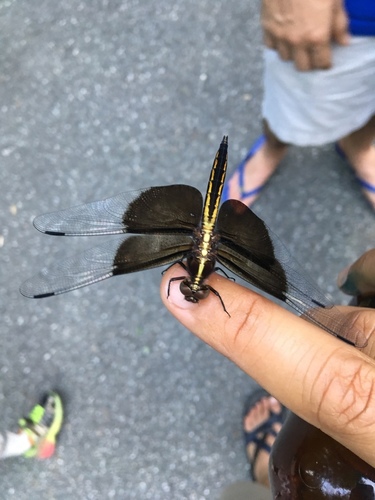
The widow skimmer is a dragonfly with a 24 to 32 mm abdomen and a slight white hue on its body. Males show steely-blue coloration while females are yellow with brown stripes, and both sexes have black bands at the wing bases. It lives near still or muddy water across most of the United States and southern Canada, where its aquatic nymphs grow before emerging as adults.
Source: Wikipedia
How to recognize it
Males have a steely blue body area; females are yellow with brown stripes. Both sexes have prominent black basal bands on their wings.
Source: Wikipedia
Size
The abdomen length ranges from 24 to 32 mm. The abdomen and thorax have a faint white tint.
Source: Wikipedia
Where it lives
Nymphs live underwater, molting repeatedly until they emerge as adults.
Source: Wikipedia
Life cycle
Reproduction occurs in tandem, with the pair forming a wheel or heart shape before sperm transfer. Nymphs develop in water, molting several times before the final emergence as winged adults.
Source: Wikipedia
Where it comes from
Occurs throughout most of the United States except higher Rocky Mountains, and in southern Ontario and Quebec.
Source: Wikipedia
Where it is found in the US
Recorded in 50 of 51 states and DC. Most records: Texas, Ohio, Illinois, Virginia, Michigan, New Jersey, Minnesota, California.
Darker = more records. Counts are museum and citizen-science records, not population size.
Source: GBIF
Status: native in North America; native in United States; native in Canada. Source: iNaturalist
Months it is reported in the US
Source: GBIF
More photos
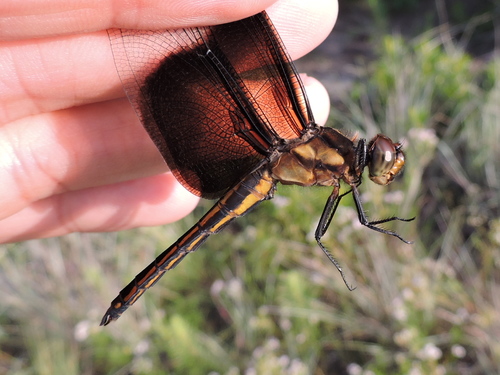
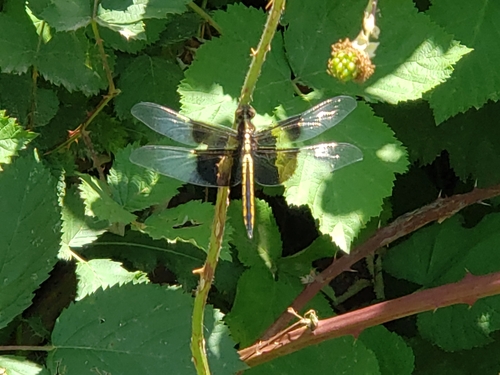
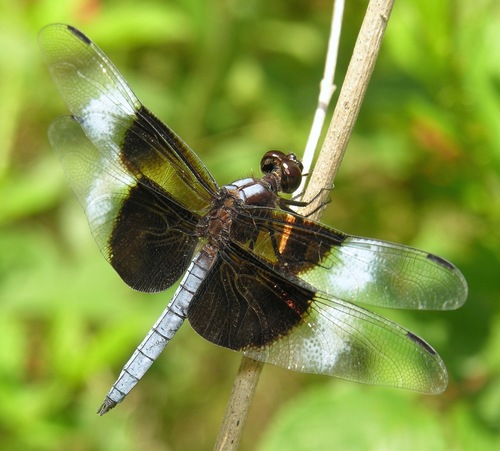
Same family (Libellulidae)



Sources
- Wikipedia: https://en.wikipedia.org/wiki/Widow_skimmer
Look it up elsewhere: GBIF · iNaturalist · BugGuide · ITIS · Wikipedia
Text written 2026-10-22 from the sources above and checked sentence by sentence against them. Data fetched 2026-10-22.