 Bug FAQ
Acanthocephala terminalis
Acanthocephala terminalis · Order: Hemiptera · Family: Coreidae
Source: Wikipedia
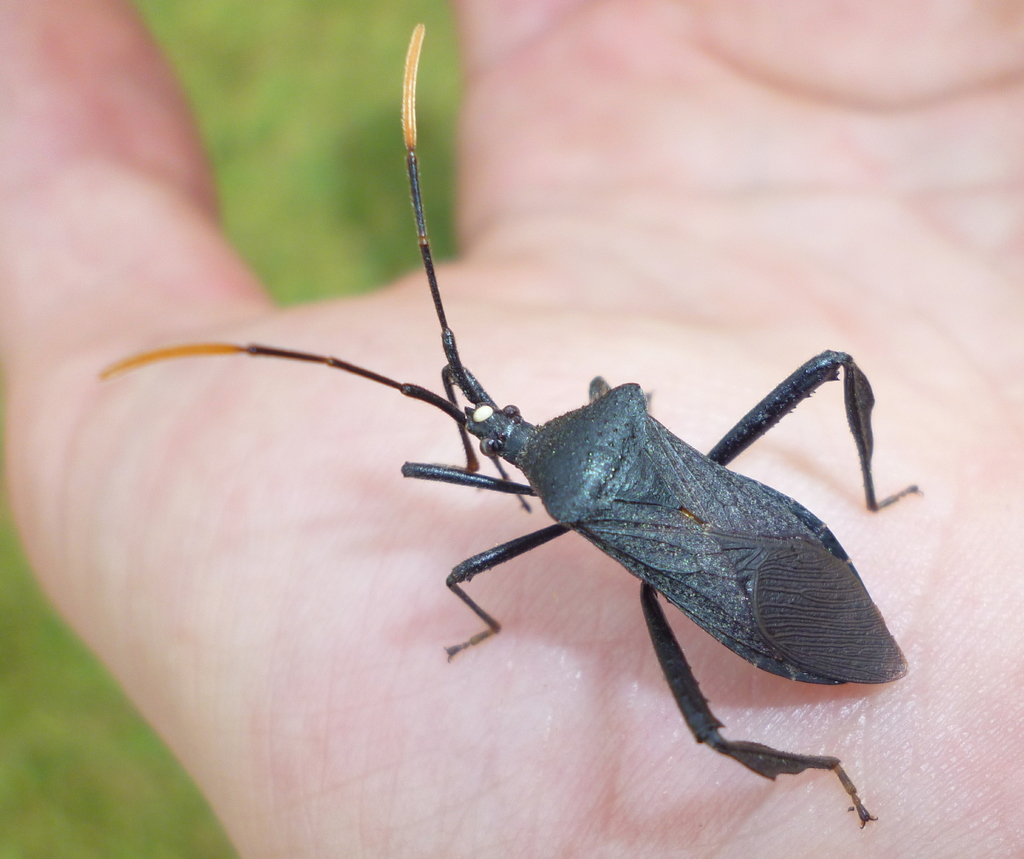
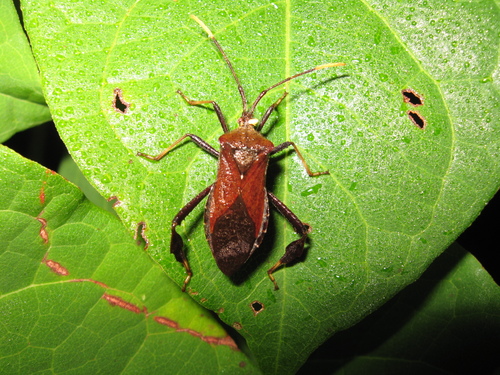
These bugs are dark gray to black, about 18 to 25 mm long, and have orange tips on the last antenna segment and leaf-shaped tibiae on the hind legs. They live in woodlands, fields and meadows across the eastern United States and southeastern Canada, feeding on plants such as staghorn sumac, riverbank grape and ninebark. Mating starts in late spring, females lay eggs on host plants, and the young molt five times before becoming adults.
Source: Wikipedia
How to recognize it
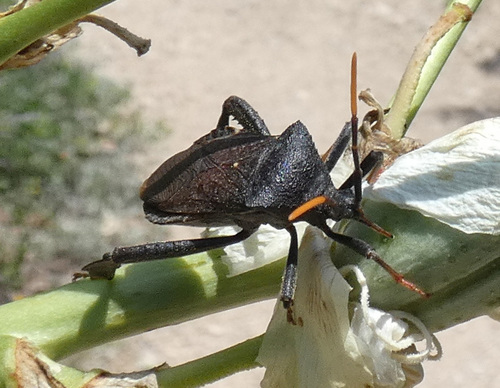
The last segment of the antennae is orange, and the hind-leg tibiae are flat and leaf-like.
Source: Wikipedia
Size
Adults measure roughly 18 to 25 mm (0.71 to 0.98 in) in length.
Source: Wikipedia
Does it bite or sting?
They do not bite or sting and are harmless to humans and pets, though they may emit a foul odor if disturbed.
Source: Wikipedia
Where it lives
They are typically found in woodlands, fields, and meadow habitats.
Source: Wikipedia
What it eats
They feed on plants such as staghorn sumac, riverbank grape, and ninebark.
Source: Wikipedia
Life cycle
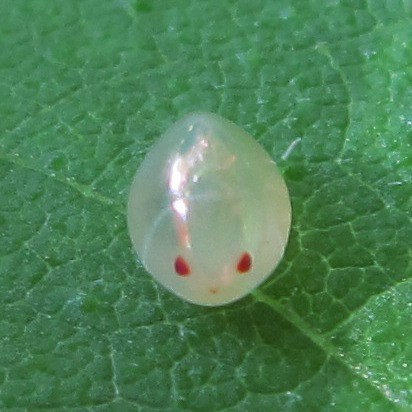
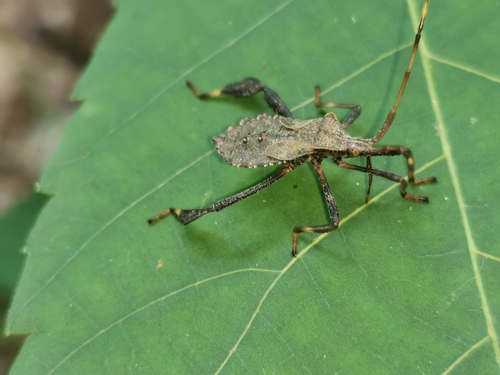
Mating begins in late spring and females deposit eggs on host plants. After hatching, juveniles undergo five molts before reaching adulthood.
Source: Wikipedia
When you see it
The reproductive season starts in late spring.
Source: Wikipedia
Where it is found in the US
Recorded in 38 of 51 states and DC. Most records: Texas, New York, Virginia, Ohio, Michigan, Massachusetts, North Carolina, Maryland.
Darker = more records. Counts are museum and citizen-science records, not population size.
Source: GBIF
Status: native in North America; native in United States; native in Canada. Source: iNaturalist
Months it is reported in the US
Source: GBIF
More photos
Questions people ask
Do Acanthocephala terminalis bite or sting?
No, they are harmless and do not bite or sting humans or pets.
Source: Wikipedia
When are they most active?
Their mating period starts in late spring, which is when they are most active.
Source: Wikipedia
What plants do they eat?
They feed on staghorn sumac, riverbank grape, and ninebark.
Source: Wikipedia
Same family (Coreidae)
 Western Conifer Seed BugLeptoglossus occidentalisDamages trees, gardens or crops
 Squash BugAnasa tristisDamages trees, gardens or crops
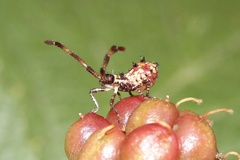 Dock BugCoreus marginatus
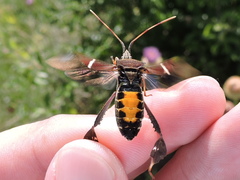 Eastern Leaf-footed BugLeptoglossus phyllopusDamages trees, gardens or crops
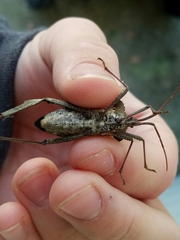 Giant leaf-footed bugAcanthocephala declivis
 Northern Leaf-Footed BugLeptoglossus oppositus
Sources
- Wikipedia: https://en.wikipedia.org/wiki/Acanthocephala_terminalis
Look it up elsewhere: GBIF · iNaturalist · BugGuide · ITIS · Wikipedia
Text written 2026-10-22 from the sources above and checked sentence by sentence against them. Data fetched 2026-10-22.