 Bug FAQ
Dock Bug
Coreus marginatus · Order: Hemiptera · Family: Coreidae
Also called: Stock bug
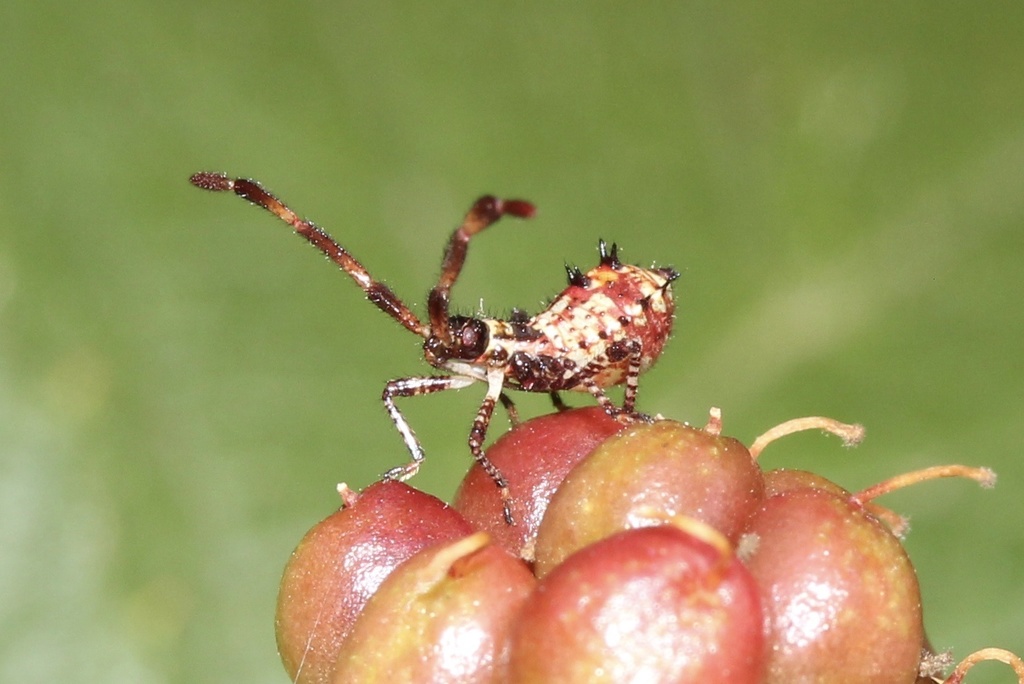
Dock bugs are medium-sized, speckled brown insects about 13 to 15 mm long, with a broad abdomen and four-segmented antennae that are red-orange except for the black tip. They live in dense vegetation across Europe, Asia and northern Africa, feed on many plants including raspberry and gooseberry, and have an annual life cycle that overwinters as adults.
Source: Wikipedia
How to recognize it
The head, pronotum and abdomen are speckled reddish-brown.
Source: Wikipedia
Size
Adults measure 13 to 15 mm (about 0.5 to 0.6 in) long; males are a bit smaller but have longer antennae.
Source: Wikipedia
Where it lives
They are often found in thick vegetation such as hedgerows and wasteland.
Source: Wikipedia
What it eats
Dock bugs are herbivores that eat many plant species, notably raspberry, gooseberry and sometimes blackcurrant.
Source: Wikipedia
Life cycle
They have an annual cycle: egg, five nymphal stages, then adult, and they overwinter as adults before mating back-to-back and laying brown eggs from late May to early July.
Source: Wikipedia
When you see it
Nymphs become adults from August onward.
Source: Wikipedia
Where it comes from
Their range includes Europe, Asia and northern Africa.
Source: Wikipedia
Where it is found in the US
Recorded in 2 of 51 states and DC. Most records: Tennessee, Virginia.
Darker = more records. Counts are museum and citizen-science records, not population size.
Source: GBIF
Same family (Coreidae)
 Western Conifer Seed BugLeptoglossus occidentalisDamages trees, gardens or crops
 Squash BugAnasa tristisDamages trees, gardens or crops
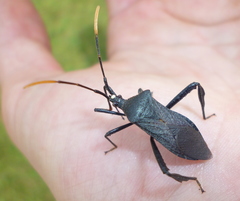 Acanthocephala terminalisAcanthocephala terminalisHarmless
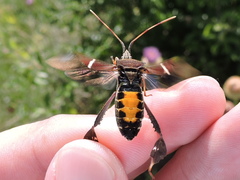 Eastern Leaf-footed BugLeptoglossus phyllopusDamages trees, gardens or crops
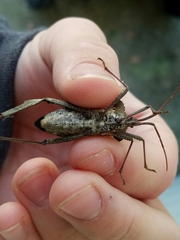 Giant leaf-footed bugAcanthocephala declivis
 Northern Leaf-Footed BugLeptoglossus oppositus
Sources
- Wikipedia: https://en.wikipedia.org/wiki/Coreus_marginatus
Look it up elsewhere: GBIF · iNaturalist · BugGuide · ITIS · Wikipedia
Text written 2026-10-22 from the sources above and checked sentence by sentence against them. Data fetched 2026-10-22.