 Bug FAQ
American Lappet Moth
Phyllodesma americana · Order: Lepidoptera · Family: Lasiocampidae
Also called: Lappet Moth, Southern lappet moth
Source: Wikipedia
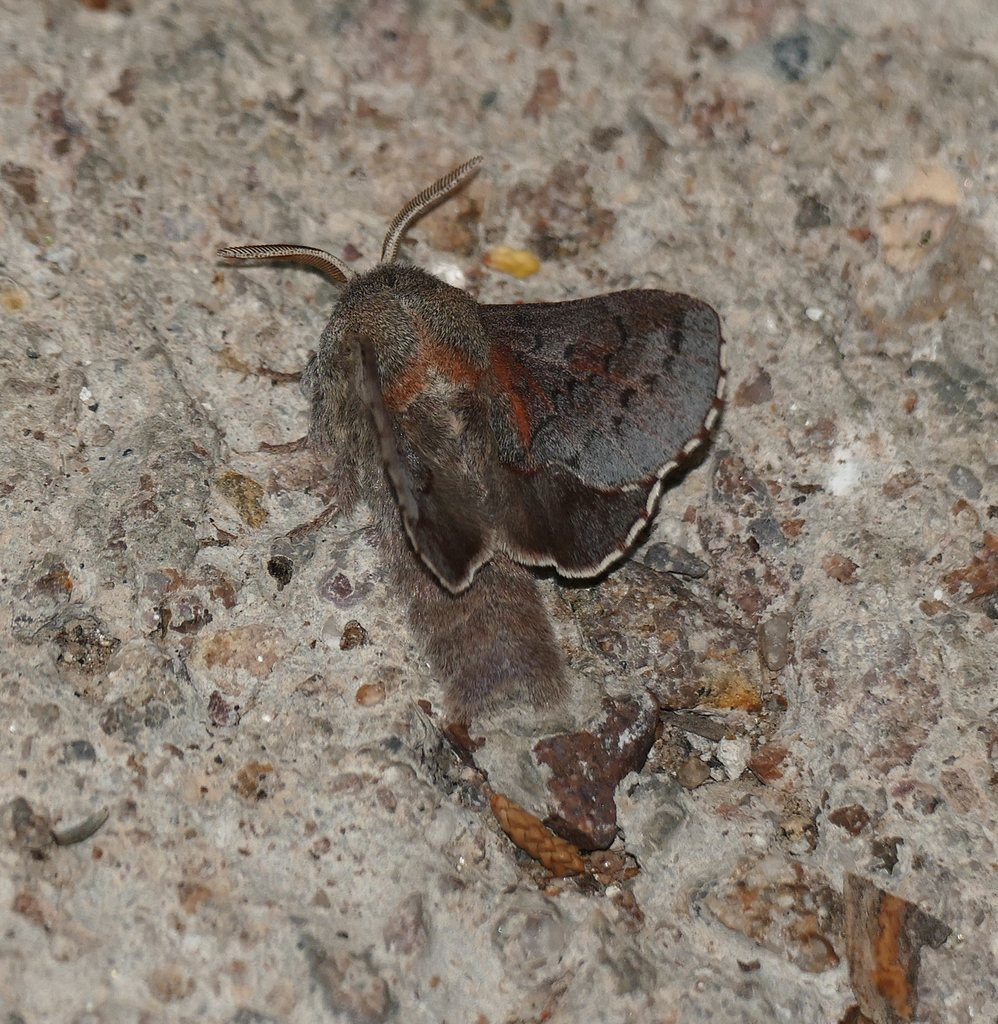
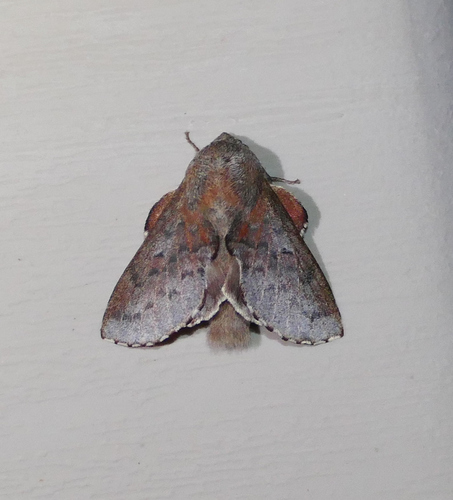
The American lappet moth has a wingspan of about 3 to 5 centimeters. It lives across much of North America, from the east coast to the west coast and up into Canada. Its larvae feed on the leaves of alders, birches, oaks, poplars, willows, and other plants.
Source: Wikipedia
How to recognize it
Phyllodesma americana is a moth in the Lasiocampidae family.
Source: Wikipedia
Size
Adults have a wingspan ranging from 29 to 49 millimetres.
Source: Wikipedia
What it eats
The caterpillars eat leaves of alders, birches, oaks, poplars, willows, Ceanothus velutinus, Chrysolepis chrysophylla, and members of the rose family.
Source: Wikipedia
Life cycle
Adults fly from March to September in the south, with two generations, and have one generation per year in the north.
Source: Wikipedia
Where it comes from
Its range covers the same areas: Nova Scotia to northern Florida, west to Texas and California, and north to British Columbia and Yukon.
Source: Wikipedia
Where it is found in the US
Recorded in 48 of 51 states and DC. Most records: California, Texas, Michigan, Massachusetts, Vermont, Oregon, Washington, Minnesota.
Darker = more records. Counts are museum and citizen-science records, not population size.
Source: GBIF
Status: native in North America; native in United States; native in Canada. Source: iNaturalist
Months it is reported in the US
Source: GBIF
More photos
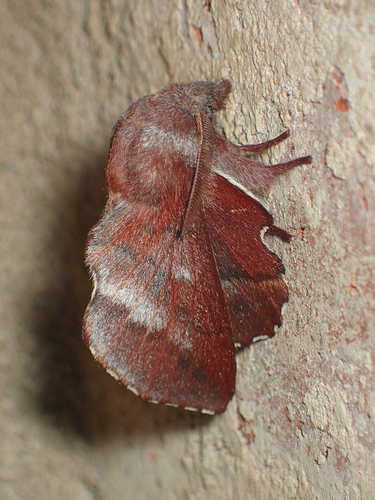
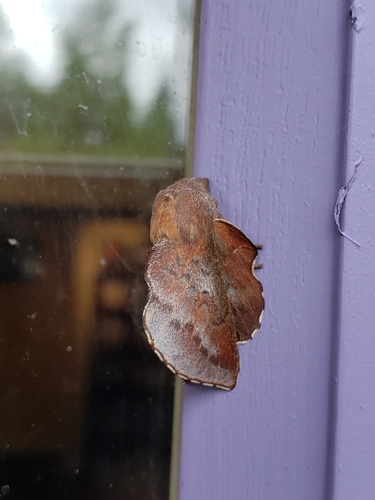
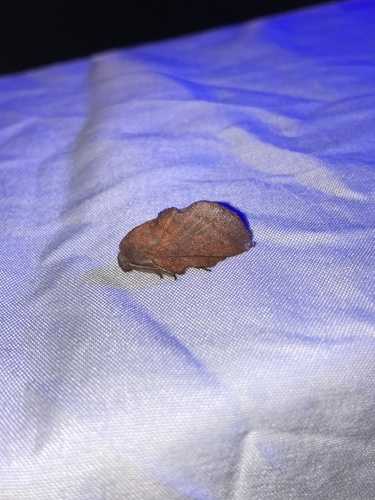
Questions people ask
Do American lappet moth caterpillars damage trees?
Yes, the larvae feed on the leaves of many tree species, which can harm gardens and forest plants.
Source: Wikipedia
Same family (Lasiocampidae)
 Eastern Tent Caterpillar MothMalacosoma americanaDamages trees, gardens or crops
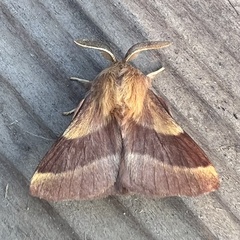 Forest Tent Caterpillar MothMalacosoma disstriaDamages trees, gardens or crops
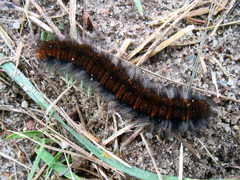 Fox MothMacrothylacia rubi
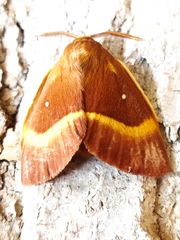 Oak EggarLasiocampa quercus
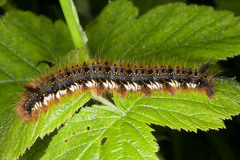 Drinker MothEuthrix potatoria
 Western Tent Caterpillar MothMalacosoma californicaDamages trees, gardens or crops
Sources
- Wikipedia: https://en.wikipedia.org/wiki/Phyllodesma_americana
Look it up elsewhere: GBIF · iNaturalist · BugGuide · ITIS · Wikipedia
Text written 2026-10-22 from the sources above and checked sentence by sentence against them. Data fetched 2026-10-22.