 Bug FAQ
Drinker Moth
Euthrix potatoria · Order: Lepidoptera · Family: Lasiocampidae
Also called: The Drinker
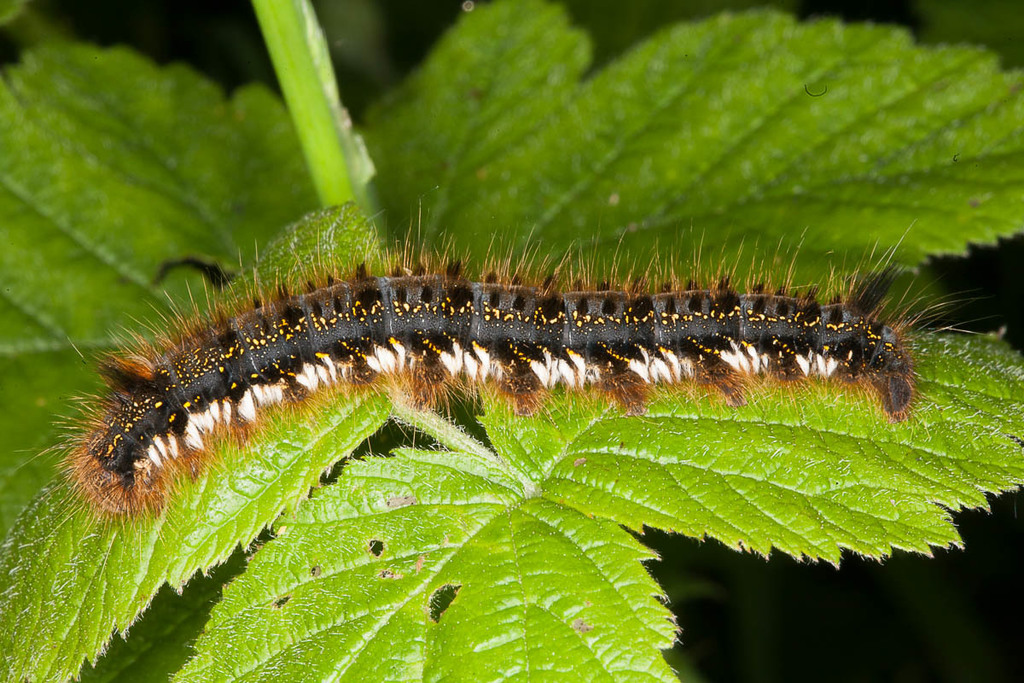
The adult drinker moth has a wingspan of about 4.5 to 6.5 cm and the caterpillar grows to roughly 6 cm long. It lives near marshes, fens, riversides and also in drier grassy areas, where the larvae feed on a variety of grasses and reeds.
Source: Wikipedia
How to recognize it
Both sexes have two distinctive white spots on each forewing; females are yellowish and a bit larger than the orange-brown males.
Source: Wikipedia
Size
Fully grown larvae are about 6 cm (2.4 in) long.
Source: Wikipedia
Where it lives
It is most often found in wet habitats such as marshes, fens and riverbanks, but also in drier grassy places. Females lay eggs in small clusters on grass or reed stems.
Source: Wikipedia
What it eats
Larvae feed on many grasses and reeds, including Alopecurus, Deschampsia, Dactylis, Elymus, Carex, Luzula and other members of the grass family.
Source: Wikipedia
Life cycle
Young larvae hibernate, start feeding again in spring, and later pupate inside a cocoon during summer. After pupation, adults emerge and females lay egg clusters on grass or reed stems.
Source: Wikipedia
When you see it
Adults are nocturnal and fly from June through August, depending on location.
Source: Wikipedia
Where it comes from
The species occurs throughout Europe.
Source: Wikipedia
Same family (Lasiocampidae)
 Eastern Tent Caterpillar MothMalacosoma americanaDamages trees, gardens or crops
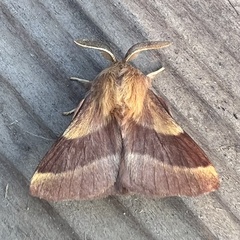 Forest Tent Caterpillar MothMalacosoma disstriaDamages trees, gardens or crops
 Fox MothMacrothylacia rubi
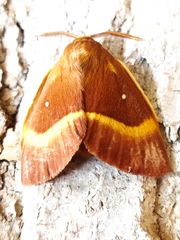 Oak EggarLasiocampa quercus
 Western Tent Caterpillar MothMalacosoma californicaDamages trees, gardens or crops
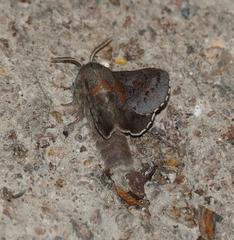 American Lappet MothPhyllodesma americanaDamages trees, gardens or crops
Sources
- Wikipedia: https://en.wikipedia.org/wiki/Euthrix_potatoria
Look it up elsewhere: GBIF · iNaturalist · BugGuide · Wikipedia
Text written 2026-10-22 from the sources above and checked sentence by sentence against them. Data fetched 2026-10-22.