 Bug FAQ
American Nursery Web Spider
Pisaurina mira · Order: Araneae · Family: Pisauridae
Also called: Nursery Web Spider
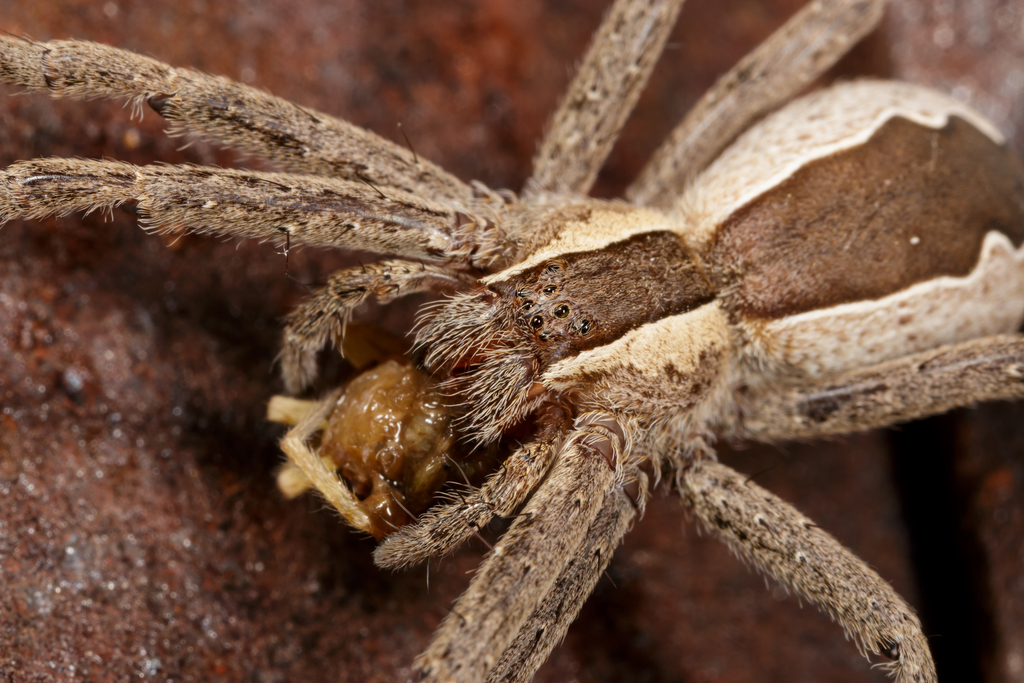
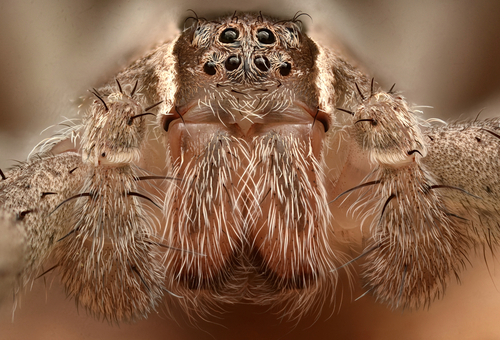
The American Nursery Web Spider has a straight front row of eyes and a moderately long abdomen. It lives in tall grass, shrubs and low bushes across eastern North America and hunts insects by waiting for prey to come close.
Source: Wikipedia
How to recognize it
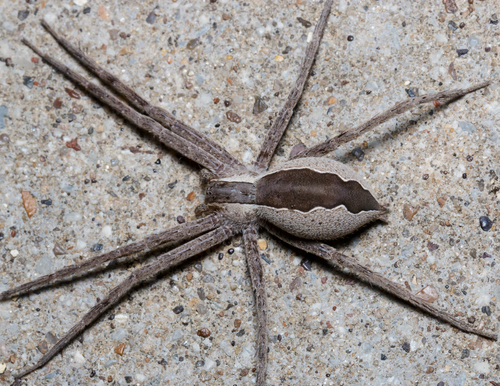
Males have longer legs relative to their bodies than females. Abdomen patterns range from a clear dark middle band to a faint band with two rows of side spots.
Source: Wikipedia
Size
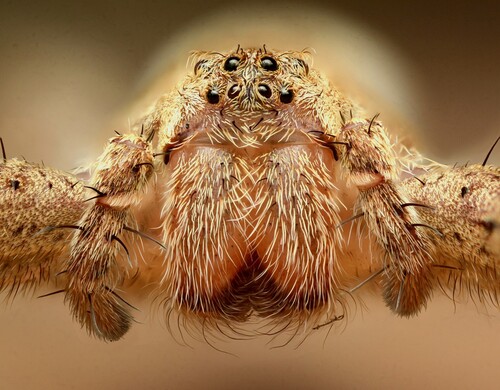
The spider’s straight anterior eye row distinguishes it from similar species. Its abdomen is usually less than twice the length of the carapace.
Source: Wikipedia
Is it a pest in the house?
It is a common indoor spider in the eastern United States and can help control plant bugs that affect small fruits and vegetables.
Source: Wikipedia
Does it bite or sting?
Its venom can kill small insects but is not strong enough to harm humans or larger animals.
Source: Wikipedia
Where it lives
It prefers high weeds, low shrubs, tall grass and bushes in ecotonal areas.
Source: Wikipedia
What it eats
It hunts insects such as gnats and mosquitoes, liquefying their internal organs for nutrition.
Source: Wikipedia
Life cycle
The female carries the egg sac with silk attached to her spinnerets and chelicerae. When the eggs are near hatching, she builds a nursery web where spiderlings stay until their first molt.
Source: Wikipedia
When you see it
Mature males are most often collected in May and June; eggs hatch in May and spiderlings disperse in June.
Source: Wikipedia
Lookalikes
It is often confused with wolf spiders because of similar appearance.
Source: Wikipedia
Where it is found in the US
Recorded in 38 of 51 states and DC. Most records: Massachusetts, Texas, Ohio, Virginia, New York, Pennsylvania, North Carolina, Maryland.
Darker = more records. Counts are museum and citizen-science records, not population size.
Source: GBIF
Status: native in North America; native in United States; native in Canada. Source: iNaturalist
Months it is reported in the US
Source: GBIF
More photos
Questions people ask
Do American Nursery Web Spiders bite humans?
Their venom is too weak to cause harm to people; bites may feel like a mild pinch.
Source: Wikipedia
How can I identify this spider?
Look for a straight front row of eyes, a moderately long abdomen, and in males, longer legs compared to females.
Source: Wikipedia
When are they most active?
Adults are most often seen in late spring, especially May and June, when eggs hatch and spiderlings emerge.
Source: Wikipedia
Same family (Pisauridae)



Sources
- Wikipedia: https://en.wikipedia.org/wiki/Pisaurina_mira
Look it up elsewhere: GBIF · iNaturalist · BugGuide · ITIS · Wikipedia
Text written 2026-10-22 from the sources above and checked sentence by sentence against them. Data fetched 2026-10-22.