 Bug FAQ
Arrowhead Blue
Glaucopsyche piasus · Order: Lepidoptera · Family: Lycaenidae
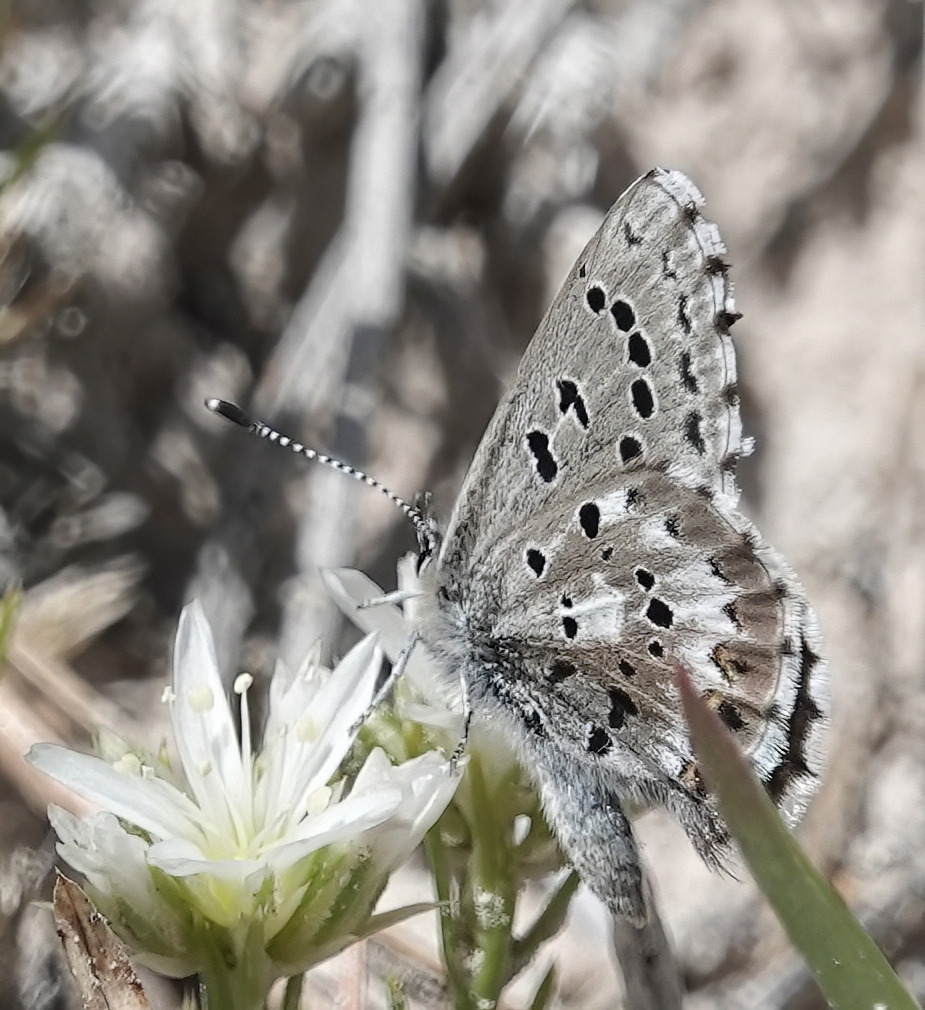
The Arrowhead Blue butterfly has a wingspan of about 2.9 to 3.5 cm. It produces one generation each year, flying from March through July, with males patrolling host plants and females laying eggs on flower buds.
Source: Wikipedia
How to recognize it
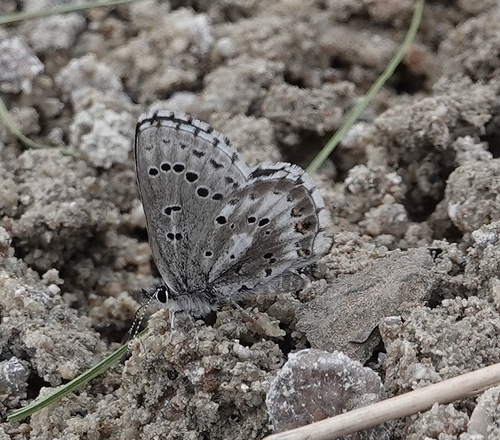
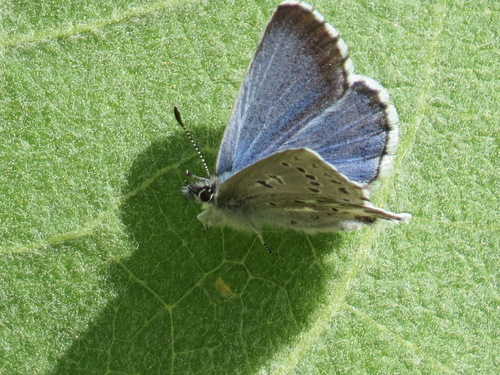
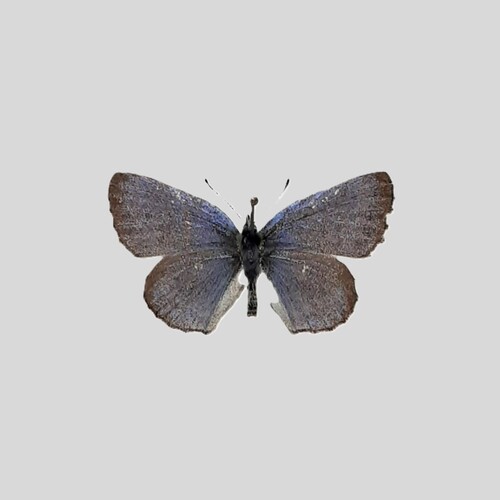
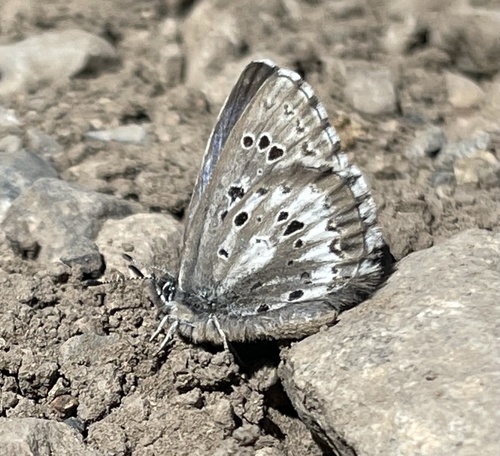
Males show a violet-blue upper side with a wide border, while females are a duller shade. The underside of both sexes is gray with many small black spots. The hindwing bears a white post-median band shaped like inward-pointing arrowheads.
Source: Wikipedia
Size
Wingspan ranges from 1 1⁄8 to 1 3⁄8 inches (about 2.9 to 3.5 cm).
Source: Wikipedia
What it eats
Adult butterflies sip nectar from flowers.
Source: Wikipedia
Life cycle
There is a single brood that appears from March to July.
Source: Wikipedia
When you see it
Adults are on the wing from March through July.
Source: Wikipedia
Where it comes from
It is native to western North America.
Source: Wikipedia
Where it is found in the US
Recorded in 13 of 51 states and DC. Most records: California, Idaho, Washington, Colorado, Oregon, Nevada, Montana, Utah.
Darker = more records. Counts are museum and citizen-science records, not population size.
Source: GBIF
Status: native in North America; native in Canada; native in United States. Source: iNaturalist
Months it is reported in the US
Source: GBIF
More photos
Questions people ask
Same family (Lycaenidae)





Sources
- Wikipedia: https://en.wikipedia.org/wiki/Glaucopsyche_piasus
Look it up elsewhere: GBIF · iNaturalist · BugGuide · ITIS · Wikipedia
Text written 2026-10-24 from the sources above and checked sentence by sentence against them. Data fetched 2026-10-24.