 Bug FAQ
Bald-faced Hornet
Dolichovespula maculata · Order: Hymenoptera · Family: Vespidae
Also called: Baldfaced Hornet, White-faced Hornet, White-tailed Hornet

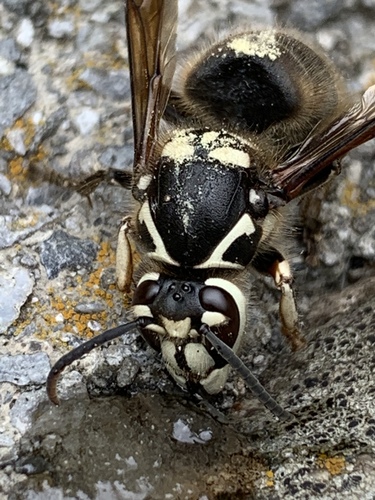
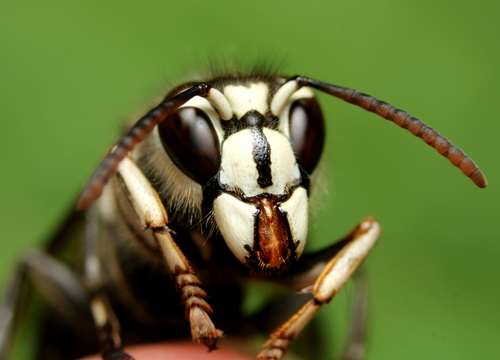
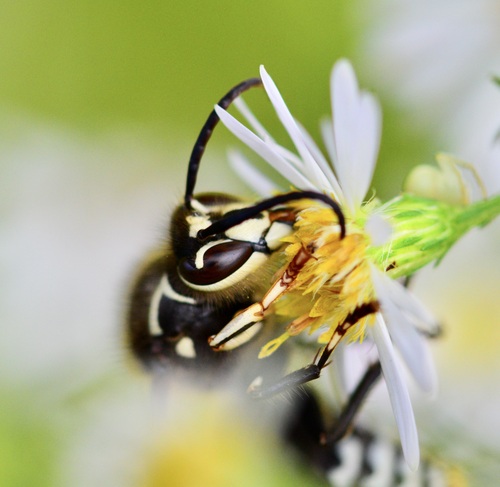
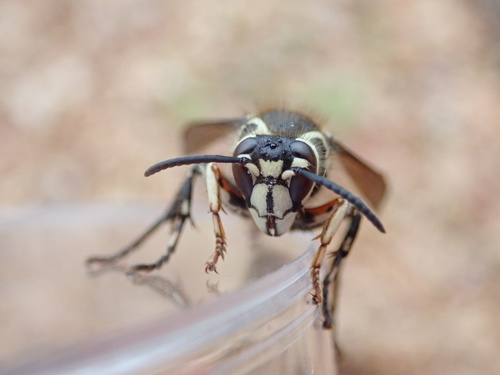
The bald-faced hornet is a large yellowjacket with a white face and white markings on its thorax, legs and abdomen, about 19 mm long. It builds football-shaped gray paper nests in trees, bushes or on building eaves and defends them aggressively. Stings are painful; the hornet can also spray venom into eyes, causing watering and temporary loss of sight.
Source: Wikipedia, Penn State Extension, UC IPM
How to recognize it
It has a striking black-and-white pattern with a white face that gives it its name. The thorax, legs and abdomen also show white markings.
Source: Wikipedia, Penn State Extension
Size
Adults are about 19 mm (0.75 in) long, larger than most other Dolichovespula species.
Source: Wikipedia
Is it a pest in the house?
All Dolichovespula build gray paper, football-shaped nests in trees, bushes or on building exteriors.
Source: Penn State Extension
Does it bite or sting?
Workers will repeatedly sting intruders and can spray venom into eyes, causing immediate watering and temporary blindness. Stings cause pain and short-term injury; some people may have severe allergic reactions. People allergic to wasp stings should have nests removed by professionals.
Source: Wikipedia, UC IPM, Penn State Extension
How to get rid of it
Traps or nest treatments can reduce yellowjacket numbers. If treating yourself, wear protective clothing and spray at night. Those with sting sensitivities should hire professional pest control to remove nests.
Source: UC IPM, Penn State Extension
Where it lives
It lives in forested areas and also in urban vegetation. Nests are usually in trees or bushes, sometimes under rocks or on building sides.
Source: Wikipedia
What it eats
It is omnivorous and helps control flies, caterpillars and spiders.
Source: Wikipedia
Life cycle
Males are haploid and females diploid; workers can lay eggs that become males.
Source: Wikipedia
When you see it
Workers appear from mid-April to early October; reproductive individuals from mid-July to November.
Source: Wikipedia
Where it comes from
The species is native to North America, including Canada and most of the United States.
Source: Wikipedia
Lookalikes
It is a yellowjacket, not a true hornet; true hornets belong to the genus Vespa. Paper wasps have longer waists and are less aggressive, while honey bees have less bright striping and more hair.
Source: Wikipedia, Penn State Extension, UC IPM
Where it is found in the US
Recorded in 49 of 51 states and DC. Most records: New York, Illinois, Minnesota, Ohio, Pennsylvania, Massachusetts, Virginia, Maryland.
Darker = more records. Counts are museum and citizen-science records, not population size.
Source: GBIF
Status: native in North America; native in Canada; native in United States. Source: iNaturalist
Months it is reported in the US
Source: GBIF
More photos
Questions people ask
How can I safely remove a bald-faced hornet nest?
Wear full protective gear and spray a wasp-hornet insecticide into the nest opening at night, or hire a professional if you are allergic.
Source: UC IPM, Penn State Extension
Can bald-faced hornets hurt my eyes?
Yes, they can spray venom into a person’s eyes, causing watering and temporary blindness.
Source: Wikipedia
Are bald-faced hornets beneficial?
They help control flies, caterpillars and spiders, making them beneficial for gardens.
Source: Wikipedia
Same family (Vespidae)


Sources
- Wikipedia: https://en.wikipedia.org/wiki/Dolichovespula_maculata
- UC IPM: https://ipm.ucanr.edu/PMG/PESTNOTES/pn7450.html
- Penn State Extension: https://extension.psu.edu/baldfaced-hornet
Look it up elsewhere: GBIF · iNaturalist · BugGuide · ITIS · Wikipedia
Text written 2026-10-23 from the sources above and checked sentence by sentence against them. Data fetched 2026-10-23.