 Bug FAQ
European Hornet
Vespa crabro · Order: Hymenoptera · Family: Vespidae
Also called: Giant Hornet, Hornet
Source: Wikipedia, Penn State Extension
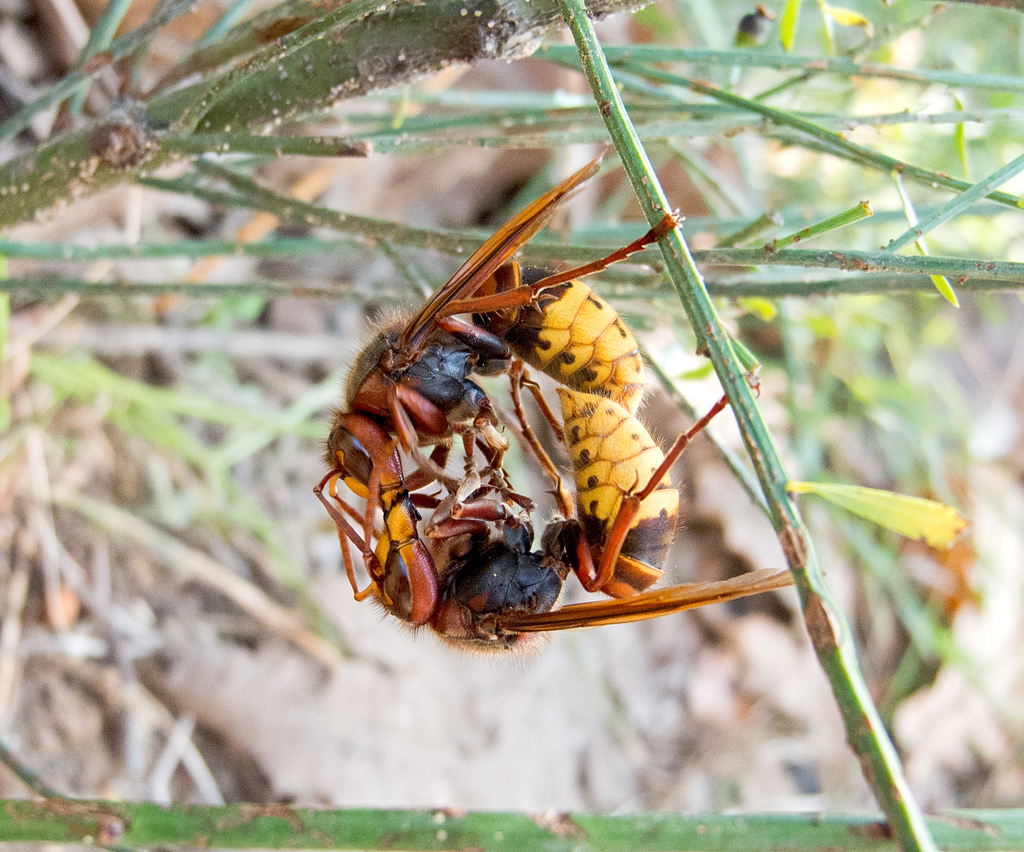
Workers are about 25 mm long and queens up to 35 mm, weighing around 0.5 g. They build paper nests in dark, protected places such as hollow trees or wall voids. Stings are mild and only a concern for allergic people.
Source: Wikipedia, Penn State Extension
How to recognize it
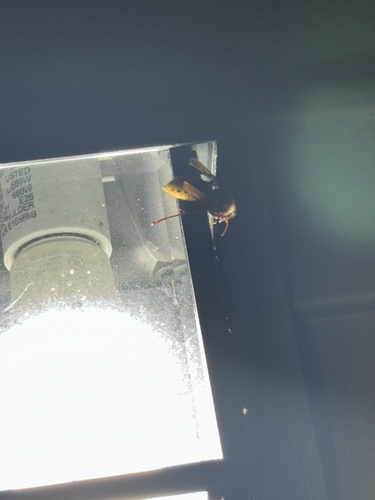
The eyes are deeply indented and C-shaped, and the wings have a reddish-orange tint. The head shows red and yellow, the thorax red and brown, and the abdomen is brown in front, yellow behind with brown tear-drops.
Source: Wikipedia, Penn State Extension
Size
Typical mass is roughly 478 mg, give or take 60 mg.
Source: Wikipedia
Is it a pest in the house?
Nests are built in protected aerial spots like hollow trees or wall voids of houses. When they strip bark from bushes they can kill twigs and branches.
Source: Penn State Extension
Does it bite or sting?
Stings occur if the hornet is stepped on or grabbed, but they generally avoid conflict. Only females can sting; males lack a stinger. For non-allergic people, the sting usually clears up in a few hours without complications.
Source: Wikipedia, Penn State Extension
How to get rid of it
Because nests are annual, waiting for the first hard frost can naturally eliminate them. If immediate removal is needed, locate and destroy the nest.
Source: Penn State Extension
Where it lives
They prefer dark nesting sites, usually hollow tree trunks.
Source: Wikipedia
What it eats
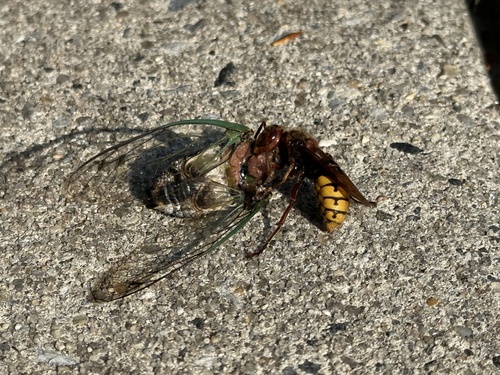
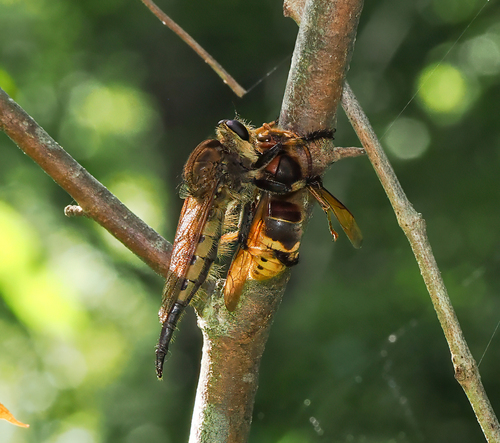
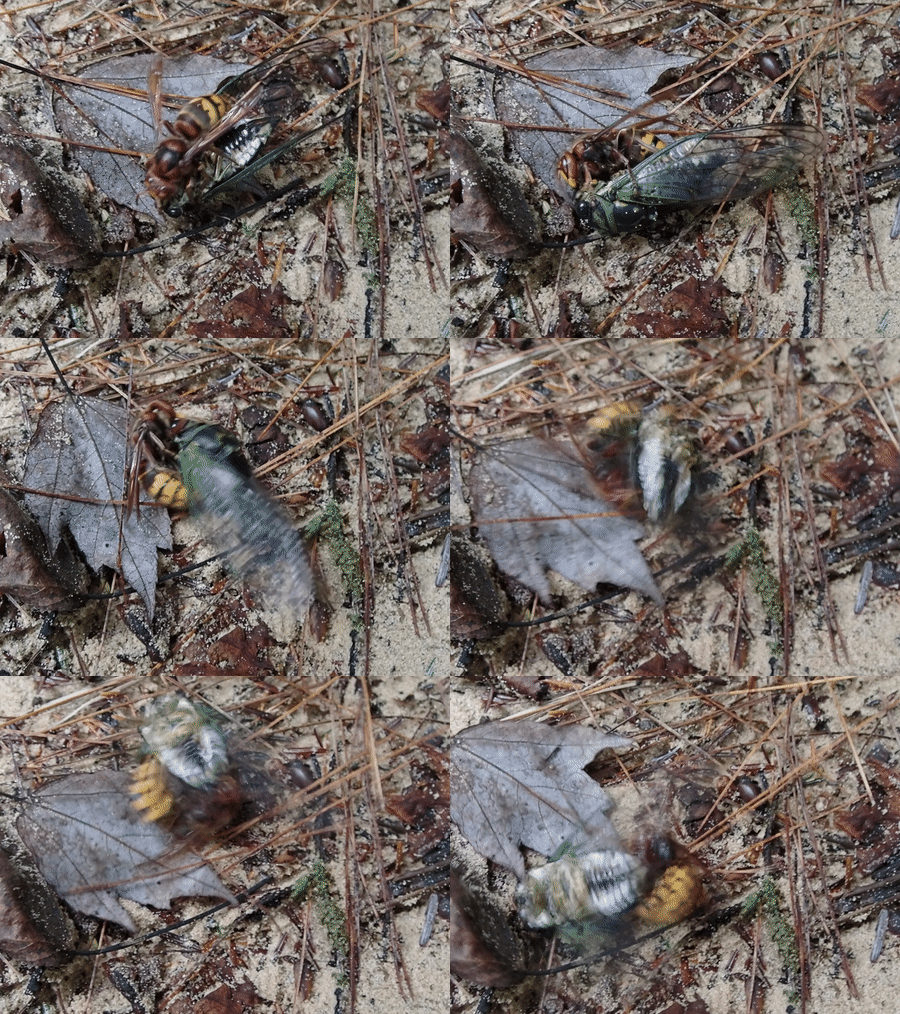
They mainly hunt large insects such as beetles, other wasps, moths, dragonflies and mantises. They also eat fallen fruit and other sugary foods.
Source: Wikipedia
Life cycle
Workers remove any eggs not laid by the queen, a behavior called worker policing.
Source: Wikipedia
When you see it
They sting when stepped on or grabbed but usually avoid conflict. They become defensive around their nest and food sources.
Source: Wikipedia
Where it comes from
The species originated in Eurasia, with historic range from Japan to the United Kingdom.
Source: Wikipedia
Lookalikes
Its coloration often leads people to mistake it for the Asian giant hornet. It is larger than common wasps but smaller than the Asian giant hornet.
Source: Wikipedia, Penn State Extension
Where it is found in the US
Recorded in 33 of 51 states and DC. Most records: Virginia, Maryland, North Carolina, Pennsylvania, New York, New Jersey, Tennessee, Georgia.
Darker = more records. Counts are museum and citizen-science records, not population size.
Source: GBIF
Status: introduced in North America; introduced in United States; introduced in Canada. Source: iNaturalist
Months it is reported in the US
Source: GBIF
More photos
Questions people ask
Can European hornets sting me?
Yes, they will sting if stepped on or grabbed, but the sting is only as painful as a honey bee and usually fades in a few hours.
Source: Wikipedia, Penn State Extension
Do they build nests in houses?
They can nest in wall voids or other dark, protected spots inside homes.
Source: Penn State Extension
How can I get rid of a European hornet nest?
The easiest method is to wait for the first hard frost, or you can locate and destroy the nest if you need faster control.
Source: Penn State Extension
Are they dangerous to pets?
They can sting pets if the animal steps on or grabs them, but the sting is mild and usually not serious unless the pet is allergic.
Source: Wikipedia, Penn State Extension
Same family (Vespidae)


Sources
- Wikipedia: https://en.wikipedia.org/wiki/European_hornet
- Penn State Extension: https://extension.psu.edu/european-hornet
Look it up elsewhere: GBIF · iNaturalist · BugGuide · ITIS · Wikipedia
Text written 2026-10-22 from the sources above and checked sentence by sentence against them. Data fetched 2026-10-22.