 Bug FAQ
Barn Funnel Weaver
Tegenaria domestica · Order: Araneae · Family: Agelenidae
Also called: funnel web weaver, Common House Spider, European house spider, House spider
Source: Wikipedia, Penn State Extension
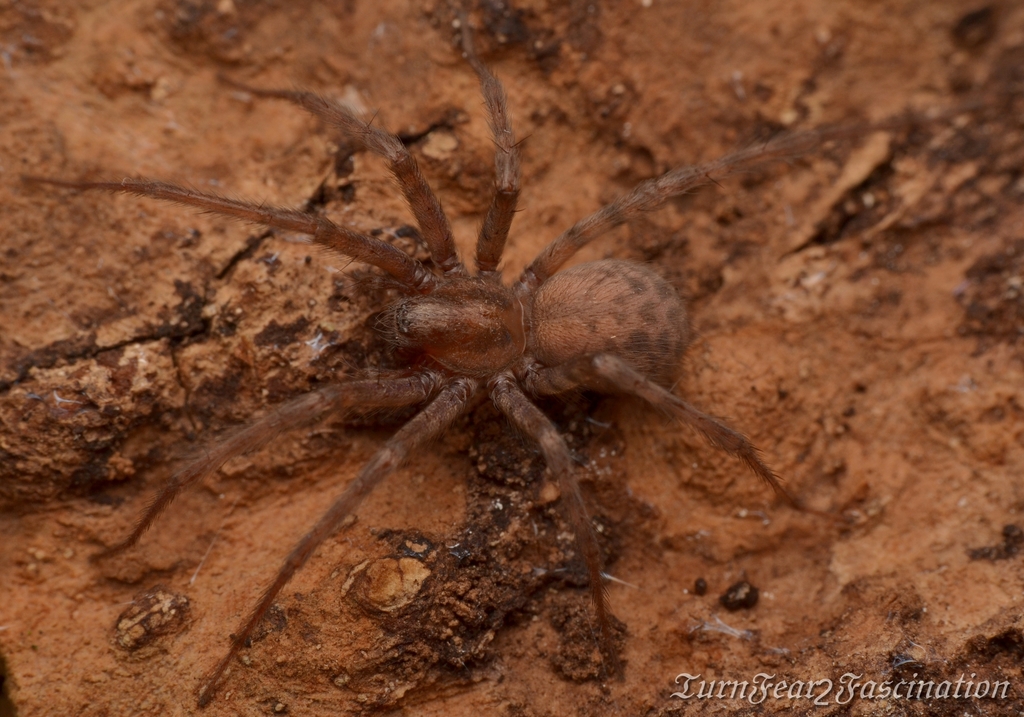
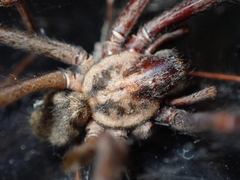
Barn funnel weavers are small house spiders, females 7.5-11.5 mm and males 6-9 mm long, with dark orange-brown bodies, striped legs and two faint black stripes on the cephalothorax. They live worldwide in homes, barns and sheds, building large, undisturbed funnel webs that can persist for years.
Source: Wikipedia, Penn State Extension
How to recognize it
The cephalothorax is red-brown with pale-yellow hairs and two pale-gray lines.
Source: Penn State Extension
Size
Females measure 7.5 to 11.5 mm in body length, while males are 6 to 9 mm long.
Source: Wikipedia
Is it a pest in the house?
Their webs can become large if left undisturbed, and indoor females may live one to two years on the same web. They are common in U.S. sheds, barns, door crevices, under rocks and boards throughout the year.
Source: Wikipedia, Penn State Extension
Does it bite or sting?
Barn funnel weavers rarely bite; when they do, it is in self-defense and usually does not break the skin. Penn State knows of no documented bites from barn funnel weavers and expects any bite to be no worse than a grass spider's.
Source: Wikipedia, Penn State Extension
How to get rid of it
To capture one, place a container in front of the spider and gently push it from behind so it walks into the opening. Spiders instinctively move forward when disturbed from behind, making this method effective.
Source: Wikipedia
Where it lives
In Europe they occur from Scandinavia down to Greece and the Mediterranean, and they are listed in Denmark’s spider checklist. In North America they are found from maritime Canada to the southern United States.
Source: Wikipedia
What it eats
They are active hunters that rely on vision, speed and their webs to capture prey. They respond to light, moving toward or away from it depending on the situation.
Source: Wikipedia
Life cycle
Spiderlings hatch from egg sacs and reach maturity within a year. Females usually survive the winter in sheltered spots and can produce multiple egg sacs.
Source: Wikipedia
When you see it
Male numbers peak in June and July, indicating that mating occurs in summer.
Source: Wikipedia
Where it comes from
Barn funnel weavers are native to Europe, North Africa, the Middle East and Central Asia, and they have spread worldwide as domestic house spiders.
Source: Wikipedia
Lookalikes
They were once thought to be close relatives of the Giant House Spider, now placed in the genus Eratigena. Like grass spiders, they are extremely fast and shy.
Source: Wikipedia, Penn State Extension
Where it is found in the US
Recorded in 47 of 51 states and DC. Most records: Colorado, Washington, Minnesota, Ohio, Illinois, Utah, Oregon, Pennsylvania.
Darker = more records. Counts are museum and citizen-science records, not population size.
Source: GBIF
Status: introduced in North America; introduced in United States; introduced in Canada. Source: iNaturalist
Months it is reported in the US
Source: GBIF
More photos


Questions people ask
Do they bite?
Rarely, and only in self-defense. The bite is unlikely to break the skin, and no bite has been documented.
Source: Wikipedia, Penn State Extension
How can I remove them from my home?
Place a container in front of the spider and gently coax it forward with a lid or similar object from behind, then release it outside.
Source: Wikipedia
Where are they most likely to be found in a house?
They build large funnel webs in undisturbed corners of sheds, barns, door crevices, under rocks or boards, and can stay on the same web for one to two years.
Source: Wikipedia, Penn State Extension
Same family (Agelenidae)


Sources
- Wikipedia: https://en.wikipedia.org/wiki/Tegenaria_domestica
- Penn State Extension: https://extension.psu.edu/barn-funnel-weaver-spider
Look it up elsewhere: GBIF · iNaturalist · BugGuide · ITIS · Wikipedia
Text written 2026-10-23 from the sources above and checked sentence by sentence against them. Data fetched 2026-10-23.