 Bug FAQ
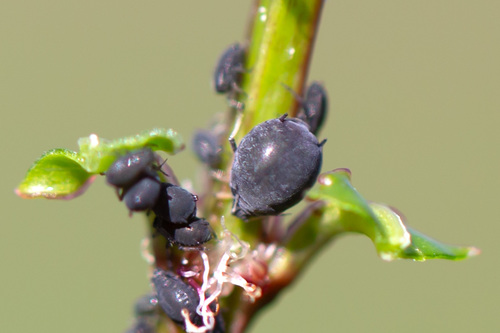
Bean Aphid
Aphis fabae · Order: Hemiptera · Family: Aphididae
Also called: black bean aphid, Black bean sphid
Source: Wikipedia
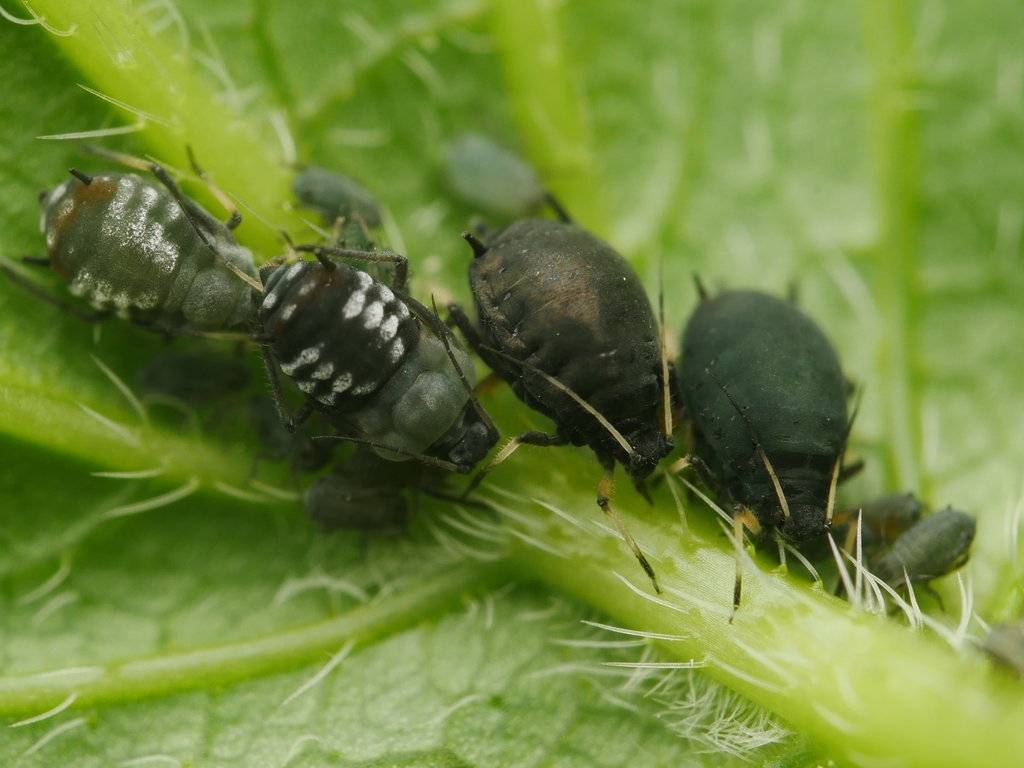
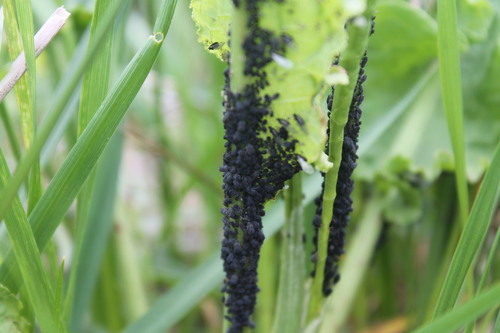
It feeds on plant sap, forming large colonies on leaf undersides and can spread plant viruses, making it a serious pest of many crops.
Source: Wikipedia
How to recognize it
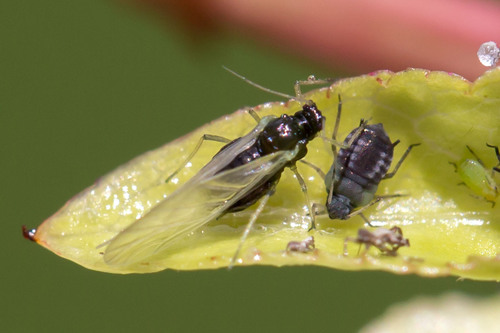
Winged forms have longer, slender bodies with shiny black heads and thoraxes. Near the rear of the abdomen are a pair of slender tubes called cornicles.
Source: Wikipedia
Size
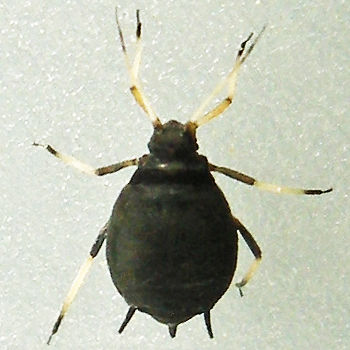
Adults are about two millimetres long and have a small head and bulbous abdomen.
Source: Wikipedia
Is it a pest in the house?
The honeydew they secrete can promote sooty mold growth. They act as vectors for plant viruses.
Source: Wikipedia
How to get rid of it
Chemical insecticides can be used to kill them, and organic growers may apply soft-soap solutions. Natural predators such as ladybird and lacewing adults and larvae, as well as hoverfly larvae, help control populations. Parasitic wasps lay eggs inside the aphids, and the developing larvae consume the host.
Source: Wikipedia
What it eats
They suck sap from stems and leaves, and ants harvest the honeydew they excrete.
Source: Wikipedia
Life cycle
Eggs are laid on woody shrubs in autumn by winged females; spring hatches produce wingless stem-mother females. Stem mothers reproduce asexually by parthenogenesis, giving live birth to nymphs. A parthenogenetic female lives about 50 days and can produce up to 30 offspring. During summer all offspring are female, and both winged and wingless forms appear, creating rapid population growth. In autumn winged aphids move to new hosts where males and females are produced, mate, and lay overwintering eggs.
Source: Wikipedia
When you see it
Large numbers are seen in the warmer months.
Source: Wikipedia
Where it is found in the US
Recorded in 34 of 51 states and DC. Most records: California, Washington, Illinois, Oregon, Michigan, Utah, Wisconsin, Hawaii.
Darker = more records. Counts are museum and citizen-science records, not population size.
Source: GBIF
Months it is reported in the US
Source: GBIF
More photos
Questions people ask
How can I get rid of black bean aphids?
Use chemical insecticides or a soft-soap spray, and encourage natural predators like ladybirds and parasitic wasps.
Source: Wikipedia
Do black bean aphids spread plant disease?
Yes, they are vectors for viruses that cause plant disease.
Source: Wikipedia
What plants do they damage?
They feed on the sap of many agricultural crops, ornamental plants, and wild hosts, causing damage to leaves and stems.
Source: Wikipedia
When are they most noticeable?
They appear in large numbers on leaf undersides during the warm months.
Source: Wikipedia
Same family (Aphididae)
 Melon AphidAphis gossypiiDamages trees, gardens or crops
 Oleander AphidAphis neriiDamages trees, gardens or crops
 Witch-hazel Cone Gall AphidHormaphis hamamelidis
 Beech Blight AphidGrylloprociphilus imbricatorDamages trees, gardens or crops
 Rice Root AphidTetraneura nigriabdominalis
 Manzanita Leafgall AphidTamalia coweni
Sources
- Wikipedia: https://en.wikipedia.org/wiki/Black_bean_aphid
Look it up elsewhere: GBIF · iNaturalist · BugGuide · ITIS · Wikipedia
Text written 2026-10-24 from the sources above and checked sentence by sentence against them. Data fetched 2026-10-24.