 Bug FAQ
Black-tailed Alligatorback Scorpion
Hottentotta jayakari · Order: Scorpiones · Family: Buthidae
Also called: Jayakar's Alligatorback Scorpion
Source: Wikipedia

The Black-tailed Alligatorback Scorpion reaches about 5 cm without its stinger and up to 9 cm with it. It lives across the Arabian Peninsula and Iran and has a black body with bright-yellow legs. It hunts small animals using a strong sting; the venom is assumed to be medically significant but the scorpion is shy and will often run away.
Source: Wikipedia
How to recognize it
The sting, pedipalps and cephalothorax are black. Its legs are bright yellow, creating a strong contrast.
Source: Wikipedia
Size
Body length is about 50 mm without the stinger and up to 90 mm including it.
Source: Wikipedia
Does it bite or sting?
The scorpion is shy and will usually flee rather than sting. Its venom has not been fully quantified but is thought to be medically significant.
Source: Wikipedia
Where it lives
It is widespread across much of the Arabian Peninsula and Iran.
Source: Wikipedia
What it eats
It is a predatory scorpion that subdues smaller animals with a strong sting.
Source: Wikipedia
Where it comes from
Its range includes the Arabian Peninsula and Iran.
Source: Wikipedia
Lookalikes
It resembles other buthid scorpions, but can be distinguished by its black body and bright-yellow legs.
Source: Wikipedia
More photos


Questions people ask
How big does this scorpion get?
It measures about 5 cm without the stinger and up to 9 cm with it.
Source: Wikipedia
Does it bite or sting people?
It can sting, and the venom is assumed to be medically significant, though the scorpion usually prefers to run away.
Source: Wikipedia
How can I tell it apart from similar scorpions?
Its black sting, pedipalps and cephalothorax combined with bright-yellow legs set it apart.
Source: Wikipedia
Same family (Buthidae)
 Striped Bark ScorpionCentruroides vittatusCan sting
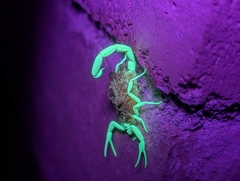 Arizona Bark ScorpionCentruroides sculpturatusVenomous
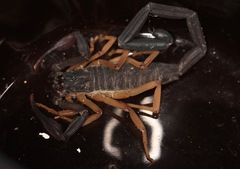 Slender Brown ScorpionCentruroides gracilisVenomous
 Edward's Bark ScorpionCentruroides edwardsiiVenomous
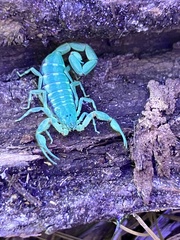 Hentz Striped ScorpionCentruroides hentziCan sting
 Common Yellow ScorpionButhus occitanusVenomous
Sources
- Wikipedia: https://en.wikipedia.org/wiki/Hottentotta_jayakari
Look it up elsewhere: GBIF · iNaturalist · BugGuide · Wikipedia
Text written 2026-10-23 from the sources above and checked sentence by sentence against them. Data fetched 2026-10-23.