 Bug FAQ
Blue Copper
Lycaena heteronea · Order: Lepidoptera · Family: Lycaenidae
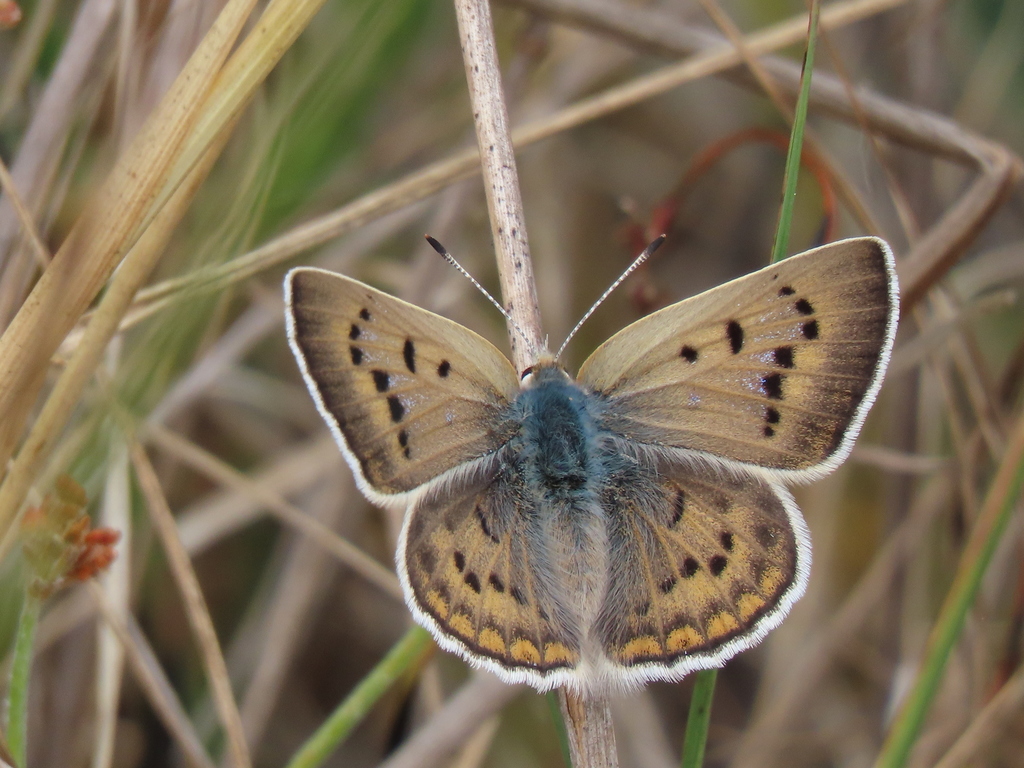
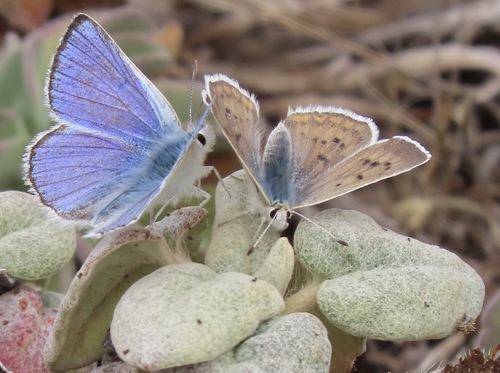
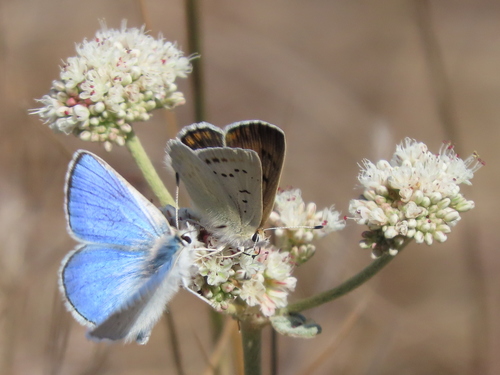
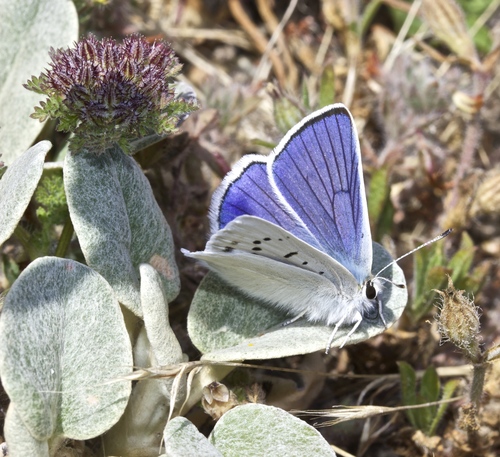
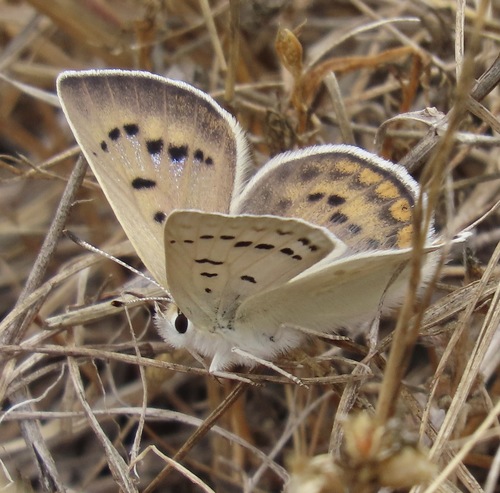
The blue copper butterfly has a wingspan of about 29 to 35 mm and shows sky-blue upper wings with dark veins in males, while females are more copper-colored with black dots; both sexes have white-outlined wings and a pale underside marked with brown-black spots. It lives in brushy mountain meadows, open forests and sagebrush areas where buckwheat (Eriogonum) grows, ranging from southern British Columbia and Alberta down through Washington, California, Colorado and New Mexico. Adults feed on a variety of flowers, while the caterpillars eat only a few species of buckwheat and pass through four instars before pupating.
Source: Wikipedia
How to recognize it
Males have sky-blue upper wings with dark veins; females have copper-toned upper wings with black dots; both sexes have white-outlined wings and a pale underside with brown-black forewing spots.
Source: Wikipedia
Size
The wingspan ranges from 29 to 35 mm.
Source: Wikipedia
Where it lives
Prefers sites where buckwheat (Eriogonum) species occur.
Source: Wikipedia
What it eats
Adults sip nectar from many plants such as buckwheat, rabbitbrush, asters, gaillardia, fiddleneck, wallflower and milkweed. Caterpillars feed mainly on three species of buckwheat (Eriogonum).
Source: Wikipedia
Life cycle
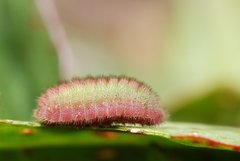
The larvae look like sowbugs and pass through four instars before forming a pupa.
Source: Wikipedia
When you see it
Adults are on the wing from April to August, with regional variations; in British Columbia they fly April-July and in Alberta July-August.
Source: Wikipedia
Where it comes from
It is a North-American species, native to the United States and Canada. In Canada it occurs in southern British Columbia and Alberta; in the U.S. it is recorded from Washington, California, Colorado and New Mexico.
Source: Wikipedia
Where it is found in the US
Recorded in 12 of 51 states and DC. Most records: Colorado, Idaho, California, Utah, Wyoming, Montana, Washington, Oregon.
Darker = more records. Counts are museum and citizen-science records, not population size.
Source: GBIF
Status: native in North America; native in United States; native in Canada. Source: iNaturalist
Months it is reported in the US
Source: GBIF
More photos
Same family (Lycaenidae)





Sources
- Wikipedia: https://en.wikipedia.org/wiki/Lycaena_heteronea
Look it up elsewhere: GBIF · iNaturalist · BugGuide · ITIS · Wikipedia
Text written 2026-10-24 from the sources above and checked sentence by sentence against them. Data fetched 2026-10-24.