 Bug FAQ
Blue Corporal
Ladona deplanata · Order: Odonata · Family: Libellulidae
Also called: Blue Corporal Dragonfly
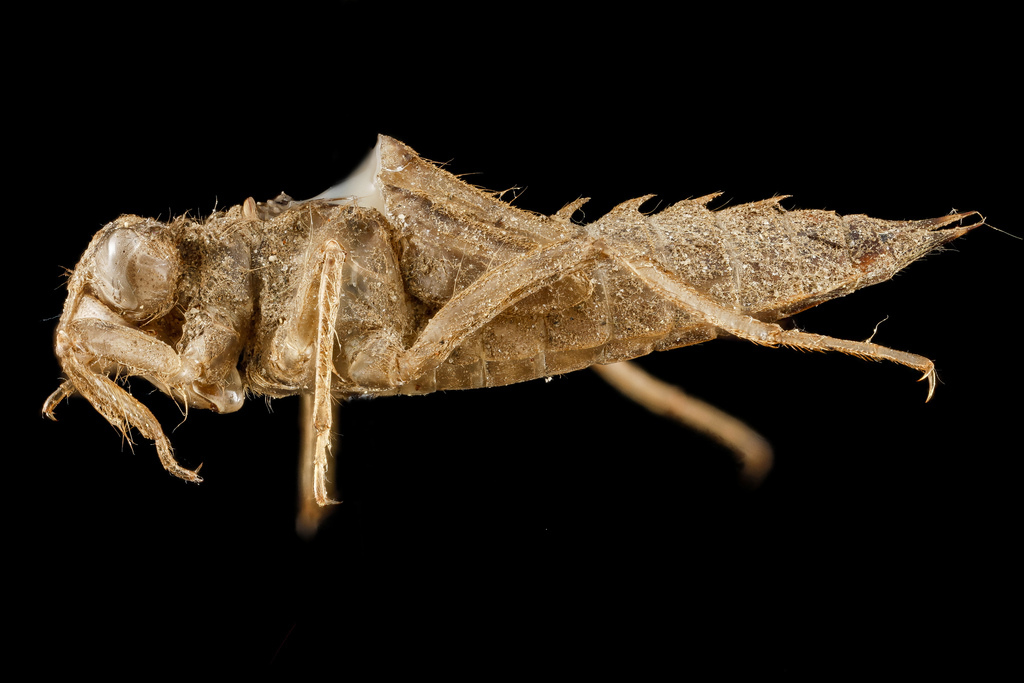
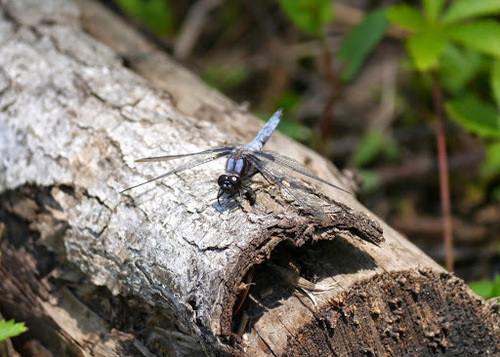
The blue corporal is a small, thick-set dragonfly about 3 to 4 cm long that lives around still, sandy ponds and lakes. Adults fly from early spring to early summer in most of its range, but in Florida they can be seen as early as November.
Source: Wikipedia
How to recognize it
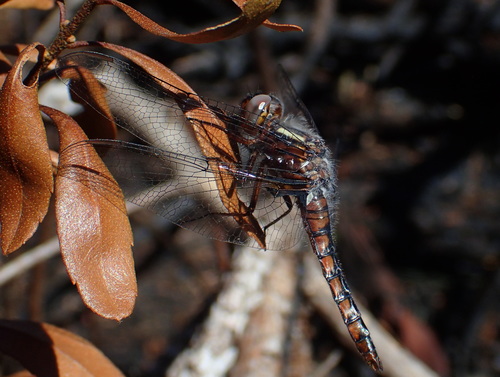
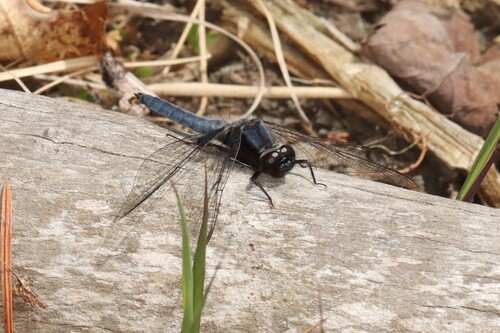
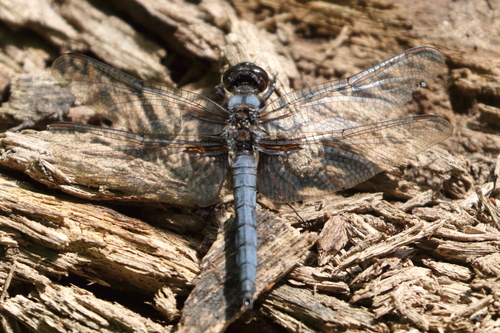
Males show a dark brown thorax with two broad bluish pruinose stripes and a blue-tinged abdomen; females are brown with narrow pale and dark side stripes on the thorax and a dark dorsal stripe that widens toward the rear.
Source: Wikipedia
Where it lives
It prefers still, nutrient-poor waters with sandy bottoms such as ponds, lakes, and pits, and is less common in streams.
Source: Wikipedia
What it eats
Larvae mainly eat midge and mayfly larvae, with occasional ostracods and cladocerans. Adult dragonflies catch flying insects, especially small flies, beetles and leafhoppers.
Source: Wikipedia
When you see it
Flight time varies by latitude: November-May in Florida, February-May in Louisiana, late March-early May in South Carolina, April-May in Kansas, April-June in Ohio and Kentucky, and April-July in New Jersey.
Source: Wikipedia
Where it comes from
It is common across the eastern United States, from Oklahoma east to New Hampshire and south to Texas and Florida.
Source: Wikipedia
Lookalikes
The chalk-fronted corporal is larger, has a basal spot on the hindwing, and the male has a white face, unlike the blue corporal’s black face and wing streaks. The male little blue dragonlet is smaller, has clear wings and white cerci.
Source: Wikipedia
Where it is found in the US
Recorded in 32 of 51 states and DC. Most records: New Jersey, Texas, Maryland, Virginia, North Carolina, Florida, Georgia, Ohio.
Darker = more records. Counts are museum and citizen-science records, not population size.
Source: GBIF
Status: native in North America; native in United States. Source: iNaturalist
Months it is reported in the US
Source: GBIF
More photos
Questions people ask
Are they a garden pest?
They do not feed on plants; their larvae eat other aquatic insects and the adults hunt flying insects.
Source: Wikipedia
Same family (Libellulidae)

Sources
- Wikipedia: https://en.wikipedia.org/wiki/Blue_corporal
Look it up elsewhere: GBIF · iNaturalist · BugGuide · ITIS · Wikipedia
Text written 2026-10-22 from the sources above and checked sentence by sentence against them. Data fetched 2026-10-22.