 Bug FAQ
Blue Emperor
Anax imperator · Order: Odonata · Family: Aeshnidae
Also called: Emperor Dragonfly
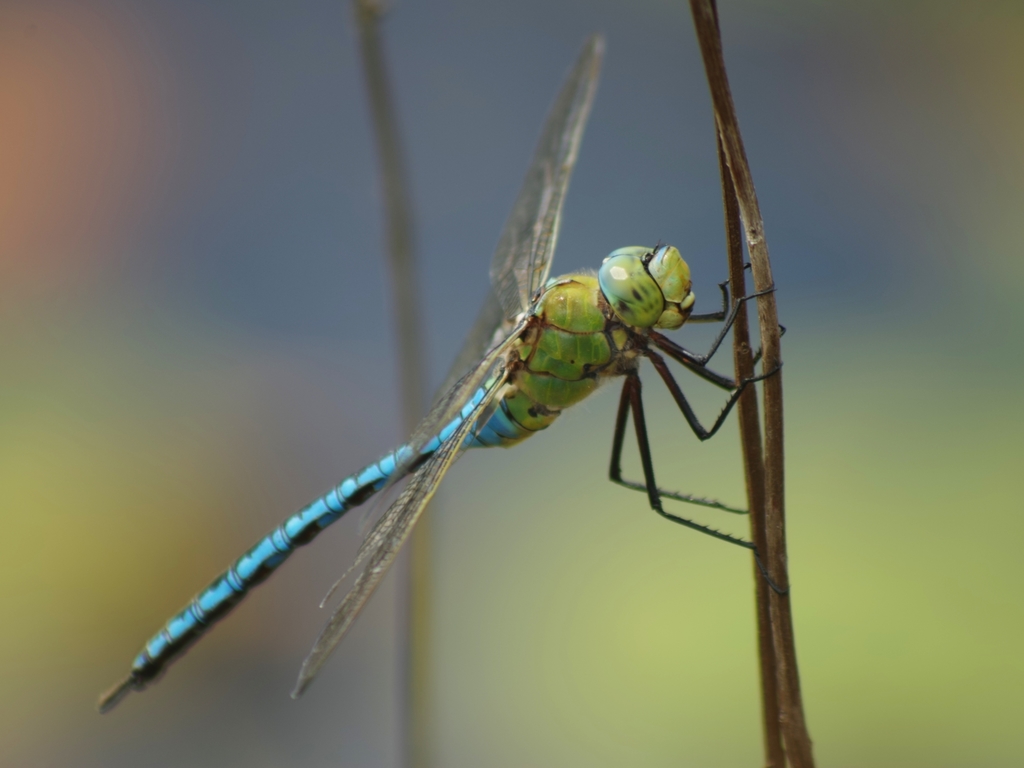
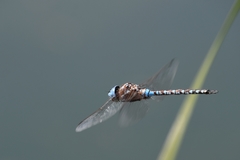
The blue emperor dragonfly is a large species, up to about 8 cm long with a wingspan around 10 cm. Males show a bright sky-blue abdomen with a black stripe, while females are a duller green. It lives across Africa, Europe, the Arabian Peninsula and parts of Asia, and its range has been moving north and upward since the 1990s.
Source: Wikipedia
How to recognize it
Females have similar markings but in a duller green colour.
Source: Wikipedia
Size
Adults measure 73 to 82 mm in length, averaging about 78 mm, with males larger than females. The average wingspan is roughly 104 mm.
Source: Wikipedia
Where it lives
Females lay their eggs singly on aquatic plants such as pondweed.
Source: Wikipedia
What it eats
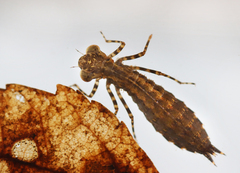
Adults hunt high in the sky, catching butterflies, other dragonflies and tadpoles. Aquatic larvae are aggressive predators that can alter the native species composition of freshwater habitats.
Source: Wikipedia
Life cycle
Adult males are highly territorial and difficult to approach.
Source: Wikipedia
Where it comes from
The species occurs throughout Africa, most of Europe, the Arabian Peninsula, and southwestern and central Asia. Since the 1990s its distribution in Europe has expanded northward and to higher altitudes.
Source: Wikipedia
Lookalikes
It is one of the largest European dragonflies, exceeded only by the magnificent emperor in the eastern Mediterranean and by female golden-ringed dragonflies in length. Thus, in most of Europe the blue emperor is the largest dragonfly species present.
Source: Wikipedia
More photos

Same family (Aeshnidae)
Sources
- Wikipedia: https://en.wikipedia.org/wiki/Emperor_dragonfly
Look it up elsewhere: GBIF · iNaturalist · BugGuide · Wikipedia
Text written 2026-10-22 from the sources above and checked sentence by sentence against them. Data fetched 2026-10-22.