 Bug FAQ
Migrant Hawker
Aeshna mixta · Order: Odonata · Family: Aeshnidae
Also called: Scarce Hawker, Migrant Hawker Dragonfly, Scarce Aeshna
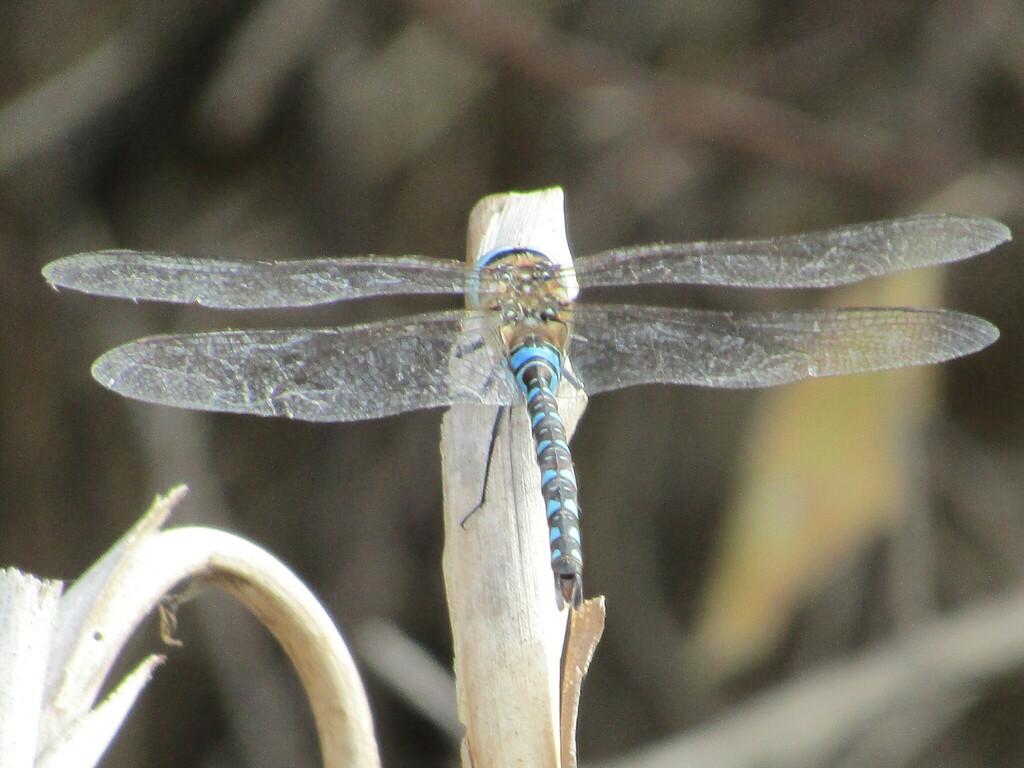
The migrant hawker is a small dragonfly with a distinctive golf-tee mark on its second abdominal segment. It breeds in still or slow-flowing water, tolerates brackish sites, and can be seen far from water resting low on vegetation. Adults fly from July through November, though they may be seen in any month.
Source: Wikipedia
How to recognize it
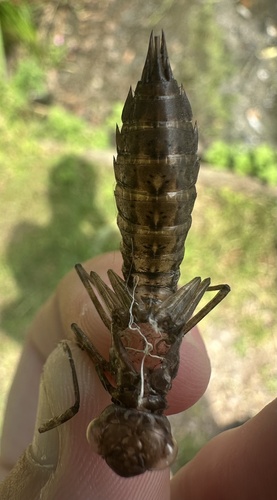
Look for a golf-tee shaped mark on the second abdominal segment to tell it apart from other Aeshna species. Its thorax has two broad yellow stripes separated by dark brown, unlike the finer green-yellow pattern of A. affinis.
Source: Wikipedia
Size
It is one of the smaller hawker dragonflies.
Source: Wikipedia
Where it lives
Breeds in lakes, ponds and other still or slow-flowing waters, and can tolerate brackish conditions. Adults often hunt high among trees and bushes but rest low on vegetation away from water.
Source: Wikipedia
What it eats
After emerging, adults leave the water and spend time feeding while maturing sexually.
Source: Wikipedia
Life cycle
It has one generation per year, with eggs entering diapause to overwinter.
Source: Wikipedia
When you see it
Flight period runs from July to mid-November, though occasional sightings occur in other months.
Source: Wikipedia
Where it comes from
Found across North Africa, southern and central Europe up to southern Scandinavia and the Baltic region. Its range also includes the Middle East and extends across Asia to China and Japan.
Source: Wikipedia
Lookalikes
The main field identification challenge is separating it from A. affinis, which often flies together.
Source: Wikipedia
More photos
Questions people ask
How can I tell a migrant hawker apart from similar dragonflies?
Check the second abdominal segment for a golf-tee shaped mark and note the two broad yellow thorax stripes separated by dark brown.
Source: Wikipedia
When are migrant hawkers active?
Adults are on the wing from July through November, with occasional sightings in other months.
Source: Wikipedia
Where does the migrant hawker breed?
It breeds in still or slow-flowing waters such as lakes and ponds and can tolerate brackish conditions.
Source: Wikipedia
Same family (Aeshnidae)
Sources
- Wikipedia: https://en.wikipedia.org/wiki/Migrant_hawker
Look it up elsewhere: GBIF · iNaturalist · BugGuide · ITIS · Wikipedia
Text written 2026-10-22 from the sources above and checked sentence by sentence against them. Data fetched 2026-10-22.