 Bug FAQ
Blue-tailed Forest Hawk
Orthetrum triangulare · Order: Odonata · Family: Libellulidae
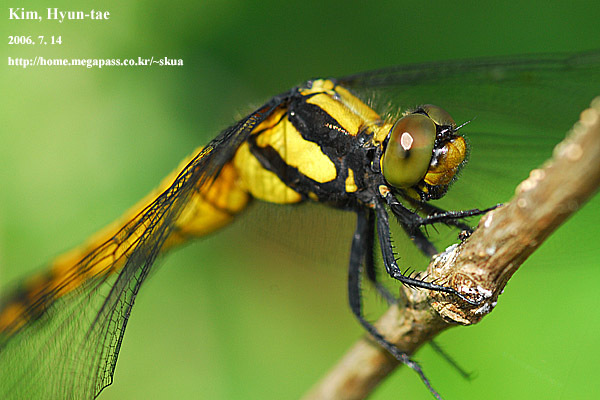
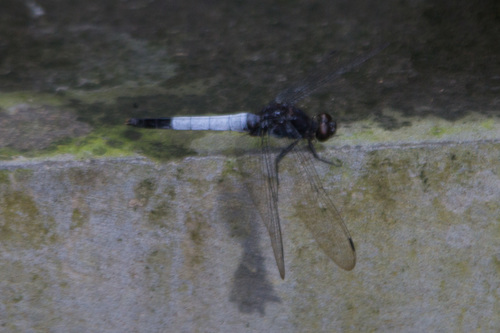
The Blue-tailed Forest Hawk is a medium-sized dragonfly with a dark face, bluish eyes, a black thorax marked by a wide apple-green stripe on each side, and an abdomen that is partly black and partly covered with a powdery azure-blue sheen. It lives around marshy hill streams where it breeds and is native to Asian freshwater habitats.
Source: Wikipedia
Size
It is a medium-sized dragonfly with a dark face and bluish eyes.
Source: Wikipedia
Where it comes from
It is an Asian freshwater dragonfly species.
Source: Wikipedia
More photos
Questions people ask
What does the Blue-tailed Forest Hawk look like?
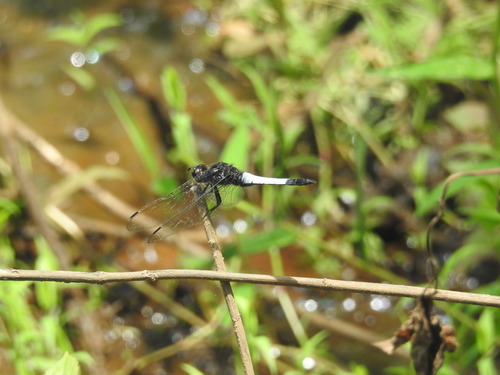
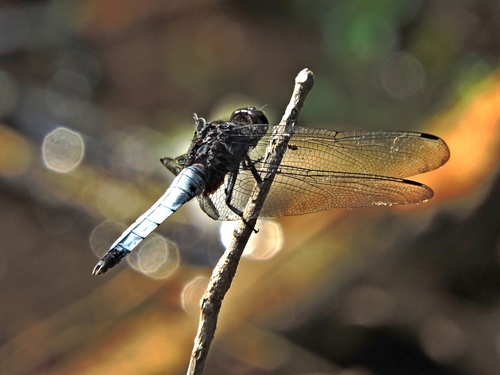
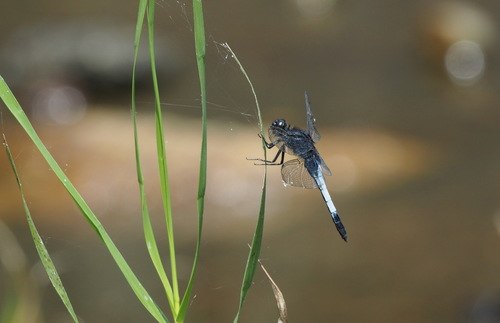
It is a medium-sized dragonfly with a dark face, bluish eyes, a black thorax bearing a wide apple-green stripe on each side, and an abdomen that is partly black and partly powdery azure-blue.
Source: Wikipedia
Where is this dragonfly found?
It lives in marshes near hill streams where it breeds and is native to Asian freshwater areas.
Source: Wikipedia
Same family (Libellulidae)

Sources
- Wikipedia: https://en.wikipedia.org/wiki/Orthetrum_triangulare
Look it up elsewhere: GBIF · iNaturalist · BugGuide · Wikipedia
Text written 2026-10-24 from the sources above and checked sentence by sentence against them. Data fetched 2026-10-22.