 Bug FAQ
Buffalo carpet beetle
Anthrenus scrophulariae · Order: Coleoptera · Family: Dermestidae
Also called: Common Carpet Beetle, carpet beetle, Marbled Carpet Beetle
Source: Wikipedia
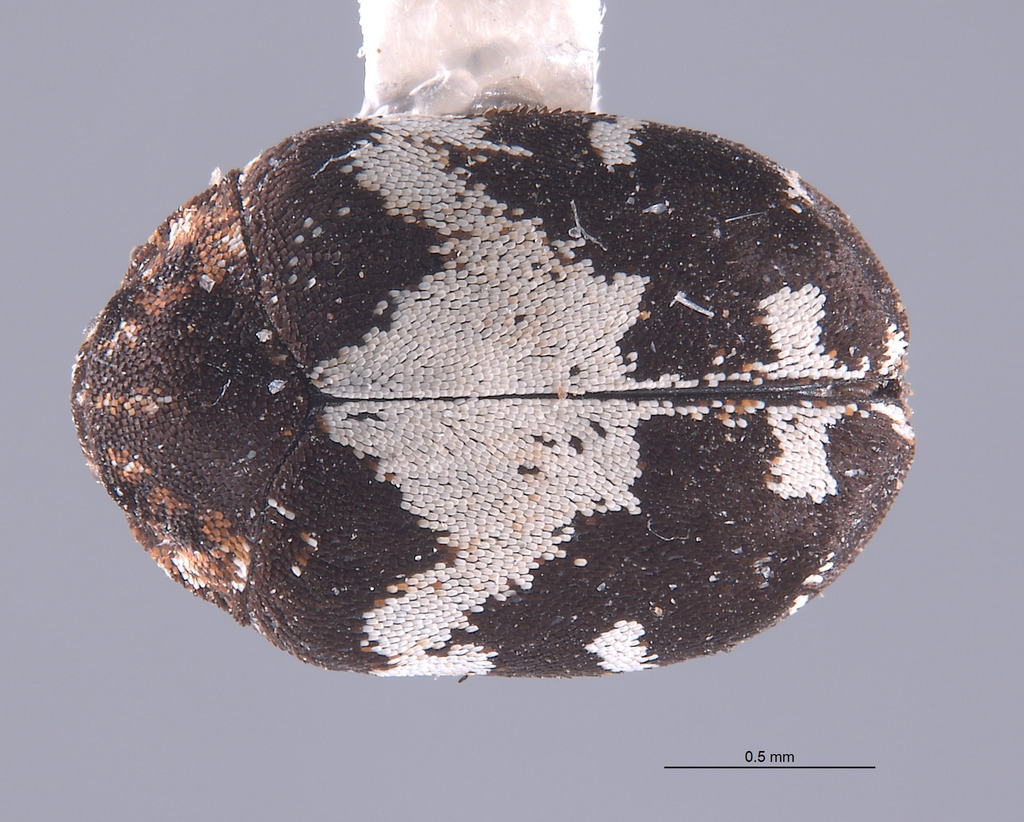
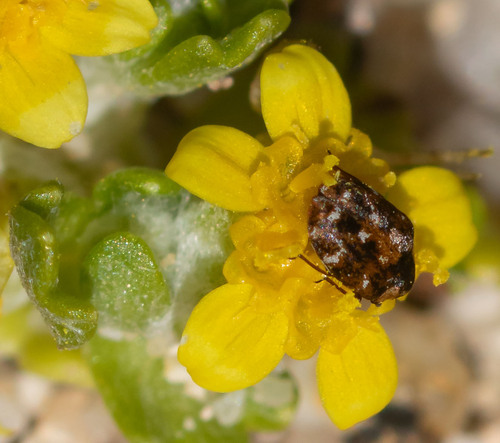
The common carpet beetle is a small beetle about 2.5-3.8 mm long with a black head hidden under a speckled prothorax and black elytra marked with orange-red and white scales. Adults feed on pollen and nectar from white flowers, while the larvae eat animal fibres and can create holes in carpets, fabrics and preserved specimens. They originated in the Palaearctic region but are now found worldwide, often entering homes via bird nests, animal skins or contaminated fabrics.
Source: Wikipedia
How to recognize it
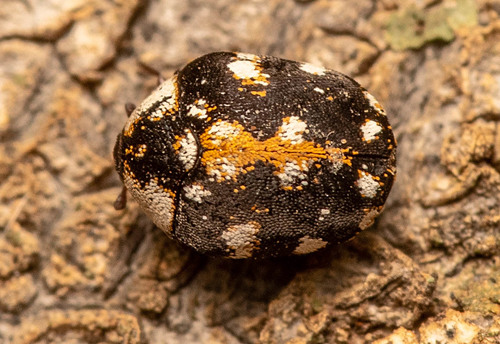
The head and prothorax are black and mostly hidden, with the prothorax covered in white scales except for a central band. The wing covers are black with orange-red scales near the middle and symmetric patches of white scales elsewhere.
Source: Wikipedia
Size
Adults measure between 2.5 and 3.8 mm in length.
Source: Wikipedia
Is it a pest in the house?
When eggs are laid on carpets or fabrics, the hatching larvae eat the animal fibres and make holes. In museums, larvae can eat dried insects and herbarium specimens, leaving fine dust.
Source: Wikipedia
How to get rid of it
Regular cleaning and vacuuming can help prevent infestations. Chemical treatments may miss hidden insects; severe cases might need fumigation.
Source: Wikipedia
Where it lives
Originally from the Palaearctic, the beetle is now present in most parts of the world. Females lay eggs where animal hairs or fibres are present, such as bird nests, bee hives, dead skins, carpets and upholstery.
Source: Wikipedia
What it eats
Adults feed on pollen and nectar, preferring white or whitish flowers like buckwheat and daisies. Larvae feed on animal fibres, causing damage to textiles and museum specimens.
Source: Wikipedia
Life cycle
Females lay batches of 30-60 small white eggs that stick to carpet fibres.
Source: Wikipedia
When you see it
Adults are active when white or whitish flowers are in bloom, feeding on their pollen and nectar.
Source: Wikipedia
Where it comes from
The species is native to Europe, the Middle East and the Nearctic region.
Source: Wikipedia
Lookalikes
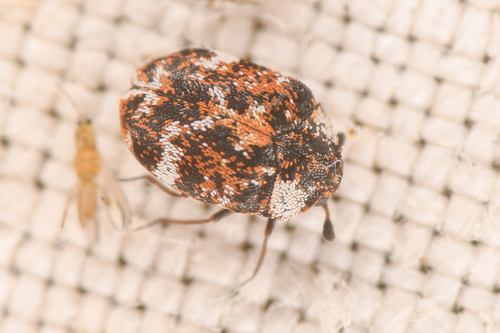
There are regional forms, from the typical black-with-orange pattern to an all-white variant called Anthrenus scrophulariae albidus.
Source: Wikipedia
Where it is found in the US
Recorded in 37 of 51 states and DC. Most records: Michigan, Massachusetts, Colorado, California, New York, Illinois, Minnesota, Pennsylvania.
Darker = more records. Counts are museum and citizen-science records, not population size.
Source: GBIF
Months it is reported in the US
Source: GBIF
More photos
Questions people ask
How can I stop them from damaging my carpets?
Keep carpets and fabrics clean, vacuum regularly, and consider chemical or fumigation treatments for heavy infestations.
Source: Wikipedia
Where do the larvae come from?
Females lay eggs on animal hairs or fibres in places like nests, skins, carpets or upholstery; the larvae hatch and feed on those fibres.
Source: Wikipedia
Same family (Dermestidae)
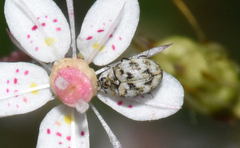 Varied Carpet BeetleAnthrenus verbasciCan damage your home
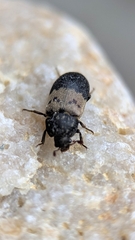 Larder BeetleDermestes lardariusCan damage your home
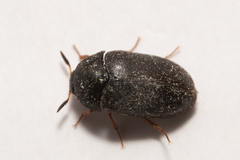 Black Carpet BeetleAttagenus unicolorCan damage your home
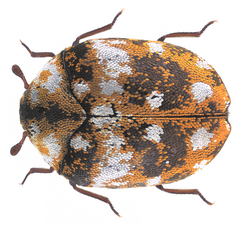 Furniture Carpet BeetleAnthrenus flavipesCan damage your home
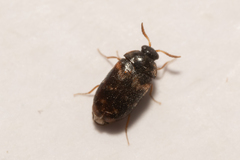 Warehouse BeetleTrogoderma variabileCan damage your home
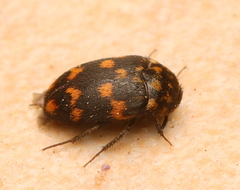 Gold Spot-row-band-dot Carpet BeetleAttagenus pustulatus
Sources
- Wikipedia: https://en.wikipedia.org/wiki/Anthrenus_scrophulariae
Look it up elsewhere: GBIF · iNaturalist · BugGuide · ITIS · Wikipedia
Text written 2026-10-22 from the sources above and checked sentence by sentence against them. Data fetched 2026-10-22.