 Bug FAQ
Furniture Carpet Beetle
Anthrenus flavipes · Order: Coleoptera · Family: Dermestidae
Source: Wikipedia
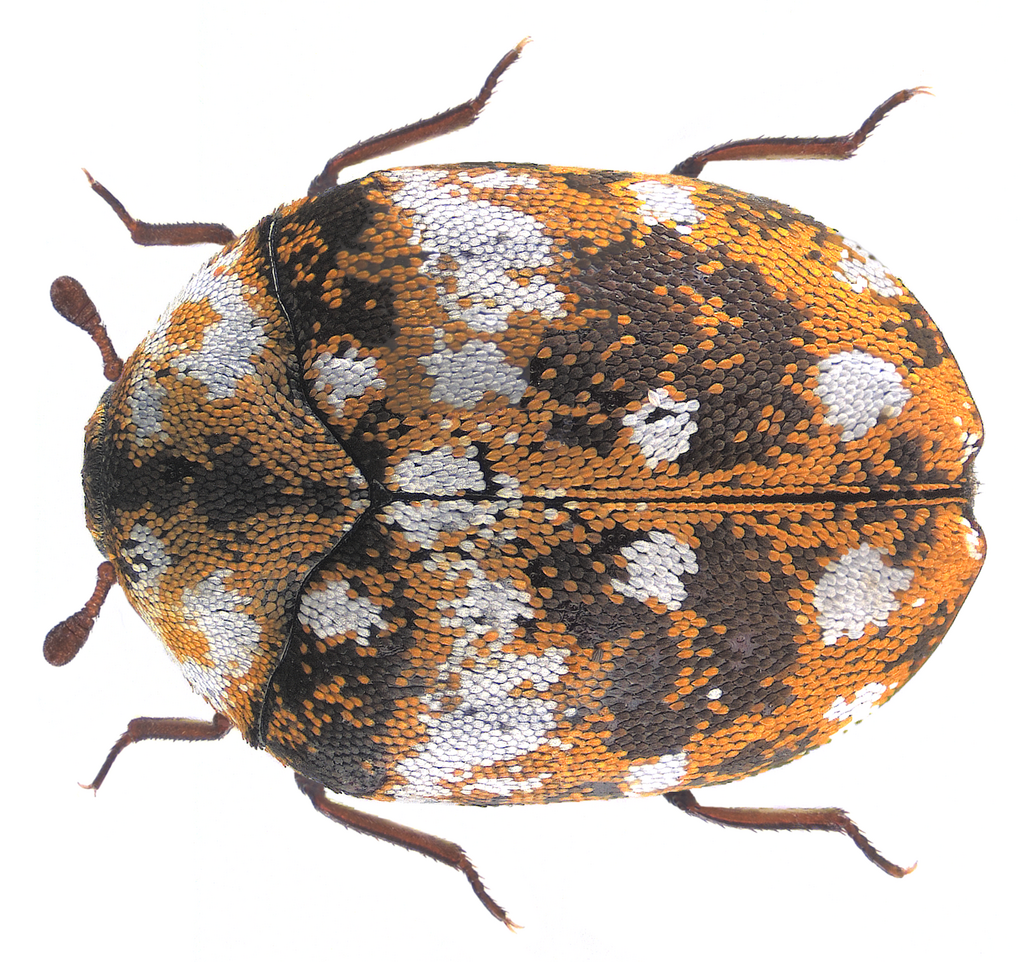
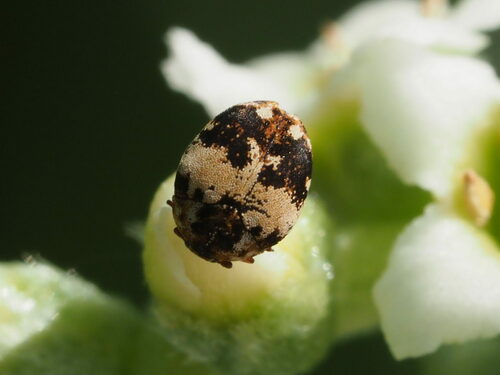
The Anthrenus flavipes beetle is a tiny, round insect about 2 to 3.5 mm long, black with variable white and yellow spots and yellow-scaled legs. Adults feed on pollen, while the larvae eat animal-derived materials and can ruin carpets, upholstery, and fabrics such as cotton, linen, rayon and jute.
Source: Wikipedia
How to recognize it
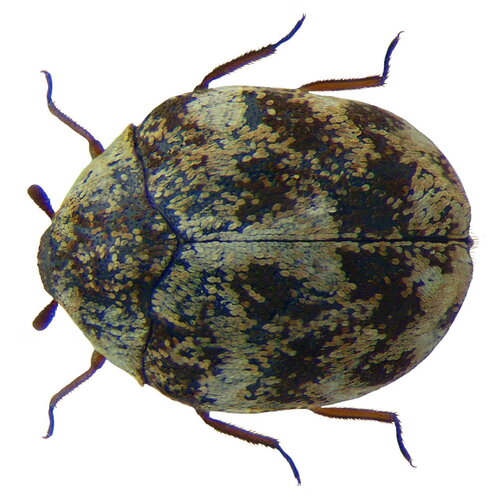
It is black with mottled white and yellow markings and its legs are covered in yellow scales.
Source: Wikipedia
Size
The beetle measures between 2 and 3.5 mm in length and has a round shape.
Source: Wikipedia
Is it a pest in the house?
It damages textiles, carpets, upholstered furniture and fabrics such as cotton, linen, rayon and jute.
Source: Wikipedia
How to get rid of it
Infestations are spotted by finding larvae, their shed skins, and obvious damage. Treatments may include dusts like diatomaceous earth, silica aerogel, sprays or emulsions applied around carpets and rugs.
Source: Wikipedia
Where it lives
It can live inside heated buildings even in cooler climates.
Source: Wikipedia
What it eats
Adult beetles feed on pollen and nectar, especially from parsley-family plants. Larvae digest keratin and other animal tissues, which is why they damage household items.
Source: Wikipedia
Life cycle
Females lay up to 100 white eggs during a 30- to 60-day adult life. Larvae go through six to thirty molts over 2 to 3 months, then pupate for 2 to 3 weeks.
Source: Wikipedia
When you see it
The tiny adults are most common in the warmer months.
Source: Wikipedia
Where it comes from
It is found worldwide, having a cosmopolitan distribution.
Source: Wikipedia
Lookalikes
It resembles other carpet beetles, but its body scales are rounded or oval, unlike the longer, narrower scales of its relatives.
Source: Wikipedia
Where it is found in the US
Recorded in 10 of 51 states and DC. Most records: Kentucky, Illinois, New York, District of Columbia, Pennsylvania, Maryland, Missouri, Arizona.
Darker = more records. Counts are museum and citizen-science records, not population size.
Source: GBIF
Months it is reported in the US
Source: GBIF
More photos
Questions people ask
What should I do if I find an infestation?
Look for larvae, their molted skins, and damage, then treat the area with dusts such as diatomaceous earth or silica aerogel, or use a suitable spray or emulsion around carpets and rugs.
Source: Wikipedia
Same family (Dermestidae)
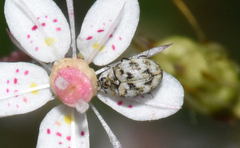 Varied Carpet BeetleAnthrenus verbasciCan damage your home
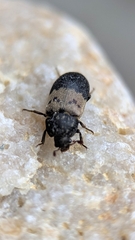 Larder BeetleDermestes lardariusCan damage your home
 Buffalo carpet beetleAnthrenus scrophulariaeCan damage your home
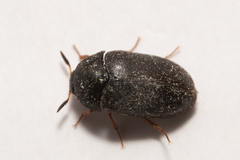 Black Carpet BeetleAttagenus unicolorCan damage your home
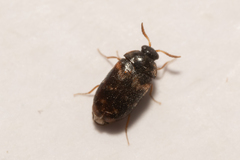 Warehouse BeetleTrogoderma variabileCan damage your home
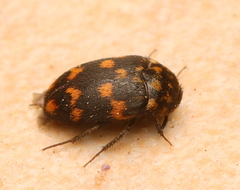 Gold Spot-row-band-dot Carpet BeetleAttagenus pustulatus
Sources
- Wikipedia: https://en.wikipedia.org/wiki/Anthrenus_flavipes
Look it up elsewhere: GBIF · iNaturalist · BugGuide · ITIS · Wikipedia
Text written 2026-10-22 from the sources above and checked sentence by sentence against them. Data fetched 2026-10-22.