 Bug FAQ
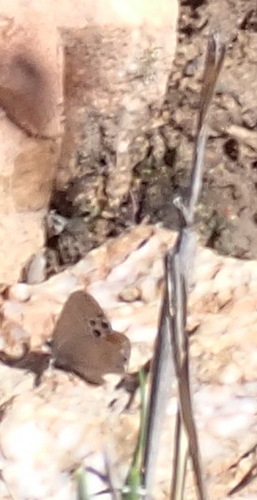
Cape Black-eye
Leptomyrina lara · Order: Lepidoptera · Family: Lycaenidae
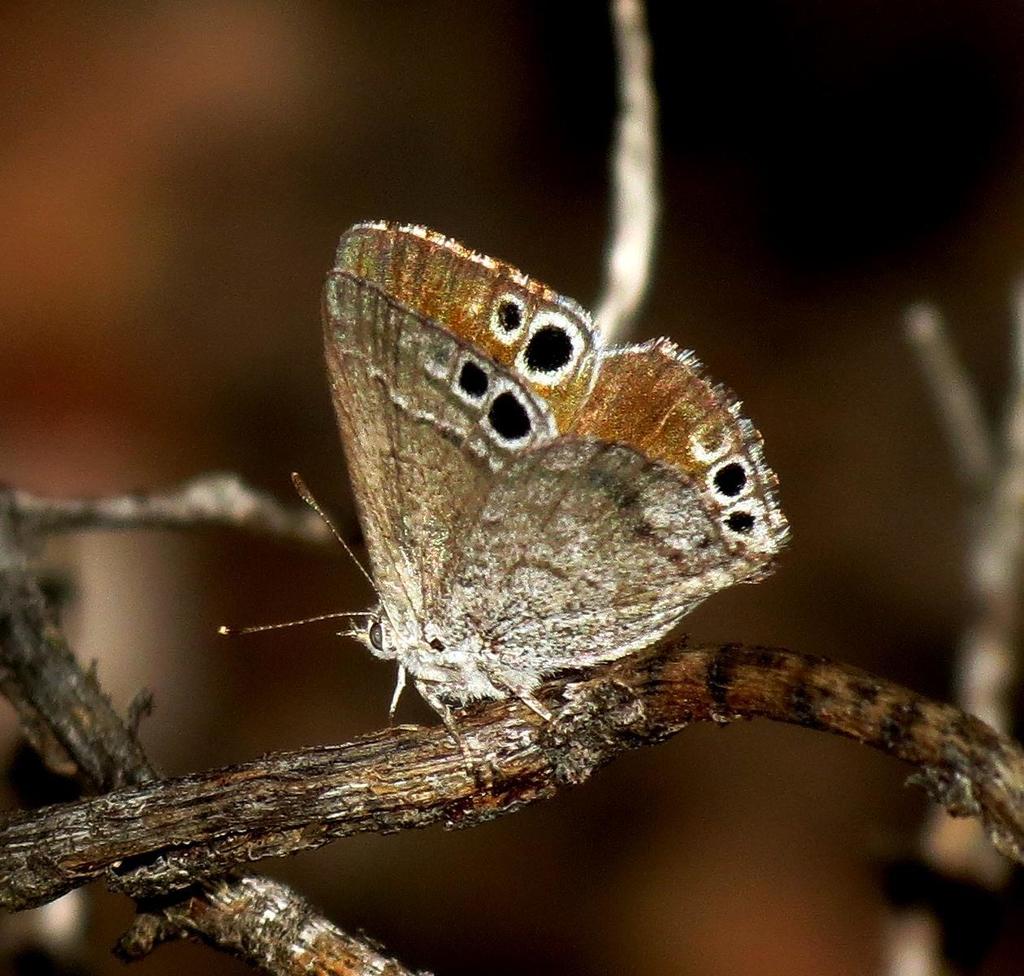
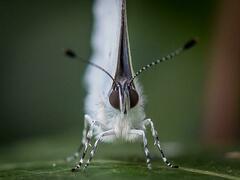
The Cape black-eye (Leptomyrina lara) is a small Lycaenid butterfly found in South Africa. Adults are on the wing from August to April with several generations each year, and the larvae feed on succulent plants such as Kalanchoe, Crassula and Cotyledon.
Source: Wikipedia
How to recognize it
Leptomyrina lara, known as the Cape black-eye, belongs to the butterfly family Lycaenidae.
Source: Wikipedia
Size
Males have a wingspan of about 20 to 29 mm, while females are slightly larger at 23 to 31 mm.
Source: Wikipedia
Where it lives
It inhabits South African fynbos, Nama Karoo and Succulent Karoo, from the Western Cape through the Eastern Cape, parts of the Free State, the mountains of Lesotho and the Northern Cape.
Source: Wikipedia
What it eats
Caterpillars feed on Kalanchoe lugardii, various Crassula species and Cotyledon plants, including C. orbiculata.
Source: Wikipedia
When you see it
Adults can be seen flying between August and April, with multiple generations in the warmer seasons.
Source: Wikipedia
Where it comes from
Its range is limited to South Africa and nearby regions such as Lesotho and the Northern Cape.
Source: Wikipedia
More photos
Questions people ask
When are Cape black-eye butterflies active?
They are on the wing from August through April, with several generations in summer and spring.
Source: Wikipedia
Same family (Lycaenidae)

Sources
- Wikipedia: https://en.wikipedia.org/wiki/Leptomyrina_lara
Look it up elsewhere: GBIF · iNaturalist · BugGuide · Wikipedia
Text written 2026-10-24 from the sources above and checked sentence by sentence against them. Data fetched 2026-10-23.