 Bug FAQ
Carolina Grasshopper
Dissosteira carolina · Order: Orthoptera · Family: Acrididae
Also called: Black-winged Grasshopper, Carolina Locust
Source: Wikipedia
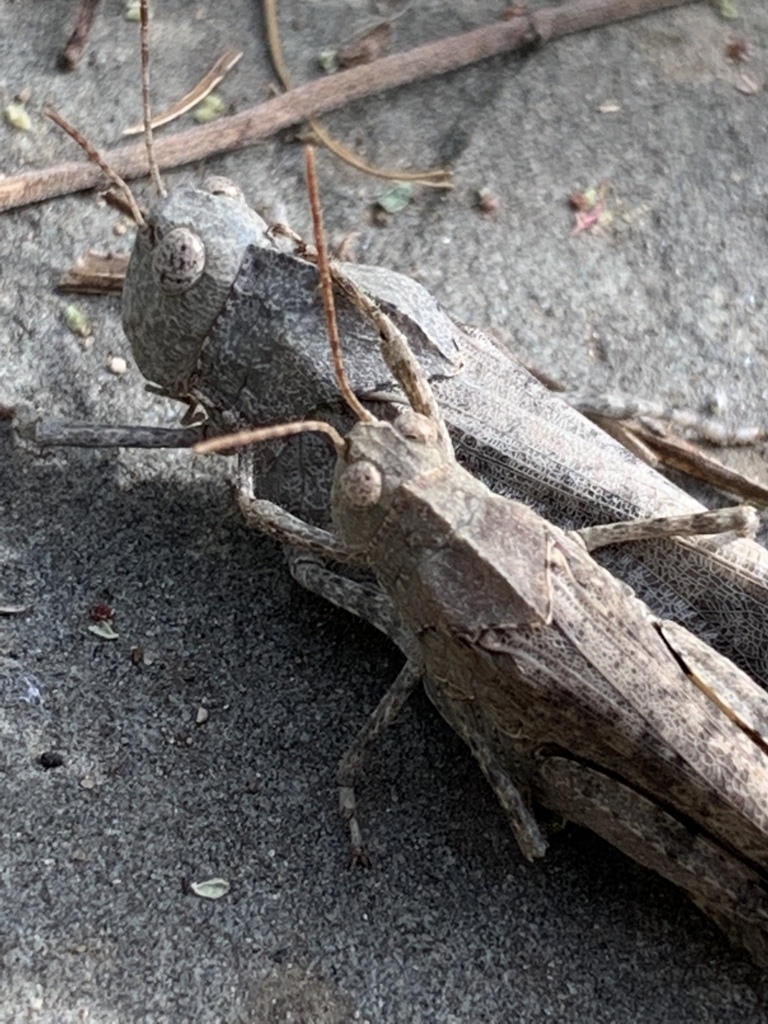
They are large insects, 32 to 58 mm long, with males’ wings spanning about 75 mm and females 80 to 102 mm. Their colour ranges from grey to brown, with light-brown to tan forewings that blend with soil and dark hind wings edged in yellow. They live on dry, sunny open areas such as dirt roads, where they feed mainly on grasses like Bromus inermis.
Source: Wikipedia
How to recognize it
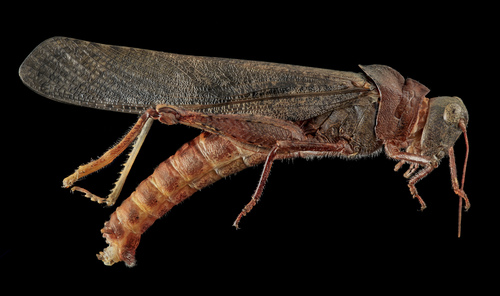
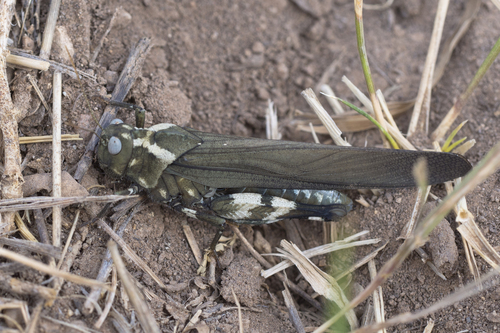
The outer wings are grey-brown to tan for camouflage, while the inner flight wings are dark with yellow margins and a ridge on the back.
Source: Wikipedia
Size
Adults measure 32 to 58 mm in body length. Male wing span is about 75 mm; females range from 80 to 102 mm.
Source: Wikipedia
Is it a pest in the house?
They are not a major pest, though occasional outbreaks have caused damage. They are considered a minor pest of grasses on rangeland.
Source: Wikipedia
Where it lives
They are commonly seen on or near dirt roads and paths where they match the gravel and soil. They prefer dry, sunny, open spots for basking, courting and laying eggs.
Source: Wikipedia
What it eats
They eat both grasses and forbs, with the exact mix depending on the habitat. In a reseeded disturbed site, 98 % of their gut contents were the grass Bromus inermis.
Source: Wikipedia
Life cycle
Nymphs develop in about 40 days at 4,700 ft and 55 days at 6,100 ft in Wyoming. Females take roughly nine weeks after adult emergence before they start laying eggs.
Source: Wikipedia
Where it is found in the US
Recorded in 49 of 51 states and DC. Most records: Massachusetts, New York, Colorado, Michigan, Illinois, Washington, Oregon, Maryland.
Darker = more records. Counts are museum and citizen-science records, not population size.
Source: GBIF
Status: native in North America; native in Canada; native in United States. Source: iNaturalist
Months it is reported in the US
Source: GBIF
More photos

Questions people ask
Can they damage my garden?
They can feed on grasses and may cause minor damage to grassy areas in rangeland.
Source: Wikipedia
When are they most likely to be seen?
In the southern part of their range they appear in May, while in northern areas they show up around July.
Source: Wikipedia
How can I tell them apart from butterflies?
Their large size, brownish forewings that match soil, and dark hind wings with yellow edges distinguish them from butterflies like the mourning cloak.
Source: Wikipedia
Same family (Acrididae)
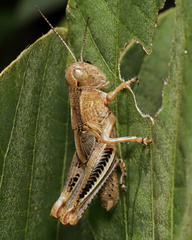 Differential GrasshopperMelanoplus differentialisDamages trees, gardens or crops
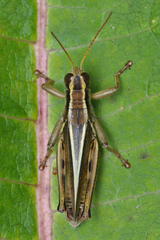 Two-striped GrasshopperMelanoplus bivittatusDamages trees, gardens or crops
 Common Field GrasshopperChorthippus brunneus
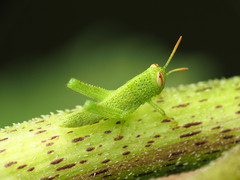 Egyptian Bird GrasshopperAnacridium aegyptium
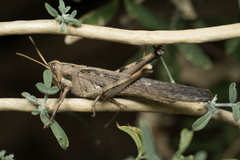 Gray Bird GrasshopperSchistocerca nitensDamages trees, gardens or crops
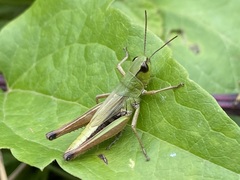 Meadow GrasshopperPseudochorthippus parallelus
Sources
- Wikipedia: https://en.wikipedia.org/wiki/Dissosteira_carolina
Look it up elsewhere: GBIF · iNaturalist · BugGuide · ITIS · Wikipedia
Text written 2026-10-22 from the sources above and checked sentence by sentence against them. Data fetched 2026-10-22.