 Bug FAQ
Differential Grasshopper
Melanoplus differentialis · Order: Orthoptera · Family: Acrididae
Source: Wikipedia
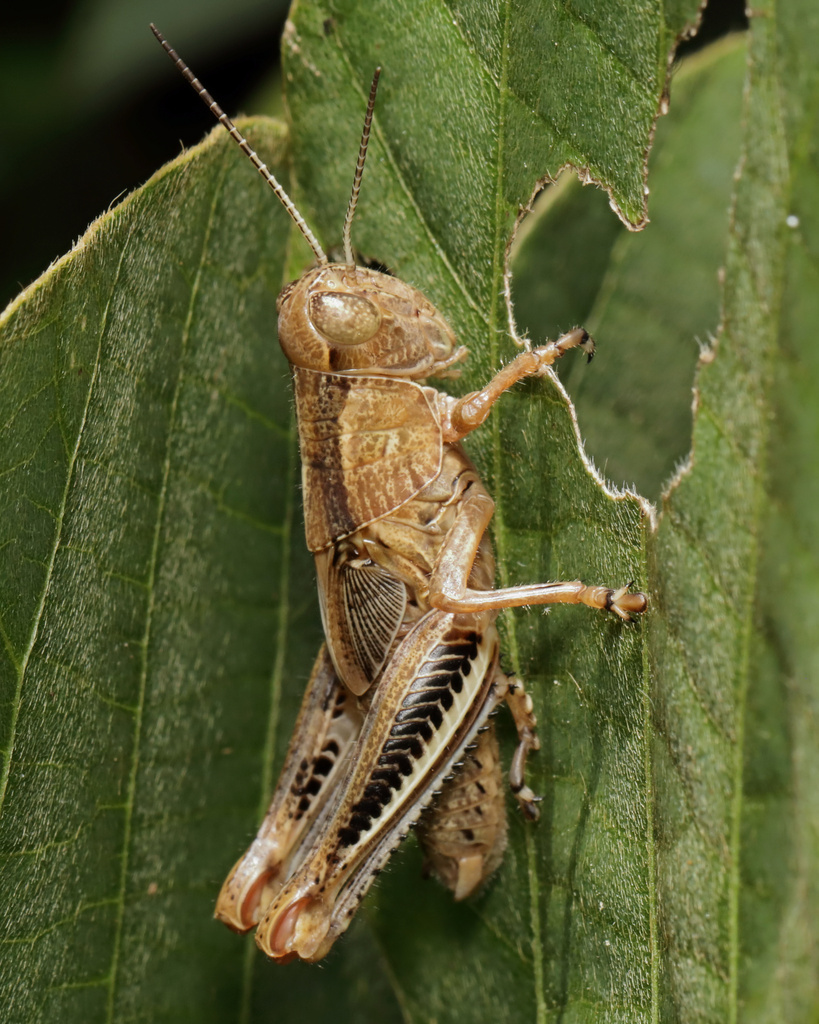
Adult males are 28 to 37 mm long and females 34 to 50 mm; they are brownish or greenish, darkening with age, and have yellow tarsi and antennae. They eat many plants, especially giant ragweed, common sunflower and prickly lettuce, and can chew garden vegetables like tomatoes and squash.
Source: Wikipedia
How to recognize it
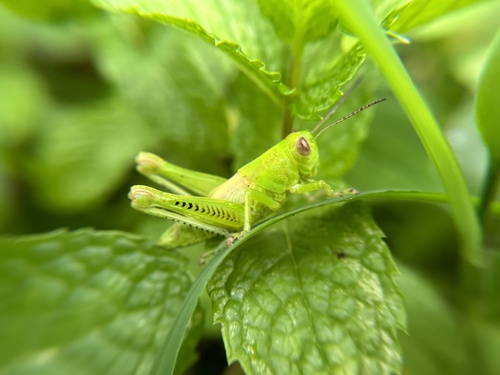
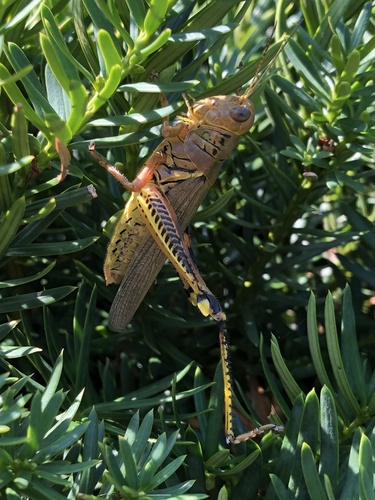
They are brownish or greenish, darkening with age; some young ones are bright yellow, with black grooves on the pronotum and yellow tarsi and antennae. Males have boot-like appendages at the end of the abdomen, inverted chevrons on the hind femur, and a yellowish tibia with black spikes.
Source: Wikipedia
Size
Adult males measure 28 to 37 mm and females 34 to 50 mm in length.
Source: Wikipedia
Is it a pest in the house?
In small numbers they may feed on garden vegetables like tomatoes, peas, squash and the leaves of those plants.
Source: Wikipedia
Where it lives
Found in heavily weeded areas, grasslands, vacant lots and other urban locations.
Source: Wikipedia
What it eats
It eats both grasses and forbs, growing faster on forbs. Preferred foods are giant ragweed, common sunflower and prickly lettuce.
Source: Wikipedia
Life cycle
There is one generation each year. Nymphs take about 32 days to become adults after hatching.
Source: Wikipedia
When you see it
In the north it is as common as the two-striped grasshopper; in the south it far outnumbers it.
Source: Wikipedia
Lookalikes
In the north it is as numerous as the two-striped grasshopper; in the south it greatly outnumbers it.
Source: Wikipedia
Where it is found in the US
Recorded in 46 of 51 states and DC. Most records: Texas, Illinois, Oklahoma, Ohio, Pennsylvania, Minnesota, Maryland, Virginia.
Darker = more records. Counts are museum and citizen-science records, not population size.
Source: GBIF
Status: native in North America; native in United States; native in Canada. Source: iNaturalist
Months it is reported in the US
Source: GBIF
More photos

Questions people ask
What plants do they damage?
They can chew garden vegetables such as tomatoes, peas and squash, and prefer plants like giant ragweed and sunflower.
Source: Wikipedia
Where are they most likely to be found?
They are common in weed-filled fields, grasslands, vacant lots and other urban areas across the central U.S., northern Mexico and southern Ontario.
Source: Wikipedia
Same family (Acrididae)
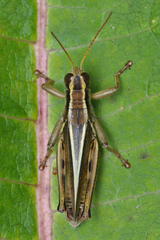 Two-striped GrasshopperMelanoplus bivittatusDamages trees, gardens or crops
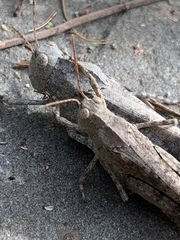 Carolina GrasshopperDissosteira carolinaDamages trees, gardens or crops
 Common Field GrasshopperChorthippus brunneus
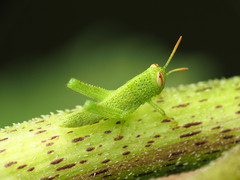 Egyptian Bird GrasshopperAnacridium aegyptium
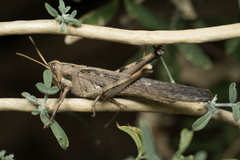 Gray Bird GrasshopperSchistocerca nitensDamages trees, gardens or crops
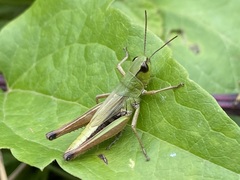 Meadow GrasshopperPseudochorthippus parallelus
Sources
- Wikipedia: https://en.wikipedia.org/wiki/Differential_grasshopper
Look it up elsewhere: GBIF · iNaturalist · BugGuide · ITIS · Wikipedia
Text written 2026-10-22 from the sources above and checked sentence by sentence against them. Data fetched 2026-10-22.