 Bug FAQ
Cercopis sanguinolenta
Cercopis sanguinolenta · Order: Hemiptera · Family: Cercopidae
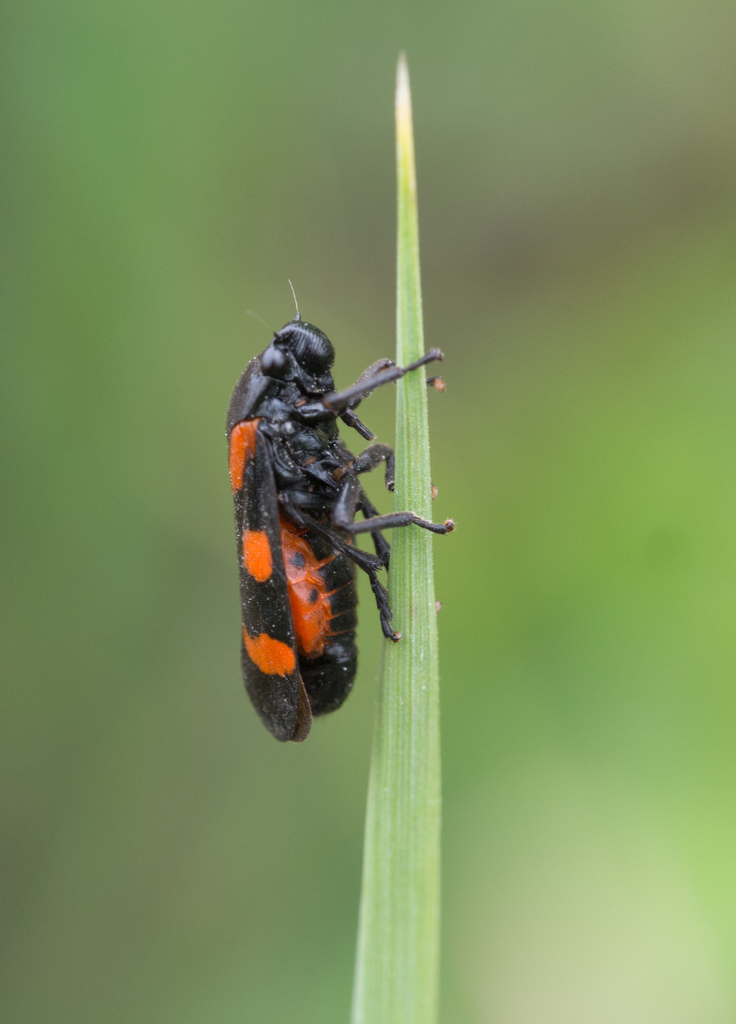
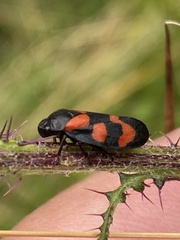
Adults are 6 to 11 mm long and the male is larger than the female. They are shiny black with bright red spots on the wing covers and fully black legs. They live on sunny, dry slopes and clearings, feed on plant sap, and the larvae live in foam nests on roots.
Source: Wikipedia
How to recognize it
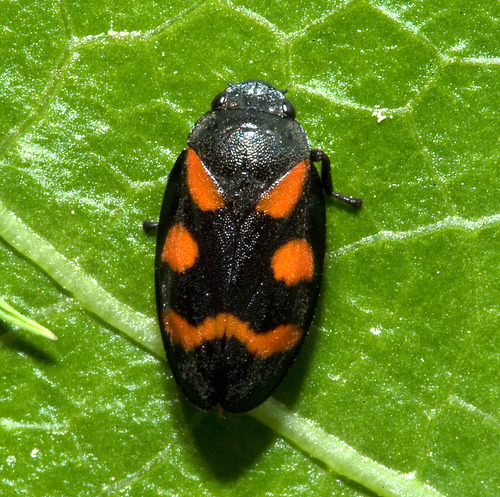
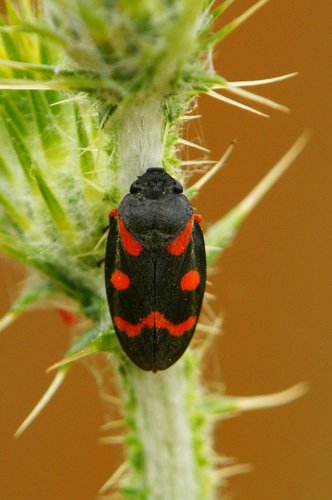
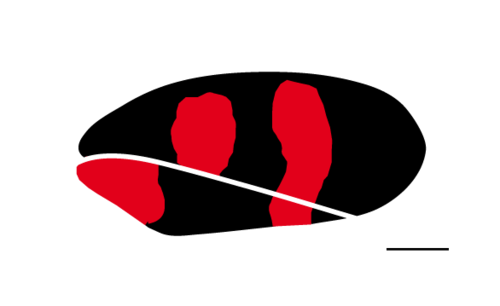
The beetle’s elytra have three red markings to a base spot, a middle spot, and an apex stripe to and the legs are completely black. A few black spots appear on the underside of the abdomen’s lateral plates.
Source: Wikipedia
Size
Length ranges from 6 to 11 mm. Males are larger than females.
Source: Wikipedia
Where it lives
Found on dry, sunny slopes and herb-rich clearings.
Source: Wikipedia
What it eats
Adults suck sap from herbaceous plants and shrubs. Larvae live in a foam nest and feed on root juices of host plants.
Source: Wikipedia
Life cycle
Mating pairs stay side-by-side at an angle of less than 45°. Larvae are surrounded by their own secretions in a foam nest while feeding on roots.
Source: Wikipedia
When you see it
They can fly but more often move by jumping.
Source: Wikipedia
Where it comes from
Occurs mainly in southern Europe, the Caucasus, and the Near East.
Source: Wikipedia
More photos
Questions people ask
When can I expect to see these bugs?
Adults appear from May to July or August on sunny herbaceous plants.
Source: Wikipedia
How can I tell this species apart from similar ones?
It has smaller red markings and a slightly curved rear stripe, unlike the U-shaped stripe of Cercopis vulnerata.
Source: Wikipedia
What do the larvae look like?
The larvae live inside a foam nest made of their own secretions while feeding on plant roots.
Source: Wikipedia
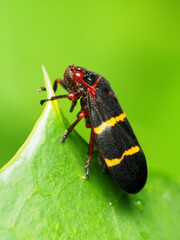
Same family (Cercopidae)
Sources
- Wikipedia: https://en.wikipedia.org/wiki/Cercopis_sanguinolenta
Look it up elsewhere: GBIF · iNaturalist · BugGuide · Wikipedia
Text written 2026-10-22 from the sources above and checked sentence by sentence against them. Data fetched 2026-10-22.