 Bug FAQ
Cherry-faced Meadowhawk
Sympetrum internum · Order: Odonata · Family: Libellulidae
Also called: Jane's Meadowhawk
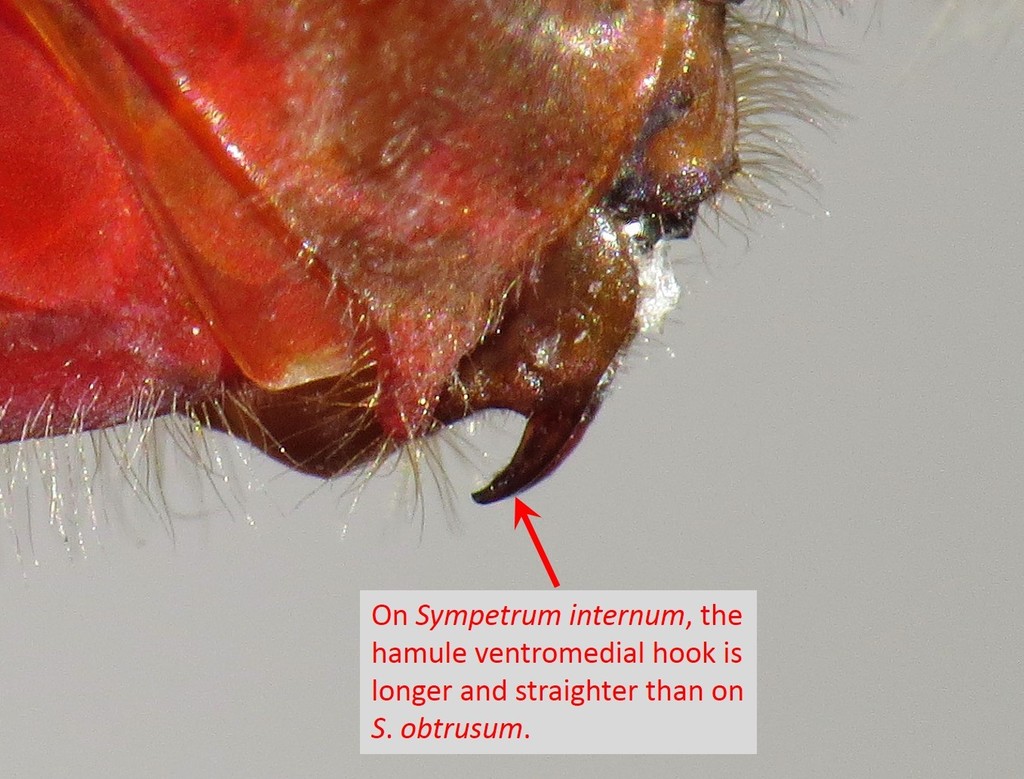
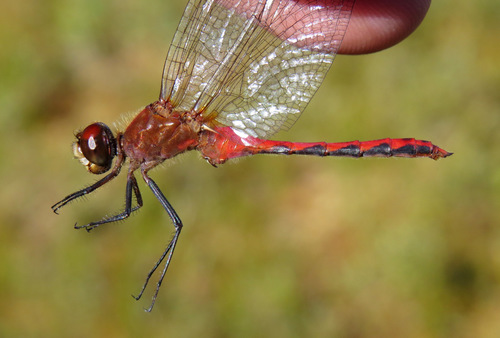
Adults are 21 to 36 mm long. The abdomen is brown, turning dark red when mature, with black triangles on the sides and black legs.
Source: Wikipedia
Lookalikes
It can be confused with the ruby meadowhawk (Sympetrum rubicundulum), saffron-winged meadowhawk (Sympetrum costiferum), and white-faced meadowhawk (Sympetrum obtrusum).
Source: Wikipedia
Where it is found in the US
Recorded in 36 of 51 states and DC. Most records: Colorado, New York, Minnesota, Vermont, Massachusetts, Michigan, North Dakota, Kansas.
Darker = more records. Counts are museum and citizen-science records, not population size.
Source: GBIF
Status: native in North America; native in Canada; native in United States. Source: iNaturalist
Months it is reported in the US
Source: GBIF
More photos


Questions people ask
How can I tell the cherry-faced meadowhawk apart from similar species?
Look for a brown abdomen that turns dark red when mature, with black triangles on the sides and black legs; other meadowhawks have different color patterns.
Source: Wikipedia
Same family (Libellulidae)

Sources
- Wikipedia: https://en.wikipedia.org/wiki/Sympetrum_internum
Look it up elsewhere: GBIF · iNaturalist · BugGuide · ITIS · Wikipedia
Text written 2026-10-23 from the sources above and checked sentence by sentence against them. Data fetched 2026-10-23.