 Bug FAQ
Clark's Mining Bee
Andrena clarkella · Order: Hymenoptera · Family: Andrenidae
Also called: Clarke's Mining Bee, Clark's Andrena, Clark's Miner
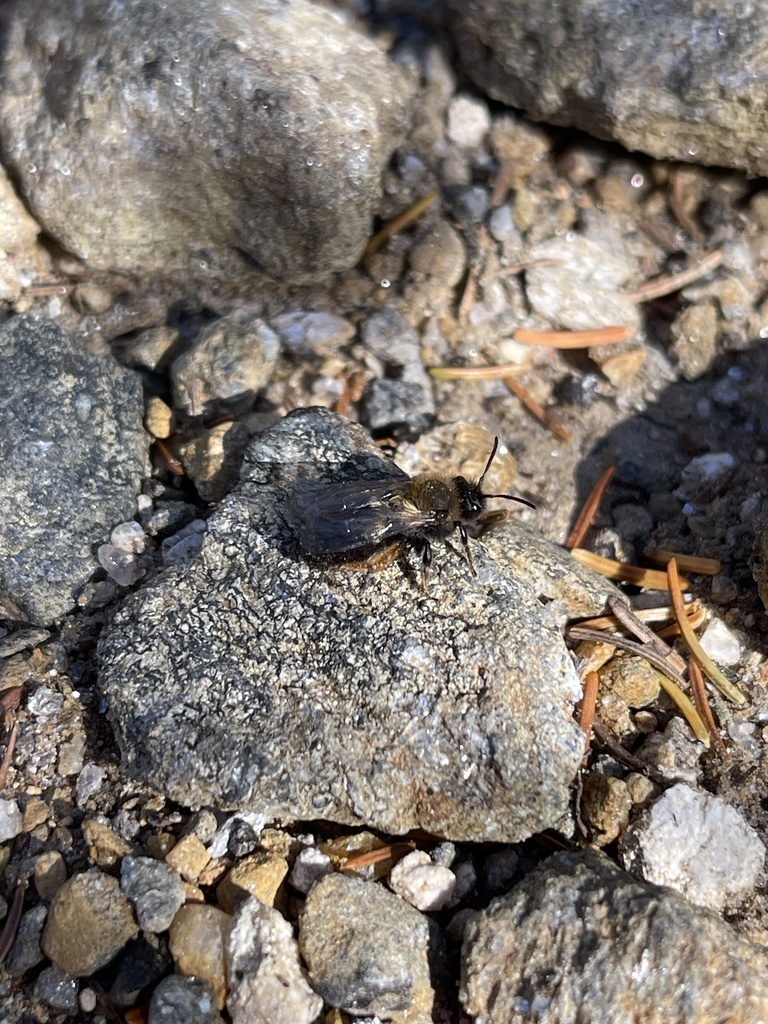
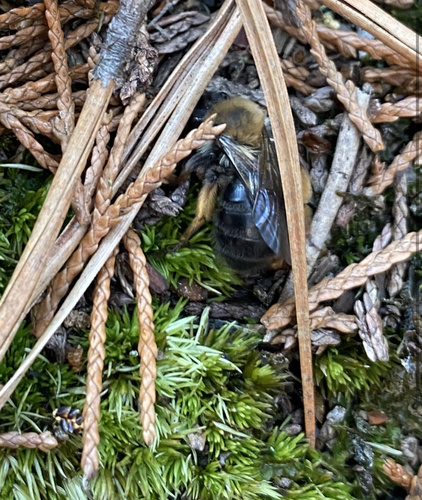
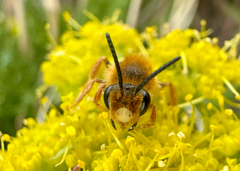
Clark's mining bee is a medium-sized bee about 10 to 13 mm long and can be recognized by its dense black and reddish-brown hairs, especially on the abdomen and mesonotum, with reddish-brown fore-legs in females and brown hair bands on males. It lives in forested areas, especially on sandy soil at lowland to sub-alpine elevations, and flies from early March to mid-May, feeding only on willow pollen. The species occurs across Europe, northern Asia (excluding China), and North America.
Source: Wikipedia
How to recognize it
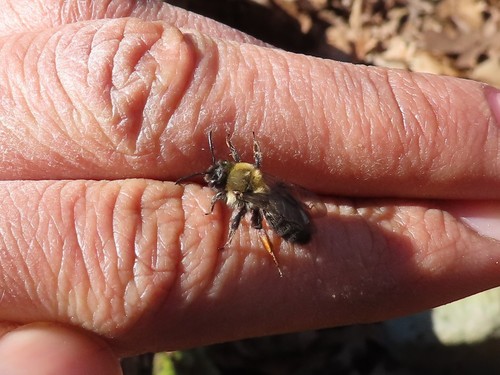
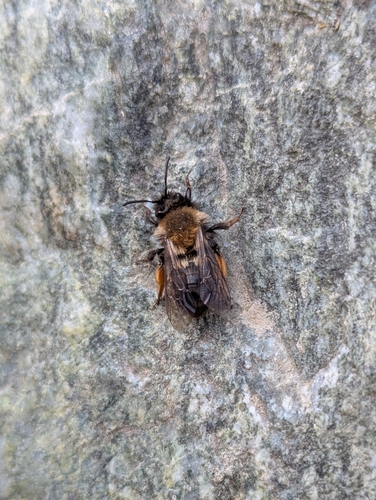
Males have brown hair and loose bands on the abdominal segments. Females are very densely hairy, with black abdominal hairs, reddish-brown hairs on the mesonotum, and reddish-brown fore-legs with a similarly coloured brush; the terminal fringe is dark brown.
Source: Wikipedia
Size
Adults measure between 10 and 13 mm in length.
Source: Wikipedia
Where it lives
Prefers forest edges, clearings, and recent clear-cuts on sandy soils. Found from lowland areas up to sub-alpine heights.
Source: Wikipedia
What it eats
Collects pollen exclusively from willow species (Salix).
Source: Wikipedia
Life cycle
Produces one generation each year, with adults on the wing from early March to mid-May.
Source: Wikipedia
When you see it
Active flight period runs from early March through mid-May.
Source: Wikipedia
Where it comes from
Distributed throughout Europe, northern Asia (except China), and North America.
Source: Wikipedia
Lookalikes
Small individuals can be confused with Andrena bicolor.
Source: Wikipedia
Where it is found in the US
Recorded in 14 of 51 states and DC. Most records: Alaska, Vermont, Massachusetts, New York, Maine, New Hampshire, Michigan, Minnesota.
Darker = more records. Counts are museum and citizen-science records, not population size.
Source: GBIF
Status: native in North America; native in Canada; native in United States. Source: iNaturalist
Months it is reported in the US
Source: GBIF
More photos
Questions people ask
How can I tell a male Clark's mining bee from a female?
Males have brown hair and loose tergite bands, while females are densely hairy with black abdomen hairs and reddish-brown mesonotum hairs.
Source: Wikipedia
When will I see Clark's mining bees in my garden?
Adults are on the wing from early March until mid-May.
Source: Wikipedia
What plants do these bees visit?
They collect pollen only from willow trees and shrubs.
Source: Wikipedia
Where does this bee live?
It prefers forest edges, clearings, and sandy soils from lowlands up to sub-alpine zones.
Source: Wikipedia
Same family (Andrenidae)

Sources
- Wikipedia: https://en.wikipedia.org/wiki/Andrena_clarkella
Look it up elsewhere: GBIF · iNaturalist · BugGuide · ITIS · Wikipedia
Text written 2026-10-23 from the sources above and checked sentence by sentence against them. Data fetched 2026-10-22.