 Bug FAQ
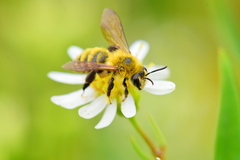
Prunus Miner Bee
Andrena prunorum · Order: Hymenoptera · Family: Andrenidae
Also called: Cherry Mining Bee, Purple Miner Bee
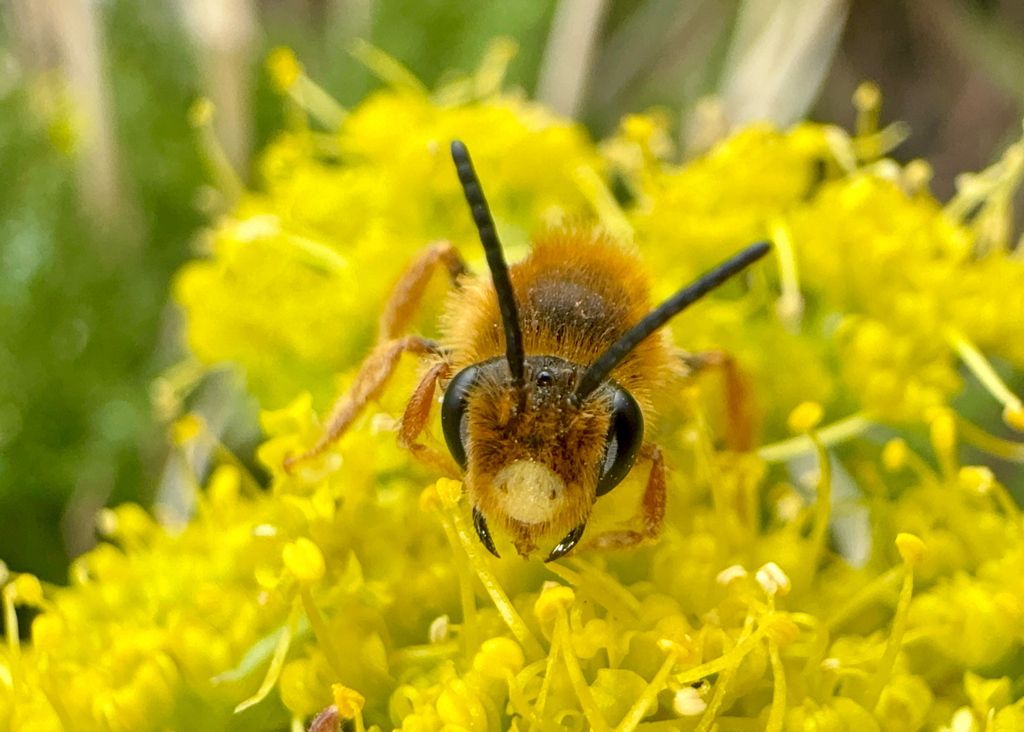
The Prunus Miner Bee is a small solitary bee that lives in grasslands and vernal pools across much of North and Central America. Adults emerge in spring, collect pollen and nectar, especially from Rosaceae plants, to feed their larvae, and spend the winter as prepupae in underground burrows. Because of its size, it can be mistaken for a fly and may be seen patrolling fruit trees before and after bloom.
Source: Wikipedia
How to recognize it
They are tiny and can look like a fly if you don’t examine them closely.
Source: Wikipedia
Size
These bees are very small, often confused with flies.
Source: Wikipedia
Where it lives
They prefer grasslands that contain vernal pools.
Source: Wikipedia
What it eats
Adults gather pollen and nectar, favoring Rosaceae flowers but will also visit fruit trees.
Source: Wikipedia
Life cycle
Both sexes overwinter as prepupae, mate, and females dig new ground burrows for their offspring. Larvae become adults in autumn, stay in their chambers through winter, and emerge the following spring.
Source: Wikipedia
When you see it
Adults typically appear in spring when their host flowers are blooming.
Source: Wikipedia
Where it comes from
They are common throughout the continental United States and much of North and Central America.
Source: Wikipedia
Lookalikes
Because of their small size, they can be mistaken for flies.
Source: Wikipedia
Where it is found in the US
Recorded in 18 of 51 states and DC. Most records: Washington, Utah, California, Arizona, Oregon, Colorado, Idaho, New Mexico.
Darker = more records. Counts are museum and citizen-science records, not population size.
Source: GBIF
Status: native in North America; native in United States; native in Canada. Source: iNaturalist
Months it is reported in the US
Source: GBIF
More photos
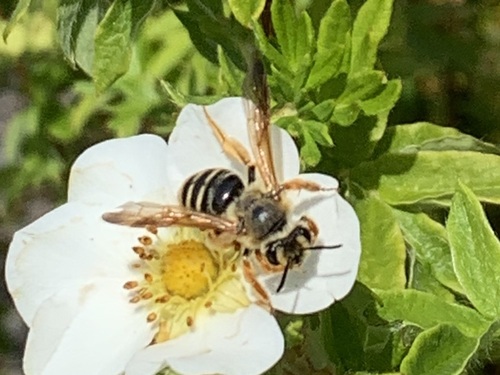
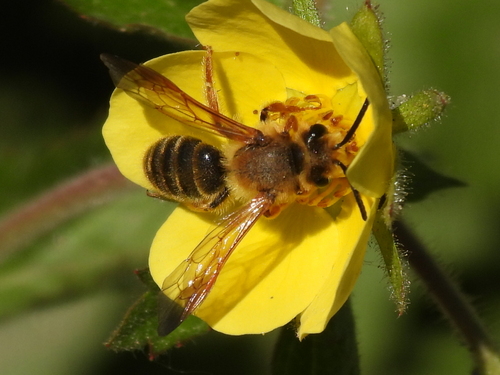

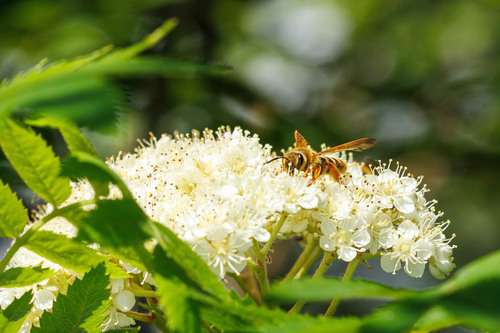
Questions people ask
When will I see these bees in my garden?
They usually emerge in spring when their host flowers are blooming.
Source: Wikipedia
Same family (Andrenidae)

Sources
- Wikipedia: https://en.wikipedia.org/wiki/Andrena_prunorum
Look it up elsewhere: GBIF · iNaturalist · BugGuide · ITIS · Wikipedia
Text written 2026-10-23 from the sources above and checked sentence by sentence against them. Data fetched 2026-10-22.