 Bug FAQ
Common Blue Mud-dauber Wasp
Chalybion californicum · Order: Hymenoptera · Family: Sphecidae
Also called: Blue Metallic Mud-dauber Wasp, Blue Mud Wasp, Blue-black Mud-dauber Wasp, Common Blue Mud Wasp
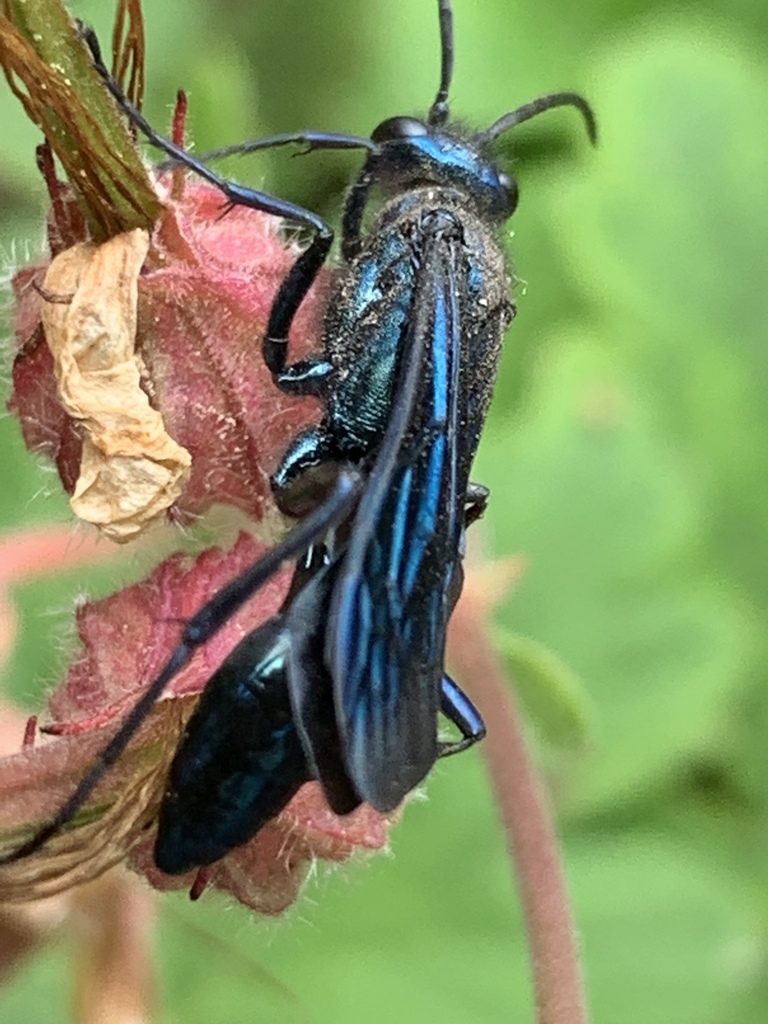
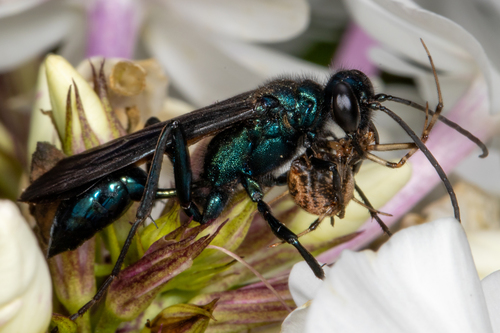
These wasps are 3/4 to 1 inch long, black with a slight iridescent shine, and look like the steel-blue cricket hunter. Adults sip flower nectar while the larvae are fed spiders such as black widows, and the species can have several generations each year. They nest in hollow plant stems, cavities in buildings, and often reuse abandoned mud-dauber nests.
Source: University of Minnesota Extension, Wikipedia
Size
They measure about three-quarters to one inch long.
Is it a pest in the house?
They build nests in cavities of plant stems and in buildings, sometimes reusing old mud-dauber nests.
Does it bite or sting?
Males lack an ovipositor and cannot sting; the species is not aggressive and stings are rare. They do not damage buildings where they nest.
How to get rid of it
They do not harm structures where they build nests.
Where it lives
Native from northern Mexico to southern Canada and most of the United States, they have also been introduced to places like Hawaii, Bermuda, Croatia, and other European countries.
Source: Wikipedia
What it eats
Adults feed on flower nectar, while larvae are provisioned with spiders, often black widows.
Source: Wikipedia
Life cycle
They produce multiple generations within a single year.
Source: Wikipedia
Where it comes from
Their natural range covers northern Mexico, the United States, and extends up to southern Canada.
Source: Wikipedia
Lookalikes
They resemble the steel-blue cricket hunter in shape and color.
Source: Wikipedia
Where it is found in the US
Recorded in 50 of 51 states and DC. Most records: Texas, New York, Illinois, Ohio, Pennsylvania, California, Florida, Virginia.
Darker = more records. Counts are museum and citizen-science records, not population size.
Source: GBIF
Months it is reported in the US
Source: GBIF
More photos
Questions people ask
Do they sting people?
Males cannot sting and the species is not aggressive, so stings are rare.
Where do they build their nests?
They nest in hollow plant stems, cavities in buildings, and often reuse abandoned mud-dauber nests.
Is this wasp found outside the United States?
Yes, it has been introduced to places like Hawaii, Bermuda, Croatia, and other European countries.
Source: Wikipedia
Same family (Sphecidae)

Sources
- Wikipedia: https://en.wikipedia.org/wiki/Chalybion_californicum
- University of Minnesota Extension: https://apps.extension.umn.edu/garden/diagnose/insect/general-curiosity-insects/flies/medium/bluemuddauber.html
Look it up elsewhere: GBIF · iNaturalist · BugGuide · ITIS · Wikipedia
Text written 2026-10-23 from the sources above and checked sentence by sentence against them. Data fetched 2026-10-23.