 Bug FAQ
Coverdale's Anacampsis Moth
Anacampsis coverdalella · Order: Lepidoptera · Family: Gelechiidae
Also called: Coverdale's Anacampsis
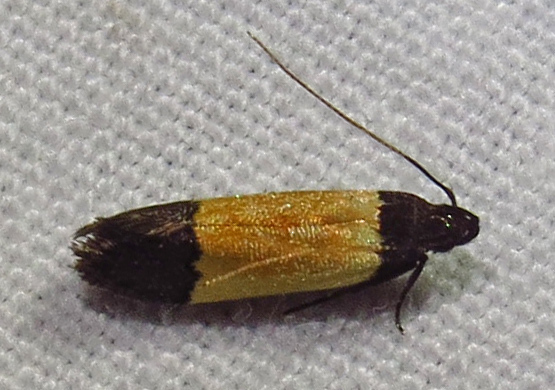
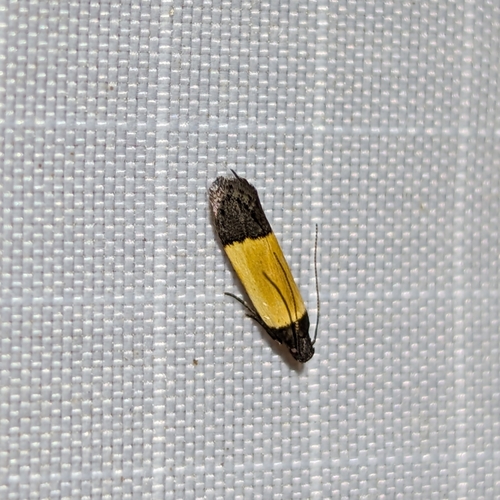
The moth has a wingspan of about 10 to 11.5 mm. Its forewings are dark purplish-brown at the base and again in the outer fourth, with a bright yellow band in between; the division lines are vertical and slightly serrated. It occurs in the United States, recorded from several southern and eastern states.
Source: Wikipedia
How to recognize it
The base of the forewings is dark purplish-brown from the costa to the inner margin. From the base to the outer fourth the wing is canary yellow. The outer fourth returns to the dark purplish-brown color, with vertical, slightly serrated division lines.
Source: Wikipedia
Size
Wingspan ranges from 10 to 11.5 mm.
Source: Wikipedia
Where it is found in the US
Recorded in 14 of 51 states and DC. Most records: Florida, North Carolina, Alabama, Mississippi, Louisiana, Texas, Georgia, Maryland.
Darker = more records. Counts are museum and citizen-science records, not population size.
Source: GBIF
Status: native in United States. Source: iNaturalist
Months it is reported in the US
Source: GBIF
More photos
Same family (Gelechiidae)
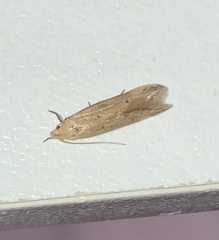 Angoumois Grain MothSitotroga cerealellaDamages trees, gardens or crops
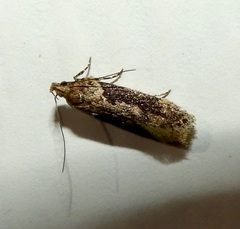 Black-smudged Chionodes MothChionodes mediofuscella
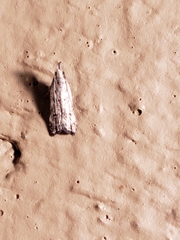 Inverse and Kimball's Dichomeris MothsDichomeris inversella
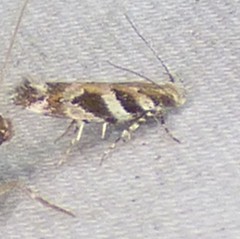 Pink-washed Aristotelia MothAristotelia roseosuffusella
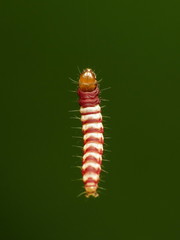 White Stripe-backed MothArogalea cristifasciella
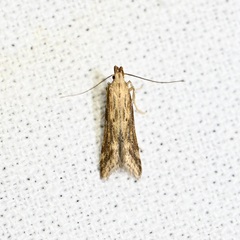 Burdock Seedhead MothMetzneria lappella
Sources
- Wikipedia: https://en.wikipedia.org/wiki/Anacampsis_coverdalella
Look it up elsewhere: GBIF · iNaturalist · BugGuide · Wikipedia
Text written 2026-10-24 from the sources above and checked sentence by sentence against them. Data fetched 2026-10-24.