 Bug FAQ
Dorcas Copper
Tharsalea dorcas · Order: Lepidoptera · Family: Lycaenidae

The Dorcas Copper has a wingspan of about 2.5 to 3.2 cm. It lives in bogs and overgrown old fields across North America. Adults fly once between June and September, and the larvae feed on Potentilla fruticosa, Rumex and Polygonum species.
Source: Wikipedia
Size
Wingspan ranges from 2.5 to 3.2 cm.
Source: Wikipedia
Where it lives
Found in bogs and old, overgrown fields.
Source: Wikipedia
When you see it
Adults have a single flight period from June through September.
Source: Wikipedia
Where it comes from
Native to North America.
Source: Wikipedia
Lookalikes
Males look similar in colour to L. helloides.
Source: Wikipedia
Where it is found in the US
Recorded in 12 of 51 states and DC. Most records: Alaska, Colorado, Wyoming, Michigan, Minnesota, Massachusetts, Montana, Wisconsin.
Darker = more records. Counts are museum and citizen-science records, not population size.
Source: GBIF
Status: native in North America; native in United States; native in Canada. Source: iNaturalist
Months it is reported in the US
Source: GBIF
More photos
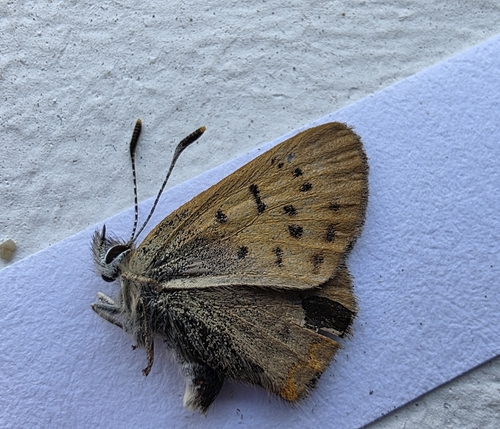
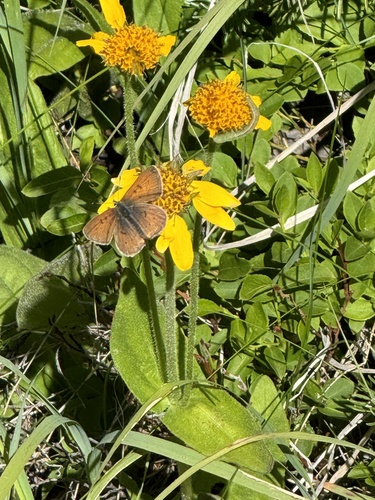
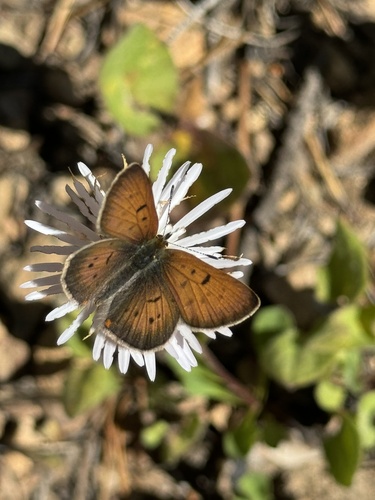
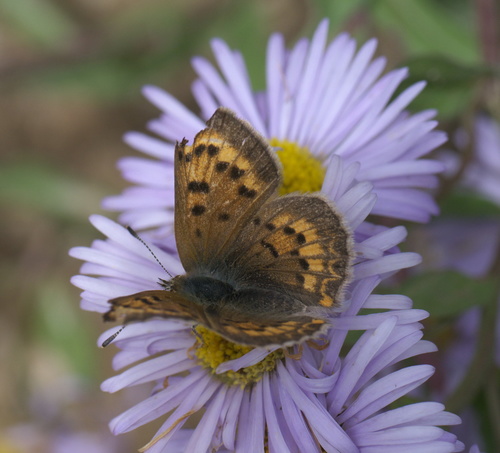
Questions people ask
When are Dorcas Coppers active?
Adults are on the wing once between June and September.
Source: Wikipedia
What do the caterpillars eat?
The larvae feed on Potentilla fruticosa, Rumex and Polygonum species.
Source: Wikipedia
Are they similar to any other butterfly?
Male Dorcas Coppers resemble the colour pattern of L. helloides.
Source: Wikipedia
Same family (Lycaenidae)

Sources
- Wikipedia: https://en.wikipedia.org/wiki/Lycaena_dorcas
Look it up elsewhere: GBIF · iNaturalist · BugGuide · ITIS · Wikipedia
Text written 2026-10-24 from the sources above and checked sentence by sentence against them. Data fetched 2026-10-24.