 Bug FAQ
Early Cellophane Bee
Colletes cunicularius · Order: Hymenoptera · Family: Colletidae
Also called: Early Colletes, Vernal Colletes
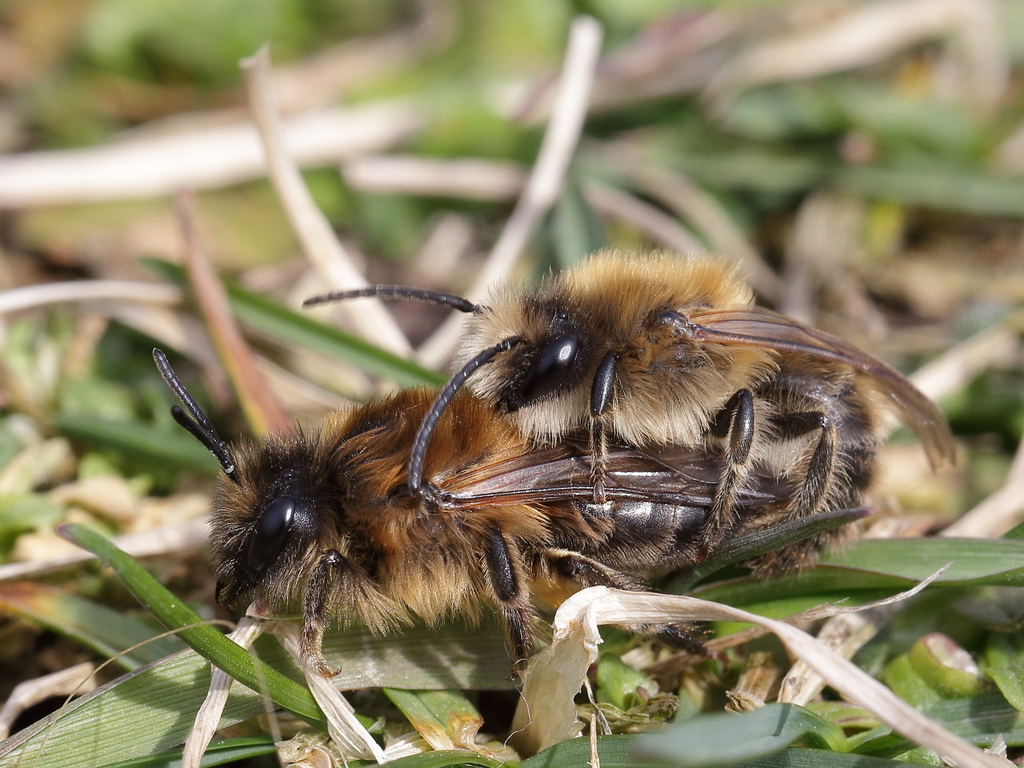
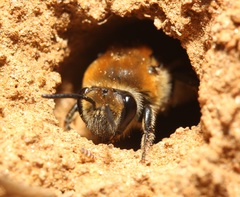
The early cellophane bee is a large, black-abdomen bee with brown-haired thorax that lives in sandy, sparsely vegetated areas such as coastal dunes and sand pits. In Britain it mainly visits creeping willow for nectar, while elsewhere it feeds on a wider range of plants, and it flies early in the year from March to May.
Source: Wikipedia
How to recognize it
Females are larger than the similar Andrena scotica, have longer antennae and lack a facial fovea; males are smaller and paler than females.
Source: Wikipedia
Size
It is a large Colletes species with a black, hairy abdomen and a brown-hairy thorax.
Source: Wikipedia
Where it lives
It prefers sparsely vegetated sandy sites, especially mature coastal dunes near creeping willow, and also occupies man-made sand pits.
Source: Wikipedia
What it eats
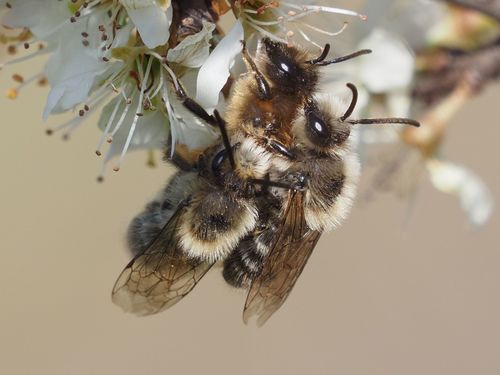
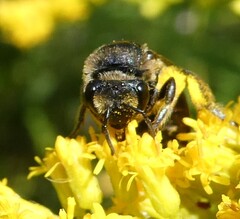
In Britain the bee mainly forages on creeping willow, using other Salix species if needed; elsewhere it feeds on many flowers, favoring willows in Finland and Fabaceae plants in Italy.
Source: Wikipedia
Life cycle
It is univoltine, producing one generation per year.
Source: Wikipedia
When you see it
Adults are on the wing from March to May, sometimes into June, earlier than most other Colletes species.
Source: Wikipedia
Where it comes from
Its distribution spans the Palearctic from Great Britain in the west to Siberia and China in the east.
Source: Wikipedia
More photos
Questions people ask
When can I expect to see early cellophane bees?
They fly early in the year, typically from March through May and occasionally into June.
Source: Wikipedia
What flowers do they visit?
In Britain they mainly visit creeping willow, while elsewhere they use a wide range of flowers, especially willows in Finland and Fabaceae in Italy.
Source: Wikipedia
Where do they nest?
They nest in sparsely vegetated sandy habitats such as mature coastal dunes near creeping willow and in man-made sand pits.
Source: Wikipedia
Same family (Colletidae)


Sources
- Wikipedia: https://en.wikipedia.org/wiki/Colletes_cunicularius
Look it up elsewhere: GBIF · iNaturalist · BugGuide · ITIS · Wikipedia
Text written 2026-10-22 from the sources above and checked sentence by sentence against them. Data fetched 2026-10-22.