 Bug FAQ
Ivy Cellophane Bee
Colletes hederae · Order: Hymenoptera · Family: Colletidae
Also called: Ivy Bee
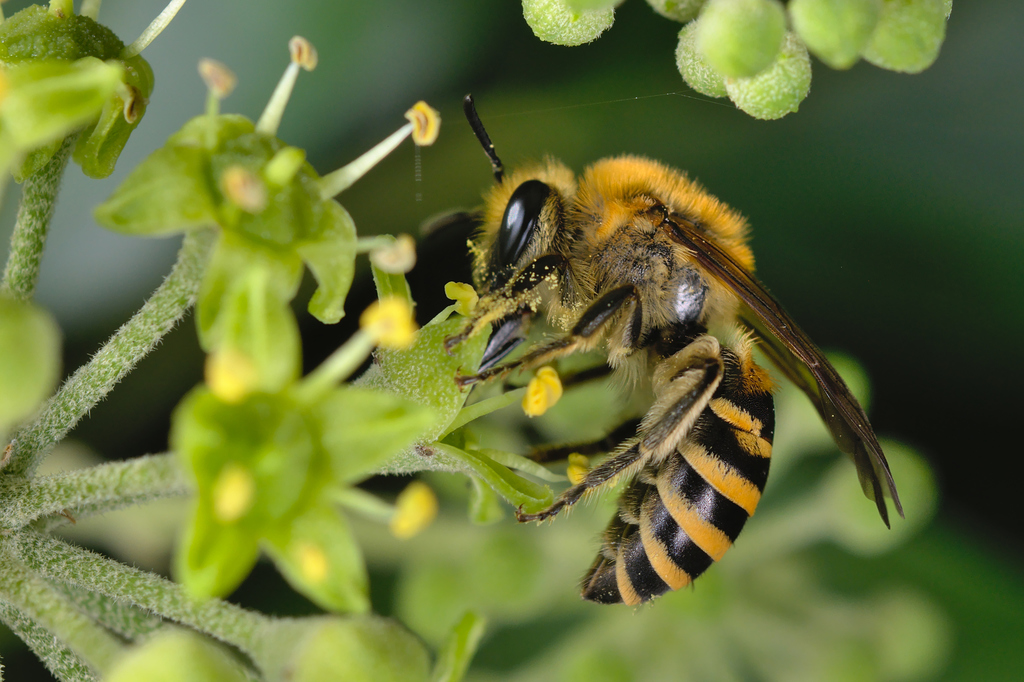
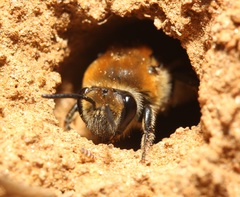
Females are about 13 mm long and males about 10 mm. Adults are covered in dense orange-brown hair on the thorax and each abdominal segment ends with an orange hair band. They nest in clay-sandy soils, often in huge aggregations of tens of thousands of nests, and are found across much of Europe. Both sexes collect nectar and pollen from ivy flowers, which they use to feed their larvae. Adults emerge from late August (males) to early September (females) and are active until early November; they do not overwinter as adults. They look very similar to the heather colletes and the sea-aster mining bee.
Source: Wikipedia
How to recognize it
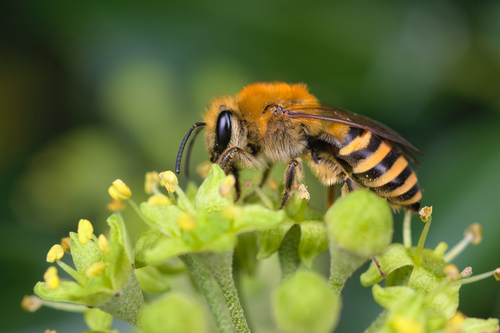
The thorax is densely covered with orange-brown hair, and each abdominal segment has an orange hair band at the tip.
Source: Wikipedia
Size
Females are about 13 mm long; males are about 10 mm long.
Source: Wikipedia
Where it lives
They nest in clay-sandy soils, especially on loess hills and soft-rock cliffs. Nesting often occurs in dense aggregations that can contain tens of thousands of nests.
Source: Wikipedia
What it eats
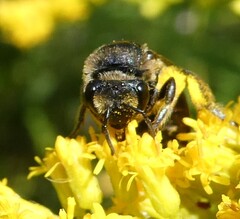
Ivy flowers provide the main pollen and nectar they collect, which they use to provision their brood cells.
Source: Wikipedia
Life cycle
They are solitary bees that do not form colonies and do not overwinter as adults.
Source: Wikipedia
When you see it
Adults emerge from late August (males) to early September (females) and remain active until early November.
Source: Wikipedia
More photos
Questions people ask
When can I expect to see ivy cellophane bees?
Adults appear from late August for males and early September for females and stay on the wing until early November.
Source: Wikipedia
What plants do they visit?
They mainly collect nectar and pollen from ivy (Hedera helix) flowers.
Source: Wikipedia
Where do they nest?
They build nests in clay-sandy soils, often in large aggregations on loess hills or soft-rock cliffs.
Source: Wikipedia
How can I tell them apart from similar bees?
They have dense orange-brown hair on the thorax and an orange hair band at the end of each abdominal segment, but look very similar to heather colletes and sea-aster mining bees.
Source: Wikipedia
Same family (Colletidae)


Sources
- Wikipedia: https://en.wikipedia.org/wiki/Colletes_hederae
Look it up elsewhere: GBIF · iNaturalist · BugGuide · ITIS · Wikipedia
Text written 2026-10-22 from the sources above and checked sentence by sentence against them. Data fetched 2026-10-22.