 Bug FAQ
Eastern Boxelder Bug
Boisea trivittata · Order: Hemiptera · Family: Rhopalidae
Also called: Boxelder Bug, Eastern Box Elder Bug, Maple Bug
Source: Wikipedia
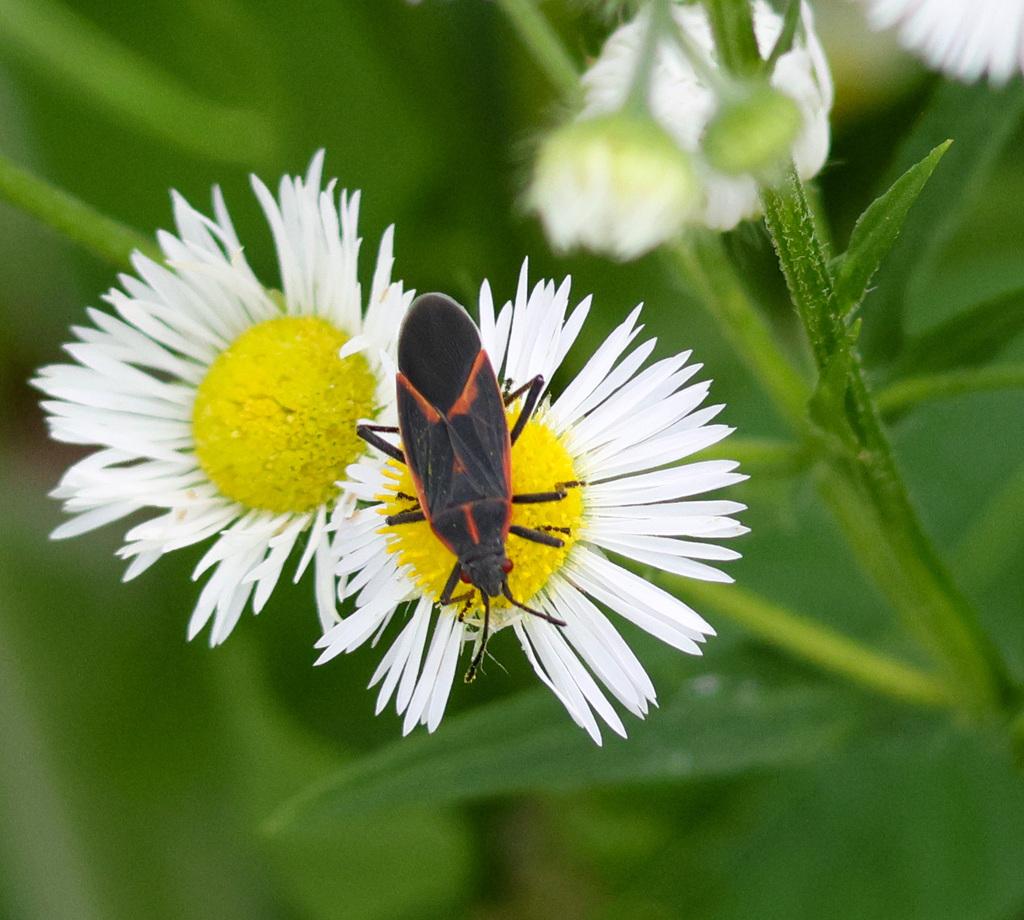
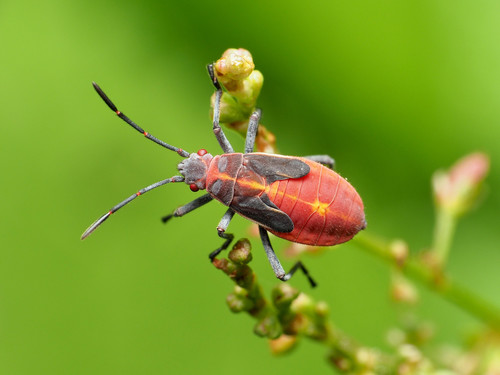
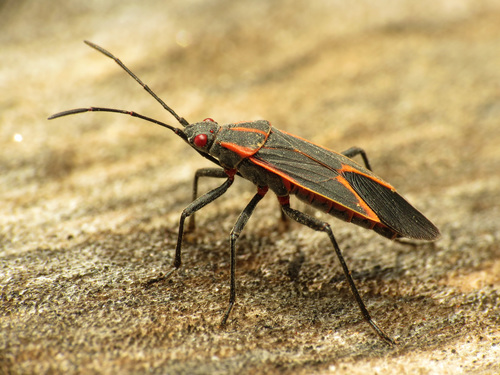
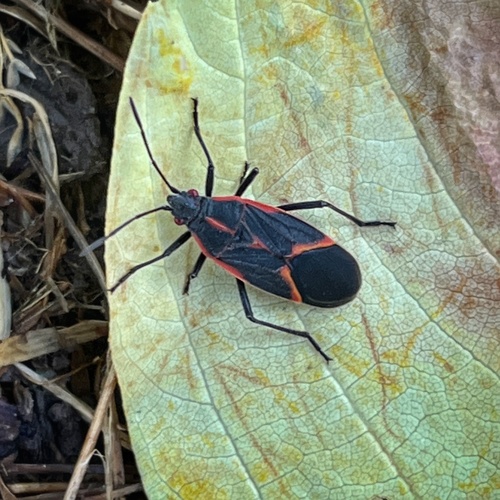
Adults are about 13 mm long, dark brown or black with red wing veins and red eyes, while nymphs are bright red. They live on boxelder, other maples and ash trees and overwinter in leaf litter or sheltered spots near homes. They feed mainly on developing seeds of those trees and may also suck leaf juices.
Source: Wikipedia
How to recognize it
Adults have dark brown or black bodies with red wing veins, red markings on the abdomen and dark red eyes; young bugs are bright red.
Source: Wikipedia
Size
An adult measures roughly 13 mm (about half an inch) in length.
Source: Wikipedia
Is it a pest in the house?
When they enter homes they leave stains on upholstery, carpets and drapes with their excreta. People often consider them a nuisance because of their indoor congregations and staining.
Source: Wikipedia
How to get rid of it
Removing boxelder and maple trees can lower their numbers, though it also eliminates a native tree. Providing natural woodland areas gives them places to overwinter without becoming a household problem.
Source: Wikipedia
Where it lives
They are most often found on boxelder, other maple species and ash trees. In winter they hide in plant debris or protected structures near human dwellings.
Source: Wikipedia
What it eats
They will also suck sap from leaves when seeds are not available.
Source: Wikipedia
When you see it
Large groups can appear in the spring and may persist through summer depending on temperature.
Source: Wikipedia
Where it comes from
The eastern boxelder bug is native to eastern North America.
Source: Wikipedia
Where it is found in the US
Recorded in 48 of 51 states and DC. Most records: Pennsylvania, Utah, Minnesota, New York, North Carolina, Illinois, Virginia, Michigan.
Darker = more records. Counts are museum and citizen-science records, not population size.
Source: GBIF
Months it is reported in the US
Source: GBIF
More photos

Questions people ask
How can I identify an eastern boxelder bug?
Look for a 13 mm dark brown or black bug with red wing veins and red eyes; the young are bright red.
Source: Wikipedia
Where do eastern boxelder bugs live?
They live on boxelder, maple and ash trees and hide in leaf litter or sheltered spots during winter.
Source: Wikipedia
How can I control them around my house?
Removing host trees can reduce their numbers, and maintaining natural woodland gives them places to overwinter away from homes.
Source: Wikipedia
Same family (Rhopalidae)
Sources
- Wikipedia: https://en.wikipedia.org/wiki/Boisea_trivittata
Look it up elsewhere: GBIF · iNaturalist · BugGuide · ITIS · Wikipedia
Text written 2026-10-23 from the sources above and checked sentence by sentence against them. Data fetched 2026-10-22.