 Bug FAQ
Fiery Skimmer
Orthetrum villosovittatum · Order: Odonata · Family: Libellulidae
Also called: Firery Skimmer
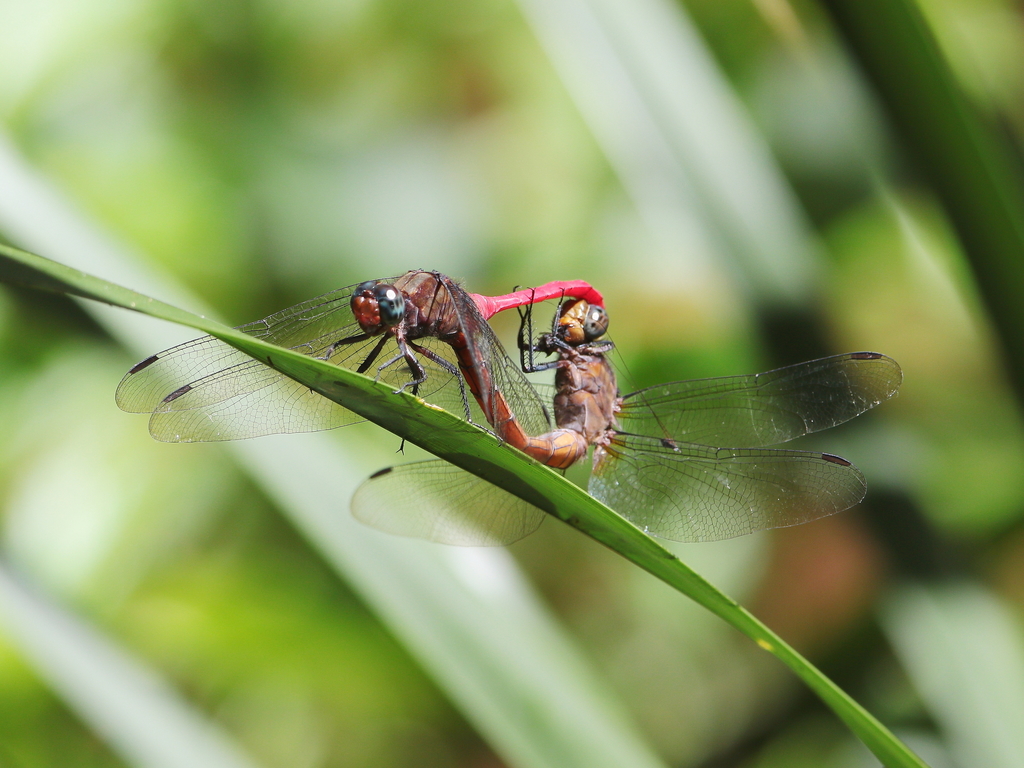
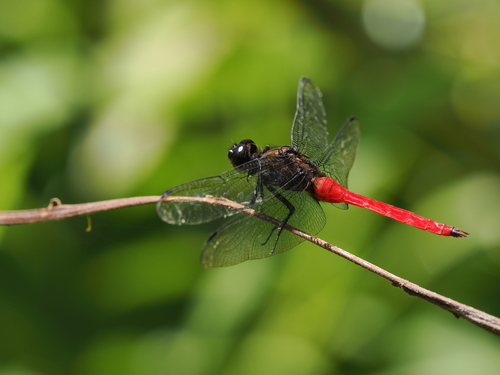
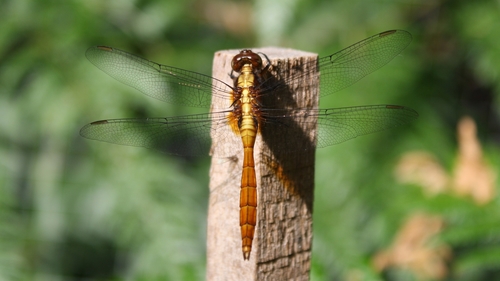
Mature males have dark grey-green thoraxes and bright red abdomens that narrow at segment four, while young males are amber and black and females are ochre-coloured. It lives around boggy seepages, streams and swamps in the Moluccas, New Guinea, nearby islands and eastern Australia from Victoria through New South Wales, Queensland, Cape York and the Northern Territory.
Source: Wikipedia
How to recognize it
Mature males show dark grey-green to greenish-brown thoraxes and a red abdomen that narrows at segment four; young males are amber-black, and females are ochre.
Source: Wikipedia
Size
The species has a wingspan ranging from 60 to 85 mm, classifying it as medium-sized.
Source: Wikipedia
Where it lives
It prefers wet habitats such as boggy seepages, streams and swamps.
Source: Wikipedia
Where it comes from
Its native range includes the Moluccas, New Guinea and nearby islands.
Source: Wikipedia
More photos


Questions people ask
What does the fiery skimmer look like?
Mature males have dark grey-green thoraxes and a bright red abdomen that narrows at segment four; young males are amber-black, and females are ochre-coloured.
Source: Wikipedia
Where can I find a fiery skimmer?
They live around boggy seepages, streams and swamps in the Moluccas, New Guinea, nearby islands and across eastern Australia from Victoria to the Northern Territory.
Source: Wikipedia
Same family (Libellulidae)

Sources
- Wikipedia: https://en.wikipedia.org/wiki/Orthetrum_villosovittatum
Look it up elsewhere: GBIF · iNaturalist · BugGuide · Wikipedia
Text written 2026-10-24 from the sources above and checked sentence by sentence against them. Data fetched 2026-10-22.