 Bug FAQ
Giant Mound Termite
Macrotermes michaelseni · Order: Blattodea · Family: Termitidae
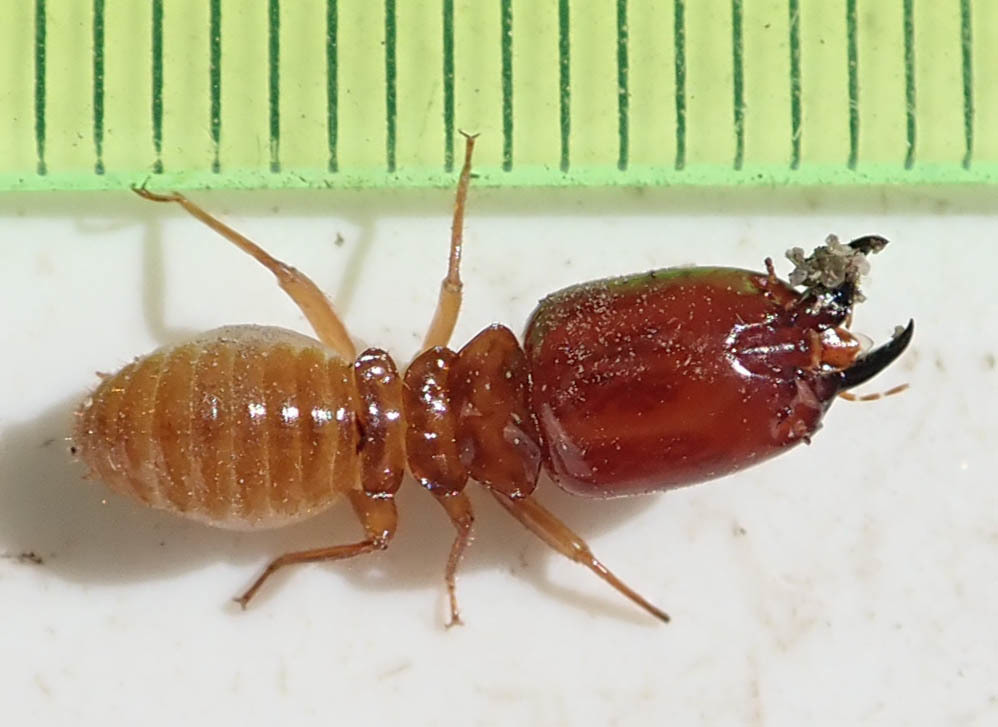
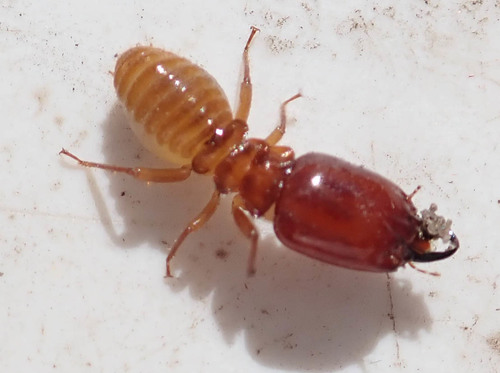
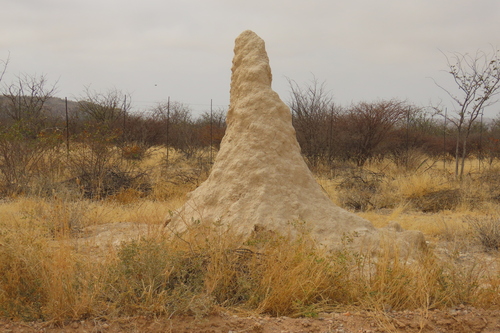
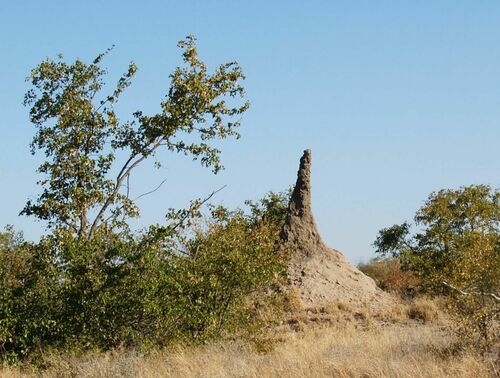
Macrotermes michaelseni builds huge colonies that can hold more than a million termites, including workers, soldiers and nymphs. They live in savannahs of sub-Saharan Africa, preferring clay soils with high groundwater and can form up to six mounds per hectare. The termites forage at night for dead grass, leaf litter from trees such as Croton and Vachellia, and even elephant dung during the dry season.
Source: Wikipedia
How to recognize it
Their nests are linked with the fungus Termitomyces schimperi, whose white, scaly caps appear above ground at the mound base.
Source: Wikipedia
Where it lives
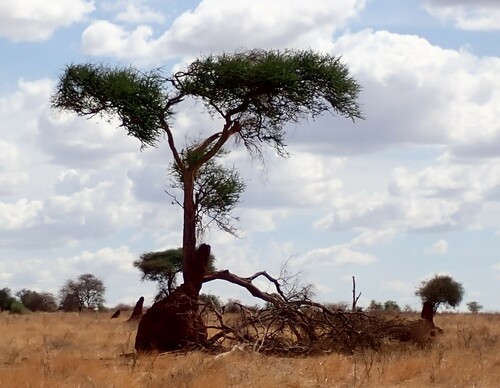
They occur in savannahs across sub-Saharan Africa. Clay soils with high groundwater are especially favorable, with up to six mounds per hectare in delta areas.
Source: Wikipedia
What it eats
Workers collect dead grass, grass litter and woody litter during night foraging.
Source: Wikipedia
Life cycle
Colonies can exceed a million termites and include nymphs, workers and soldiers. If a colony is destroyed, new colonies often re-establish at the same site.
Source: Wikipedia
Where it comes from
Macrotermes michaelseni is native to sub-Saharan Africa.
Source: Wikipedia
Lookalikes
Other Macrotermes species also live in savannahs of sub-Saharan Africa, so careful observation is needed to tell them apart.
Source: Wikipedia
More photos
Questions people ask
What fungus is associated with Macrotermes michaelseni?
It cultivates the fungus Termitomyces schimperi, whose white, scaly fruiting bodies grow above the mound.
Source: Wikipedia
Where does Macrotermes michaelseni live?
It is native to savannahs of sub-Saharan Africa, especially in areas with clay soils and high groundwater.
Source: Wikipedia
What do the termites eat?
Workers gather dead grass, grass litter, woody litter, leaf litter from several tree species, and later elephant dung.
Source: Wikipedia
How large can a Macrotermes michaelseni colony become?
A mature colony may hold over a million termites, including workers, soldiers and nymphs.
Source: Wikipedia
Same family (Termitidae)
 Conehead TermiteNasutitermes corniger
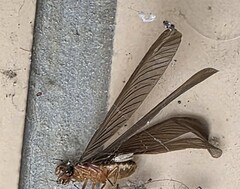 Black-winged Subterranean TermiteOdontotermes formosanusDamages trees, gardens or crops
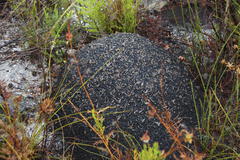 Blackmound TermiteAmitermes hastatus
 Macrotermes carbonariusMacrotermes carbonariusCan bite
 Spinifex TermiteNasutitermes triodiaeCan irritate skin
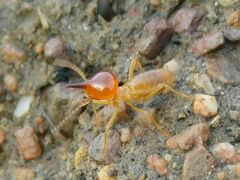 Snouted Harvester TermiteTrinervitermes trinervoides
Sources
- Wikipedia: https://en.wikipedia.org/wiki/Macrotermes_michaelseni
Look it up elsewhere: GBIF · iNaturalist · BugGuide · Wikipedia
Text written 2026-10-24 from the sources above and checked sentence by sentence against them. Data fetched 2026-10-23.