 Bug FAQ
Glistening Demoiselle
Phaon iridipennis · Order: Odonata · Family: Calopterygidae
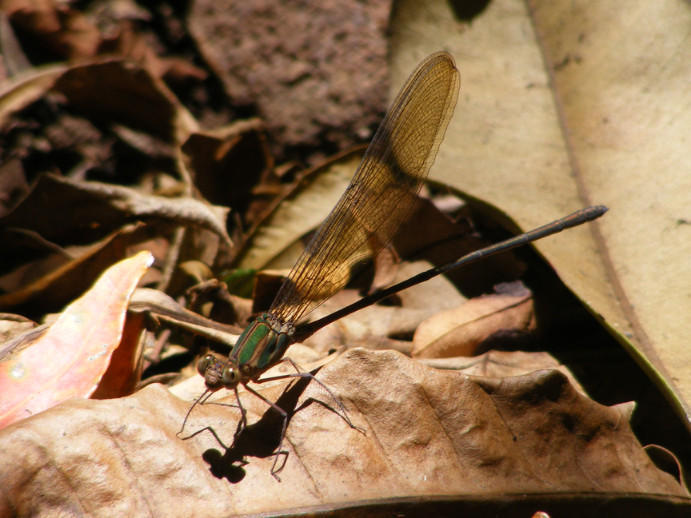
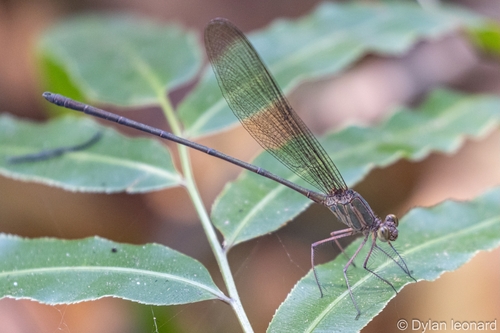
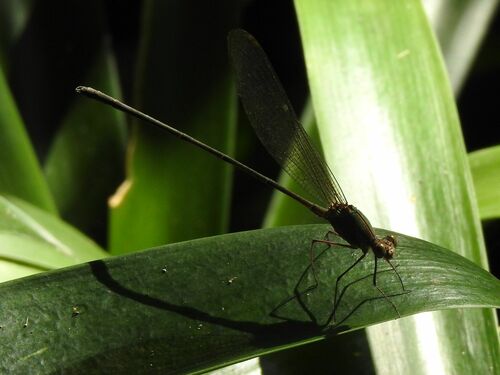
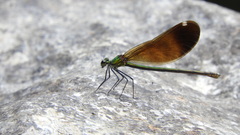
The glistening demoiselle is a large damselfly up to 75 mm long with a wingspan of about 87 mm and long legs. Its wings sparkle with purple-blue flecks and the body is coppery-green, females being duller and browner.
Source: Wikipedia
How to recognize it
Both sexes have a coppery-green thorax and abdomen, with females appearing duller and browner.
Source: Wikipedia
Size
It can reach up to 75 mm in length and a wingspan of up to 87 mm, and it has long legs.
Source: Wikipedia
Where it lives
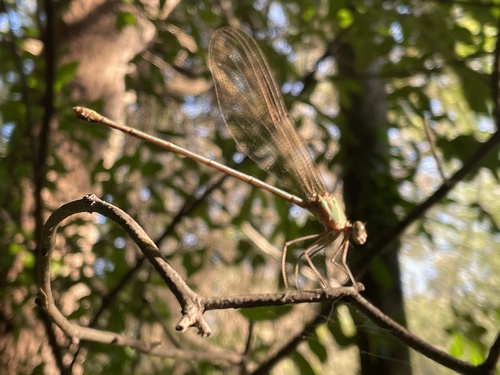
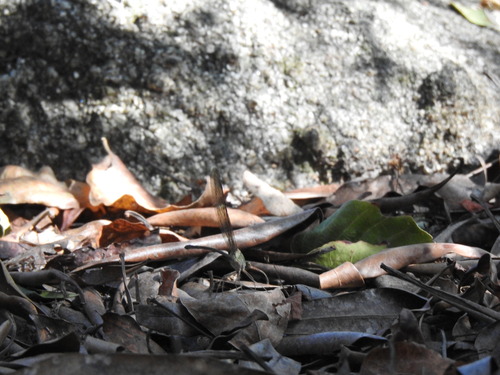
Adults usually perch in dense, shady undergrowth on sticks and logs among leaf litter.
Source: Wikipedia
When you see it
Adults are recorded year-round in warmer regions but are most active from October to March, peaking in late November.
Source: Wikipedia
Where it comes from
It is found in most sub-Saharan African countries from South Africa to Ethiopia and Senegal. It also occurs on Madagascar.
Source: Wikipedia
More photos
Questions people ask
Where can I find glistening demoiselles?
They are common near rivers, streams, swamps and forested marsh edges across sub-Saharan Africa and Madagascar.
Source: Wikipedia
Same family (Calopterygidae)


Sources
- Wikipedia: https://en.wikipedia.org/wiki/Phaon_iridipennis
Look it up elsewhere: GBIF · iNaturalist · BugGuide · Wikipedia
Text written 2026-10-24 from the sources above and checked sentence by sentence against them. Data fetched 2026-10-23.