 Bug FAQ
Gray Scoopwing
Callizzia amorata · Order: Lepidoptera · Family: Uraniidae

How to recognize it
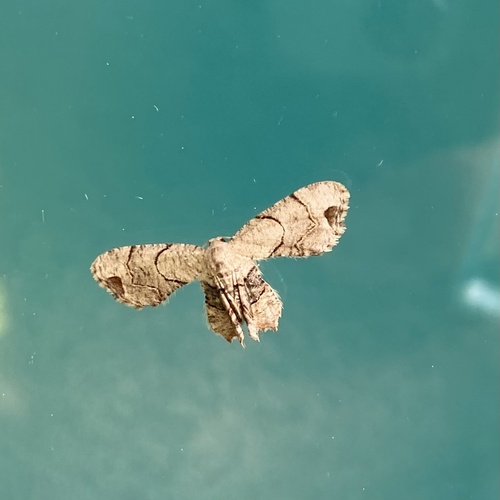
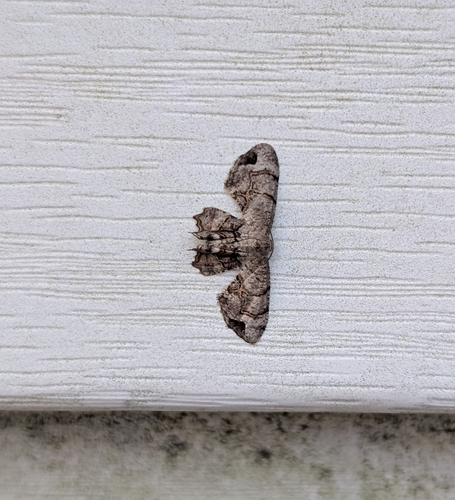
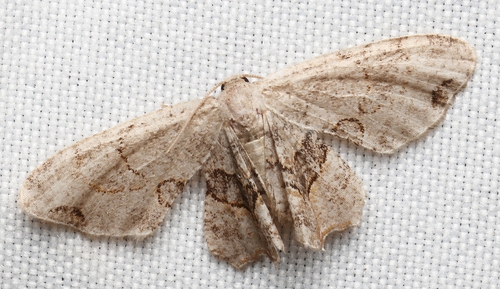
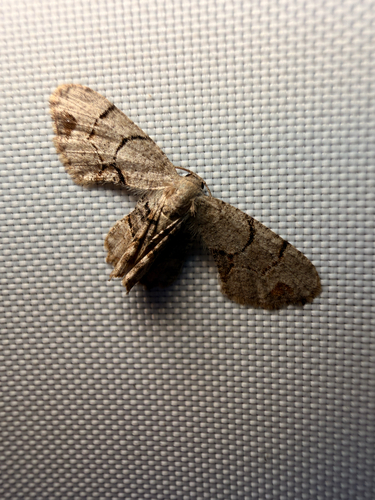
Each forewing shows a brown triangle near the outer edge that is outlined in black.
Source: Wikipedia
Where it lives
The species occurs from the west coast (California, British Columbia) to the east coast (Florida, Nova Scotia).
Source: Wikipedia
Life cycle
Adults hold their forewings spread out horizontally while the hindwings are folded and lie along the abdomen.
Source: Wikipedia
When you see it
Adults have been reported from February through October, with most sightings between May and August.
Source: Wikipedia
Where it is found in the US
Recorded in 40 of 51 states and DC. Most records: Washington, Oregon, Virginia, Missouri, Oklahoma, Tennessee, Colorado, California.
Darker = more records. Counts are museum and citizen-science records, not population size.
Source: GBIF
Status: native in North America; native in Canada; native in United States. Source: iNaturalist
Months it is reported in the US
Source: GBIF
More photos
Questions people ask
When are gray scoopwing moths active?
Adults are seen from February to October, especially from May to August.
Source: Wikipedia
Same family (Uraniidae)
Sources
- Wikipedia: https://en.wikipedia.org/wiki/Callizzia_amorata
Look it up elsewhere: GBIF · iNaturalist · BugGuide · ITIS · Wikipedia
Text written 2026-10-24 from the sources above and checked sentence by sentence against them. Data fetched 2026-10-24.