 Bug FAQ
Hickory Hairstreak
Strymon caryaevorus · Order: Lepidoptera · Family: Lycaenidae
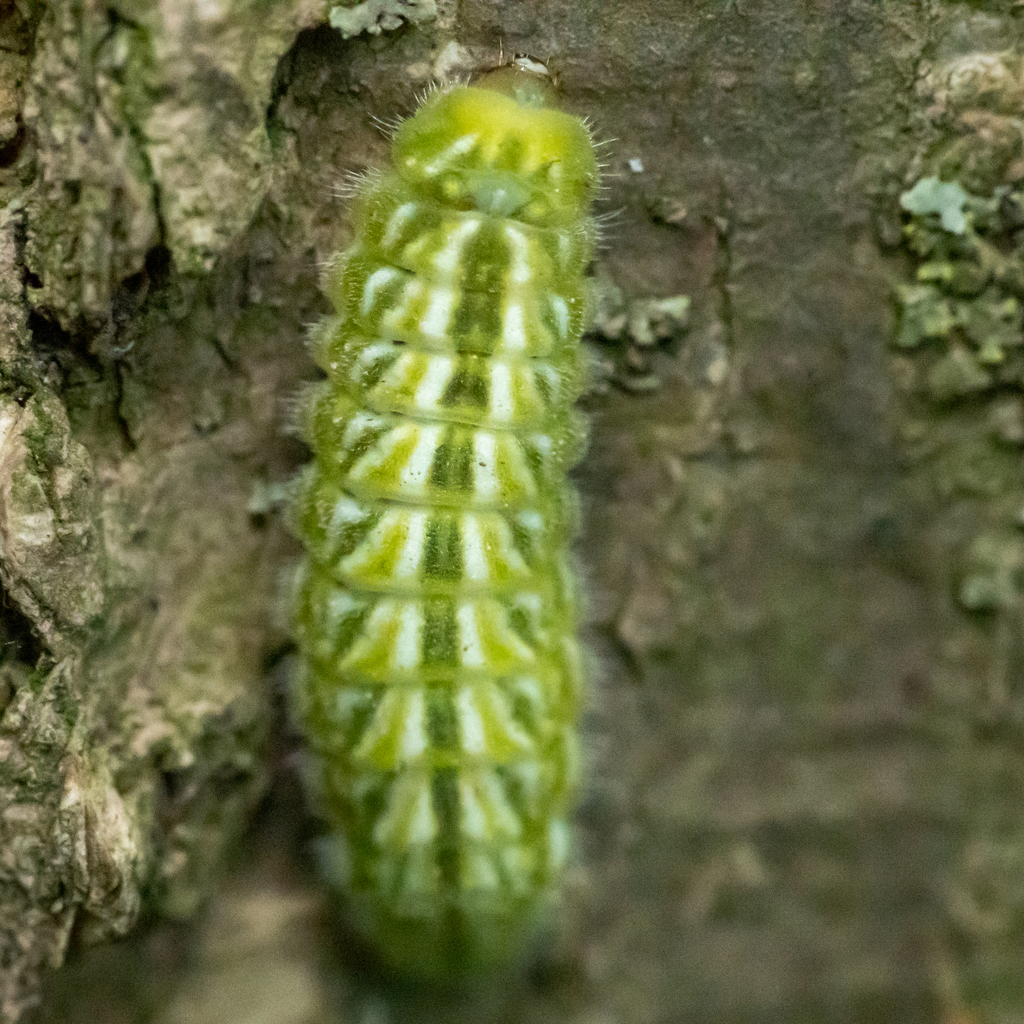
The Hickory Hairstreak has a wingspan of about 22 to 35 mm. It lives in the eastern United States and southern Ontario, from the Great Lakes west to Minnesota and Iowa and south along the Appalachians to eastern Tennessee. Adults sip nectar from a variety of flowers, while the caterpillars eat leaves of hickory, butternut, red oak, white ash and hawthorn. The species overwinters as an egg and adults fly from June through August, producing one generation each year.
Source: Wikipedia
How to recognize it
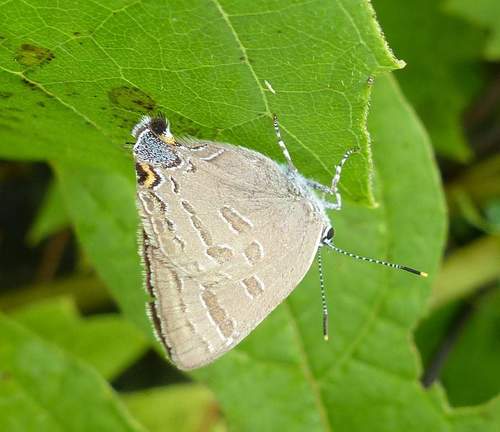
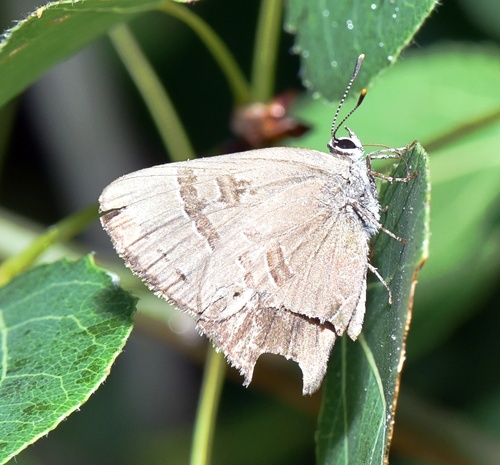
The hindwing bears a single tail.
Source: Wikipedia
Size
Wingspan ranges from 22 to 35 mm.
Source: Wikipedia
What it eats
Caterpillars eat the leaves of bitternut hickory, butternut, red oak, white ash and hawthorn.
Source: Wikipedia
Life cycle
The species overwinters as an egg. Adults are on the wing from June to August, producing one generation per year.
Source: Wikipedia
When you see it
Adults fly from June through August.
Source: Wikipedia
Where it comes from
Native to eastern North America, including southern Ontario and the eastern United States.
Source: Wikipedia
Where it is found in the US
Recorded in 25 of 51 states and DC. Most records: New York, Connecticut, Vermont, Michigan, Ohio, Wisconsin, Minnesota, Massachusetts.
Darker = more records. Counts are museum and citizen-science records, not population size.
Source: GBIF
Status: native in North America; native in United States; native in Canada. Source: iNaturalist
Months it is reported in the US
Source: GBIF
More photos
Questions people ask
When are Hickory Hairstreak butterflies active?
Adults are on the wing from June to August.
Source: Wikipedia
What do the caterpillars eat?
They feed on the leaves of hickory, butternut, red oak, white ash and hawthorn.
Source: Wikipedia
Same family (Lycaenidae)

Sources
- Wikipedia: https://en.wikipedia.org/wiki/Satyrium_caryaevorus
Look it up elsewhere: GBIF · iNaturalist · BugGuide · ITIS · Wikipedia
Text written 2026-10-24 from the sources above and checked sentence by sentence against them. Data fetched 2026-10-24.