 Bug FAQ
House Longhorn
Hylotrupes bajulus · Order: Coleoptera · Family: Cerambycidae
Also called: Old house borer, house longhorn beetle
Source: Wikipedia
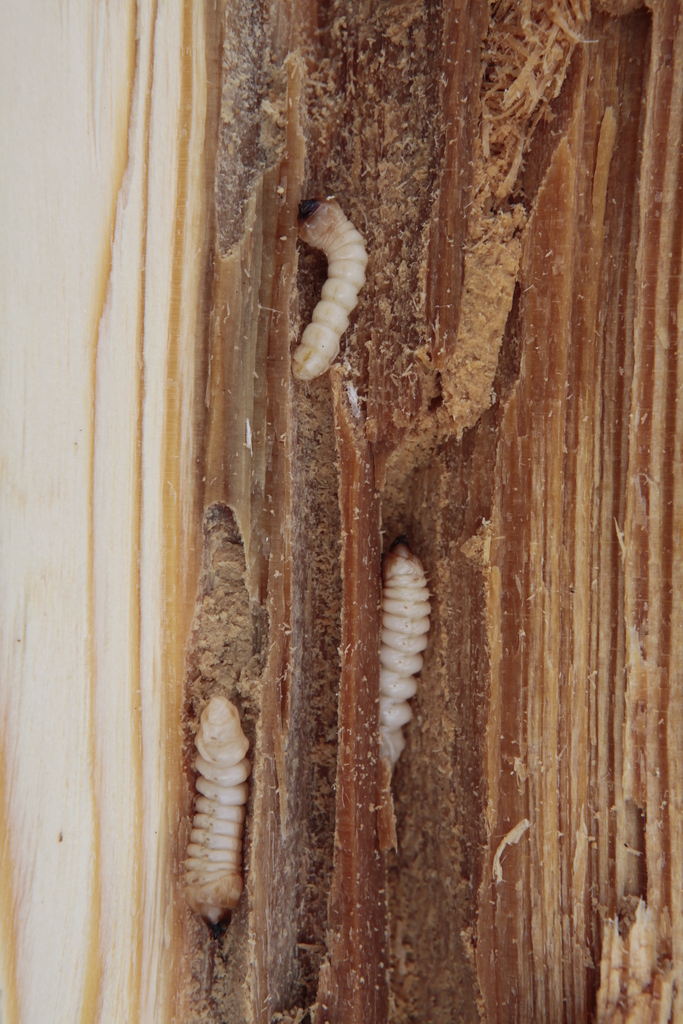
Adults are brown-black beetles that look grey because of fine hairs and have two smooth bumps on the pronotum. The larvae eat softwood sapwood, especially fresh pine-type wood, and can cause decay of structural timber over several years.
Source: Wikipedia
How to recognize it
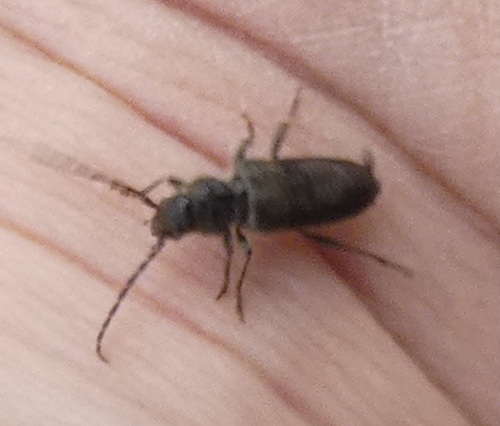
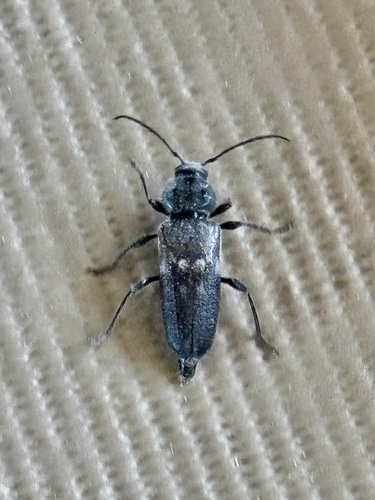
The beetles appear brown to black but look grey due to a fine fuzz on most of the upper side. Two hair-free bumps on the pronotum are a distinctive sign of this species.
Source: Wikipedia
Size
Adults grow to about 8 to 20 mm long, while larvae can reach up to 30 mm.
Source: Wikipedia
Is it a pest in the house?
The beetle often attacks newly built houses because fresh timber has higher resin content. In places like Australia, infestations happen when wood containing eggs or larvae is used without proper kiln drying.
Source: Wikipedia
How to get rid of it
Ensuring timber is kiln-dried before use helps prevent the beetle from entering homes.
Source: Wikipedia
Where it lives
They mainly infest fresh sapwood of softwoods such as pine, fir and spruce.
Source: Wikipedia
What it eats
Only the larvae feed, preferring dead softwood like pine, fir, spruce, Araucaria and Douglas fir. By consuming dead wood, they speed up the breakdown of fence posts and similar structures.
Source: Wikipedia
Life cycle
From egg to adult can take two to ten years, depending on wood type, age, moisture and temperature. Larvae usually turn into pupae just under the wood surface and emerge as adults in mid-late summer.
Source: Wikipedia
When you see it
Adults are most active during the summer months, roughly June through September.
Source: Wikipedia
Where it comes from
Originally European, the beetle now occurs worldwide wherever timber is moved, including Africa, Asia, the Americas and Australia.
Source: Wikipedia
Lookalikes
The species shows a lot of variation in size and appearance, making identification tricky. Small individuals may lose the fuzzy spots on their wing covers and have reddish legs and antennae.
Source: Wikipedia
Where it is found in the US
Recorded in 19 of 51 states and DC. Most records: Pennsylvania, Kentucky, Texas, North Carolina, Massachusetts, South Carolina, Louisiana, Alabama.
Darker = more records. Counts are museum and citizen-science records, not population size.
Source: GBIF
Status: introduced in United States; introduced in Canada. Source: iNaturalist
Months it is reported in the US
Source: GBIF
More photos


Questions people ask
What should I do if I find them?
Replace or treat the affected timber and use kiln-dried wood for future construction to stop further damage.
Source: Wikipedia
Same family (Cerambycidae)
 Asian Longhorned BeetleAnoplophora glabripennisDamages trees, gardens or crops
 Red Milkweed BeetleTetraopes tetrophthalmus
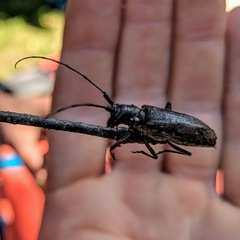 White-spotted SawyerMonochamus scutellatusCan damage your home
 Red Pine Longhorn BeetleStictoleptura rubra
 Spotted Longhorn BeetleRutpela maculataDamages trees, gardens or crops
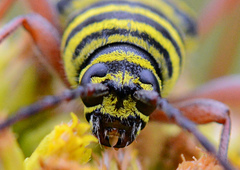 Locust BorerMegacyllene robiniae
Sources
- Wikipedia: https://en.wikipedia.org/wiki/Hylotrupes
Look it up elsewhere: GBIF · iNaturalist · BugGuide · ITIS · Wikipedia
Text written 2026-10-22 from the sources above and checked sentence by sentence against them. Data fetched 2026-10-22.