 Bug FAQ
Red Pine Longhorn Beetle
Stictoleptura rubra · Order: Coleoptera · Family: Cerambycidae
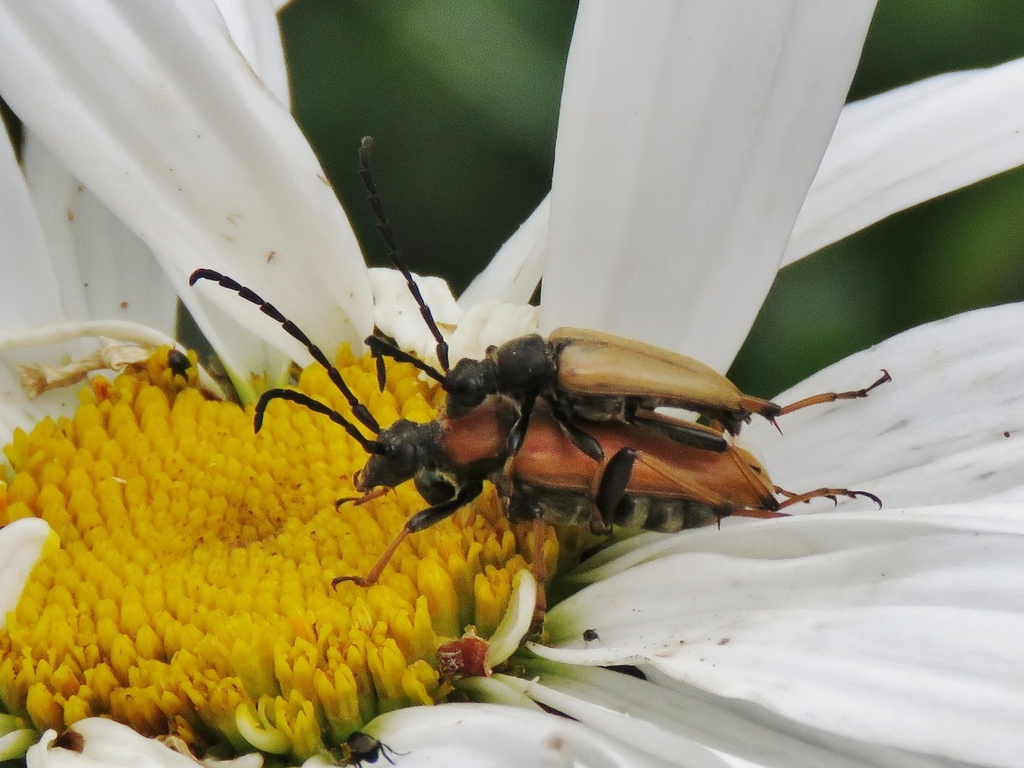
The Red Pine Longhorn Beetle is 10 to 20 mm long and shows sexual colour differences, with females reddish-brown and males darker with lighter elytra. Larvae live in dead conifer wood, while adults visit flowers for nectar and pollen; the whole life cycle takes two to three years and adults appear from May to September, especially July-August. The species occurs across mainland Europe, Russia, North Africa, Turkey and Great Britain.
Source: Wikipedia
How to recognize it
Females have uniformly reddish-brown or orange elytra and pronotum, while males have black heads and pronotum with brown or pale ochre elytra. Males are generally smaller and narrower than females.
Source: Wikipedia
Size
Adults measure between 10 and 20 mm in length.
Source: Wikipedia
Where it lives
Larvae develop inside dead wood and stumps of coniferous trees such as spruce, pine, fir and larch.
Source: Wikipedia
What it eats
Adults feed on nectar and pollen from flowering plants. Larvae feed on dead conifer wood.
Source: Wikipedia
Life cycle
The species’ life cycle lasts two to three years.
Source: Wikipedia
When you see it
Adults are active from May through September, with a peak in July and August.
Source: Wikipedia
Where it comes from
Found throughout mainland Europe, Russia, and North Africa. Also recorded in Turkey and Great Britain.
Source: Wikipedia
Questions people ask
Can they harm living trees or gardens?
They feed on dead wood, not on living trees or garden plants.
Source: Wikipedia
Same family (Cerambycidae)
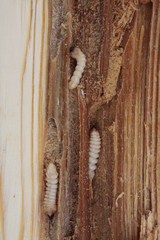 House LonghornHylotrupes bajulusCan damage your home
 Asian Longhorned BeetleAnoplophora glabripennisDamages trees, gardens or crops
 Red Milkweed BeetleTetraopes tetrophthalmus
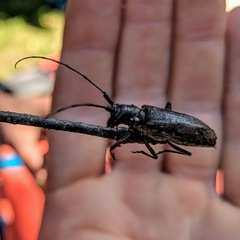 White-spotted SawyerMonochamus scutellatusCan damage your home
 Spotted Longhorn BeetleRutpela maculataDamages trees, gardens or crops
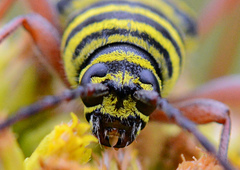 Locust BorerMegacyllene robiniae
Sources
- Wikipedia: https://en.wikipedia.org/wiki/Stictoleptura_rubra
Look it up elsewhere: GBIF · iNaturalist · BugGuide · Wikipedia
Text written 2026-10-22 from the sources above and checked sentence by sentence against them. Data fetched 2026-10-22.