 Bug FAQ
Lygus pratensis
Lygus pratensis · Order: Hemiptera · Family: Miridae
Source: Wikipedia
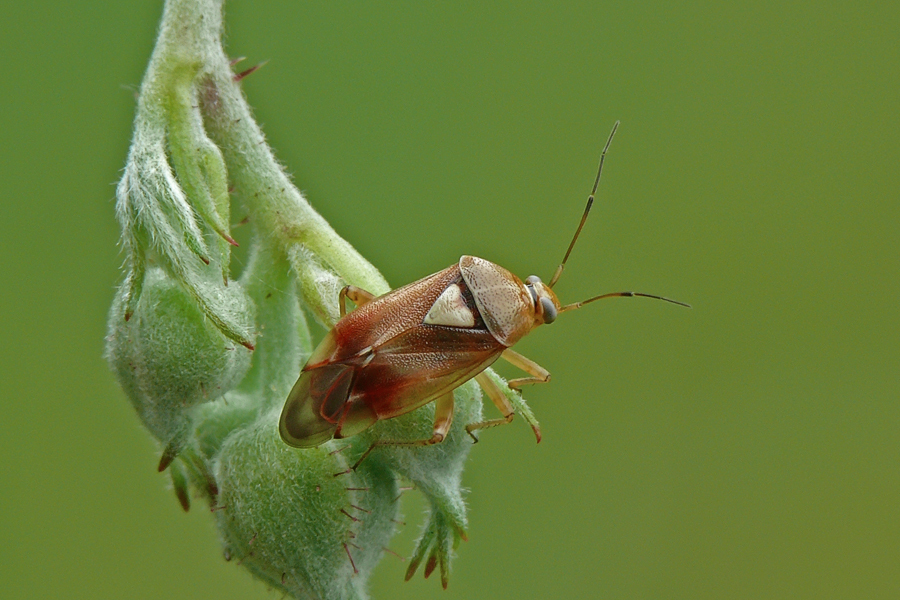
These meadow plant bugs are about 6 mm long, with males slightly larger than females. They are usually reddish in males and green-brown in females, with a heart-shaped scutellum and partially exposed wings. Adults live year-round, overwinter in litter or under bark, and females lay white eggs in May-June on flower buds.
Source: Wikipedia
Size
Males measure 6.1 to 7.3 mm and females 5.8 to 6.7 mm in length.
Source: Wikipedia
How to get rid of it
Parasitic wasps of the genus Peristenus are effective biological control agents; they locate nymphs, lay eggs inside them, and the wasp larvae consume the bug from within.
Source: Wikipedia
Where it lives
They prefer heaths, hedge rows and meadow habitats.
Source: Wikipedia
What it eats
Both larvae and adults suck sap from many herbaceous plants and also feed on flower nectar, especially from oxeye daisy and tansy. They are polyphagous, commonly feeding on buttercup, wild radish, toadflax, heather and various Asteraceae, and may even consume aphids.
Source: Wikipedia
Life cycle
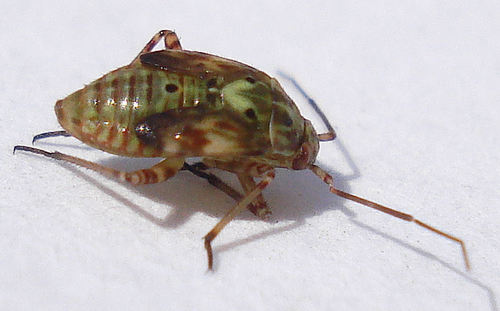
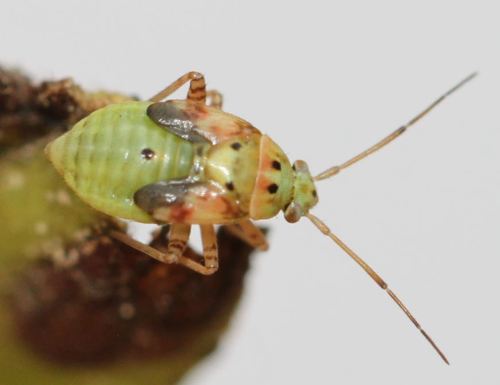
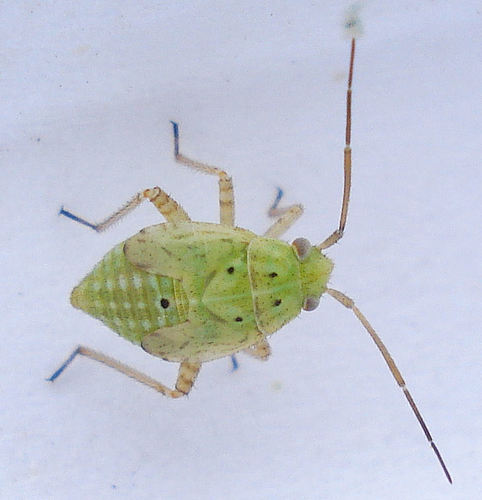
Females lay small white eggs in groups on flower buds in May-June; larvae start round and bright, later turning fully green and resembling aphids.
Source: Wikipedia
When you see it
Egg-laying occurs in May and June on flower buds or other plant parts.
Source: Wikipedia
Where it comes from
Found across most of Europe, parts of Africa, northern Asia (except China) and the Indomalayan region.
Source: Wikipedia
Lookalikes
It resembles Lygus wagneri but is usually a bit larger with a longer wing membrane and denser hair on the corium; it also looks similar to Lygus maritimus and Lygus rugulipennis.
Source: Wikipedia
Where it is found in the US
Recorded in 11 of 51 states and DC. Most records: Illinois, Mississippi, Missouri, Iowa, Oklahoma, Kansas, Louisiana, Minnesota.
Darker = more records. Counts are museum and citizen-science records, not population size.
Source: GBIF
Months it is reported in the US
Source: GBIF
More photos
Questions people ask
What plants are most affected by Lygus pratensis?
They commonly damage buttercup, wild radish, toadflax, heather and many members of the daisy family, as well as garden vegetables and ornamental flowers.
Source: Wikipedia
How can I control a Lygus pratensis infestation?
Encouraging parasitic wasps of the genus Peristenus can help reduce their numbers, as these wasps attack the nymph stage.
Source: Wikipedia
Same family (Miridae)
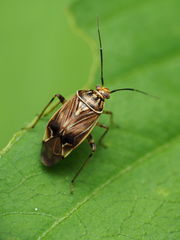 North American Tarnished Plant BugLygus lineolarisDamages trees, gardens or crops
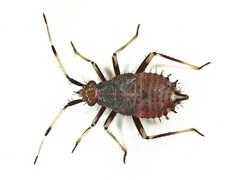 Red-spotted Plant BugDeraeocoris ruber
 Alfalfa Plant BugAdelphocoris lineolatusDamages trees, gardens or crops
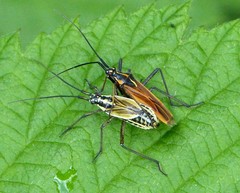 Meadow Plant BugLeptopterna dolabrataDamages trees, gardens or crops
 Four-lined Plant BugPoecilocapsus lineatusDamages trees, gardens or crops
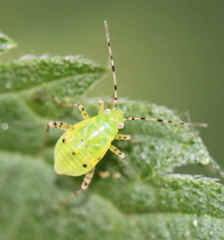 Three Spotted Nettle BugLiocoris tripustulatus
Sources
- Wikipedia: https://en.wikipedia.org/wiki/Lygus_pratensis
Look it up elsewhere: GBIF · iNaturalist · BugGuide · ITIS · Wikipedia
Text written 2026-10-22 from the sources above and checked sentence by sentence against them. Data fetched 2026-10-22.