 Bug FAQ
Red-spotted Plant Bug
Deraeocoris ruber · Order: Hemiptera · Family: Miridae
Also called: Plant bug, Red Bug
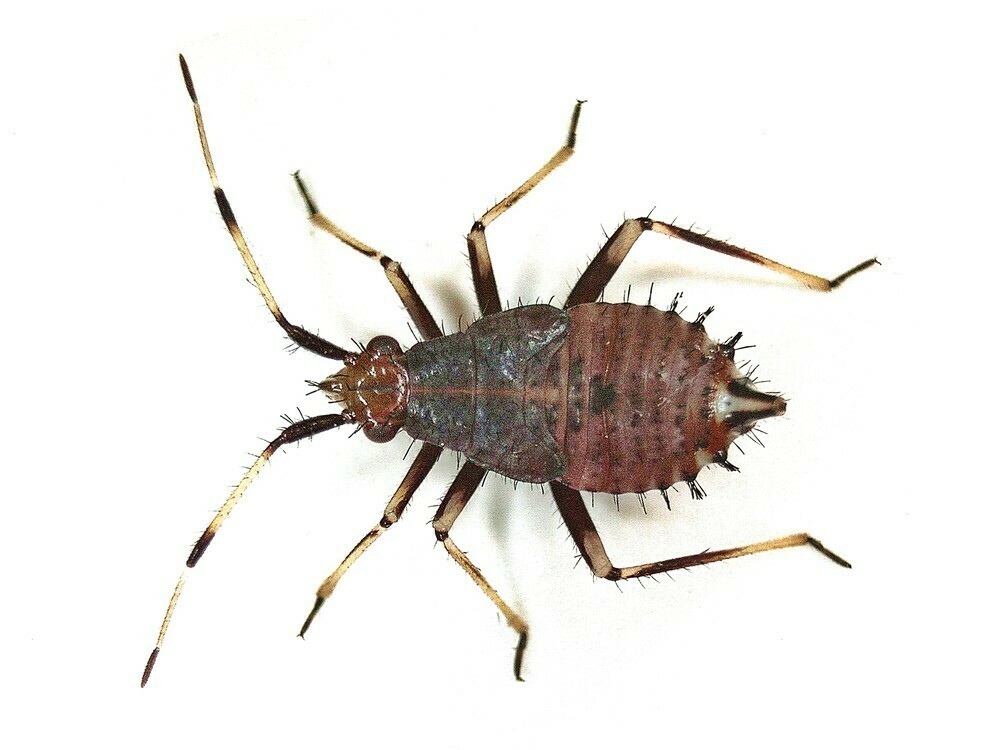
The red-spotted plant bug is a medium-sized, glossy bug about 6 to 8 mm long, with a wide body and a red cuneus on its forewing. Adults appear from July to September and there is one generation each year.
Source: Wikipedia
How to recognize it
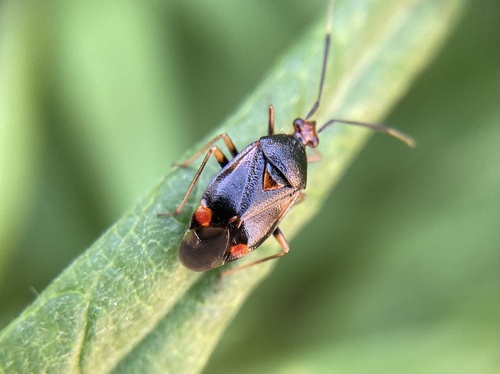
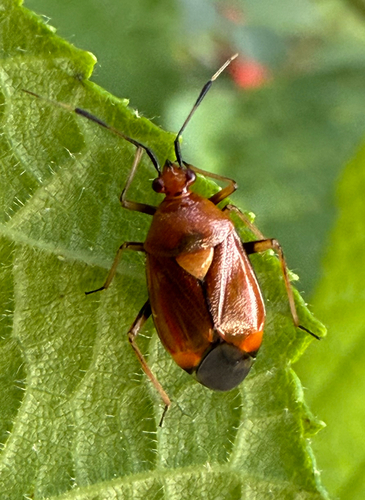
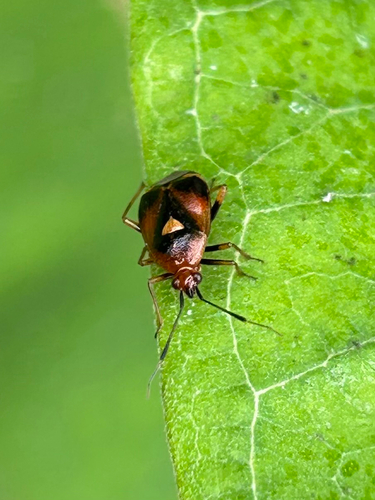
The bug has a very wide, glossy body; its top can be light brown, orange, or black, but the cuneus is always red. Its forewings are shiny, the tibiae lack bands, and the first antennal segment is black, as is the base of the second segment.
Source: Wikipedia
Size
It measures about 6 to 8 mm (0.24 to 0.31 in) in length.
Source: Wikipedia
Where it lives
It prefers forests, especially sunny edges and open spots.
Source: Wikipedia
What it eats
It is almost entirely predatory, feeding on aphids and other small insects, and may even eat its own kind.
Source: Wikipedia
Life cycle
The species produces one generation per year.
Source: Wikipedia
When you see it
Adults are active from July through September.
Source: Wikipedia
Where it comes from
Found throughout most of Europe except a few islands and northern regions, and also present in the Nearctic and Neotropical realms.
Source: Wikipedia
Where it is found in the US
Recorded in 4 of 51 states and DC. Most records: New York, Connecticut, Massachusetts, Ohio.
Darker = more records. Counts are museum and citizen-science records, not population size.
Source: GBIF
Status: introduced in United States; introduced in Canada. Source: iNaturalist
Months it is reported in the US
Source: GBIF
More photos
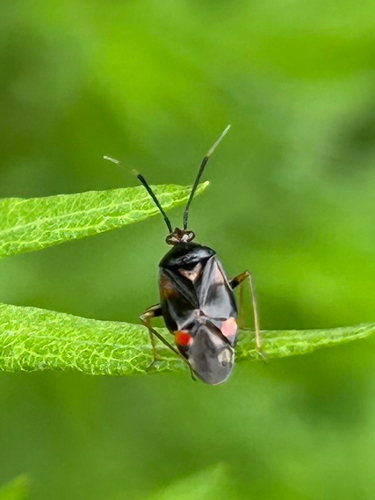
Same family (Miridae)
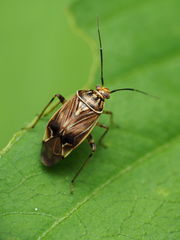 North American Tarnished Plant BugLygus lineolarisDamages trees, gardens or crops
 Alfalfa Plant BugAdelphocoris lineolatusDamages trees, gardens or crops
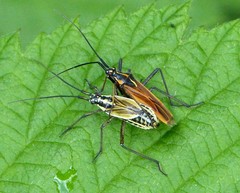 Meadow Plant BugLeptopterna dolabrataDamages trees, gardens or crops
 Four-lined Plant BugPoecilocapsus lineatusDamages trees, gardens or crops
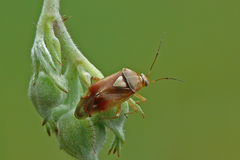 Lygus pratensisLygus pratensisDamages trees, gardens or crops
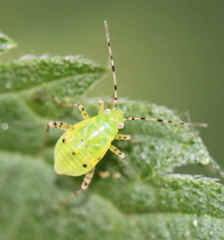 Three Spotted Nettle BugLiocoris tripustulatus
Sources
- Wikipedia: https://en.wikipedia.org/wiki/Deraeocoris_ruber
Look it up elsewhere: GBIF · iNaturalist · BugGuide · ITIS · Wikipedia
Text written 2026-10-22 from the sources above and checked sentence by sentence against them. Data fetched 2026-10-22.