 Bug FAQ
Polistes badius
Polistes badius · Order: Hymenoptera · Family: Eumenidae
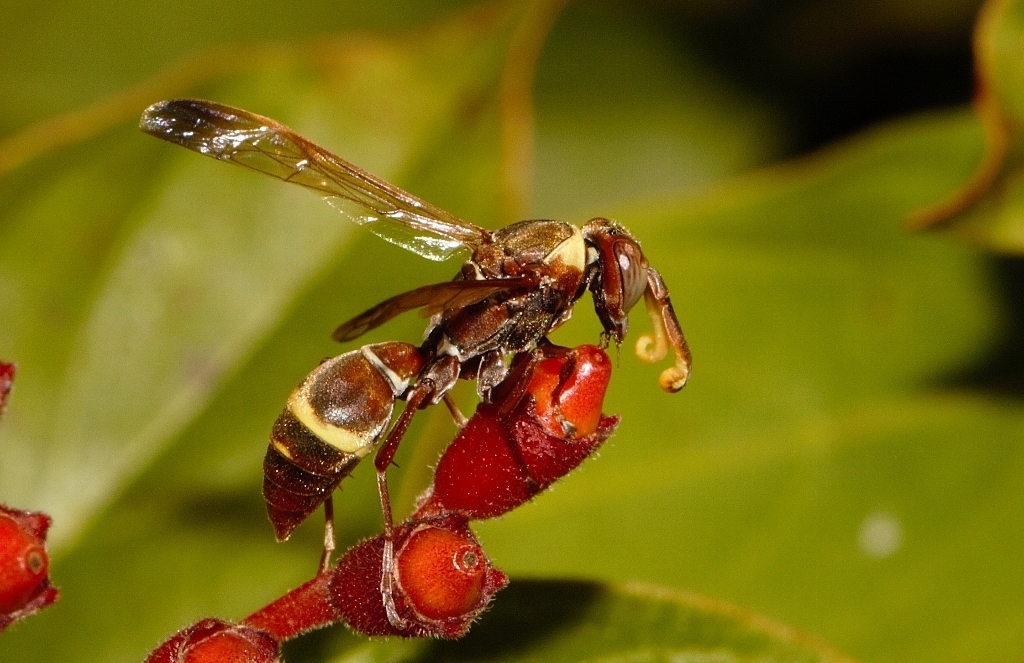
It builds horizontal nests whose cells face downward and feeds mainly on caterpillars and other soft-bodied insects. The species is native to Africa and Yemen.
Source: Wikipedia
Size
The type specimen measured about 13 mm (0.51 in) in length.
Source: Wikipedia
Where it lives
Its nests are horizontal with cells that face downward.
Source: Wikipedia
What it eats
It feeds mainly on caterpillars and other soft-bodied insects.
Source: Wikipedia
Where it comes from
Polistes badius occurs in Africa and Yemen.
Source: Wikipedia
Lookalikes
It was originally described in 1873 as Polistes badia by Carl Eduard Adolph Gerstaecker.
Source: Wikipedia
More photos
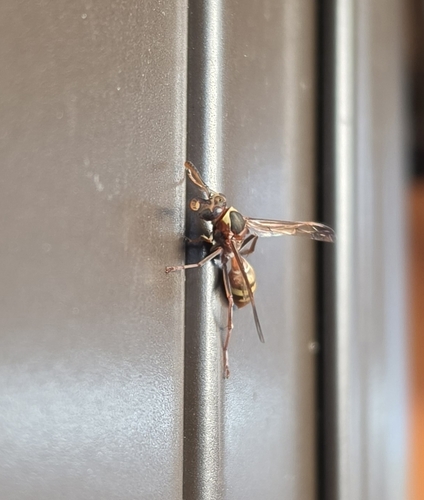
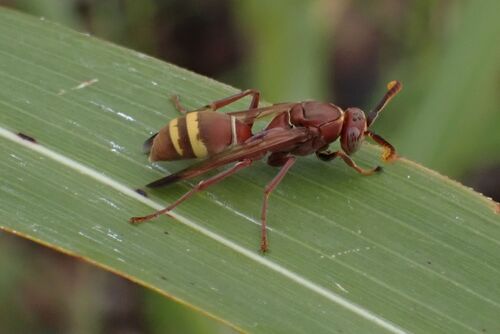
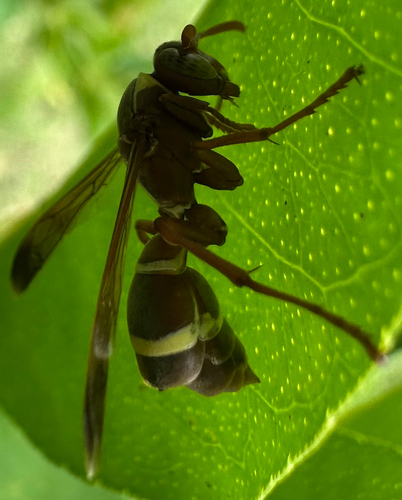
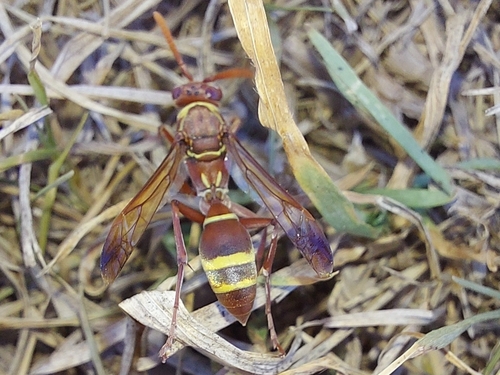
Questions people ask
What does Polistes badius look like?
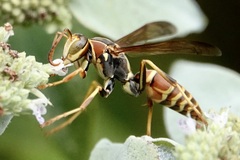
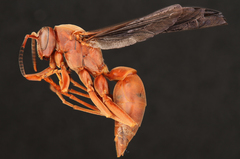
It is about 13 mm long, red-brown with pale yellow and golden yellow bands, and covered in fine yellow hairs.
Source: Wikipedia
What does Polistes badius eat?
It feeds mainly on caterpillars and other soft-bodied insects.
Source: Wikipedia
How can I recognize its nest?
The nest is built horizontally and the cells face downward.
Source: Wikipedia
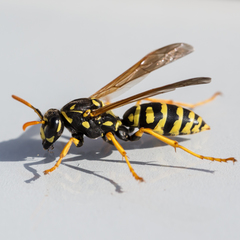
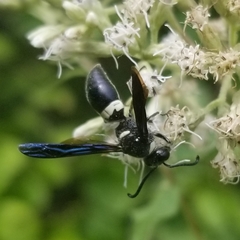
Same family (Eumenidae)

Sources
- Wikipedia: https://en.wikipedia.org/wiki/Polistes_badius
Look it up elsewhere: GBIF · iNaturalist · BugGuide · Wikipedia
Text written 2026-10-24 from the sources above and checked sentence by sentence against them. Data fetched 2026-10-23.