 Bug FAQ
Red-striped Black Bambootail
Prodasineura verticalis · Order: Odonata · Family: Platycnemididae
Also called: Black Bambootail, Red-striped Black Threadtail
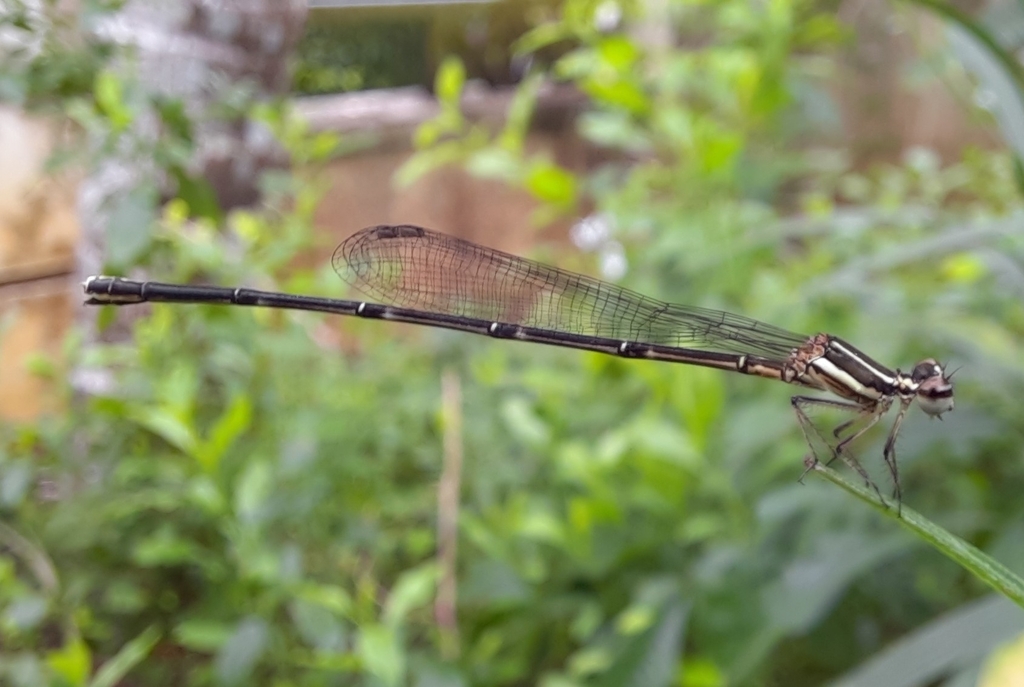
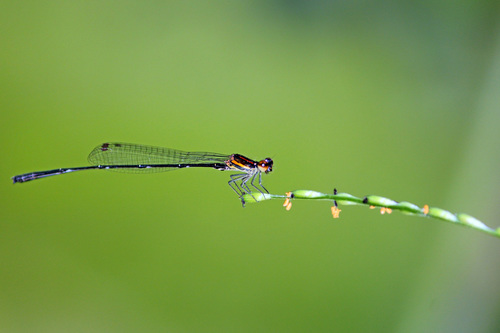
The Red-striped Black Bambootail is a damselfly about 19 to 20 mm long in the hindwings and roughly 30 mm in the abdomen. Males are mostly black with red and yellow thorax stripes and small yellow spots on the abdomen, while females have similar markings but paler, more yellowish stripes.
Source: Wikipedia
How to recognize it
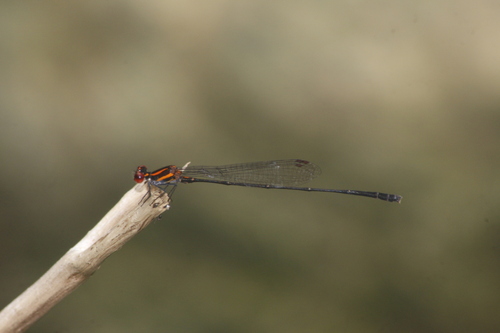
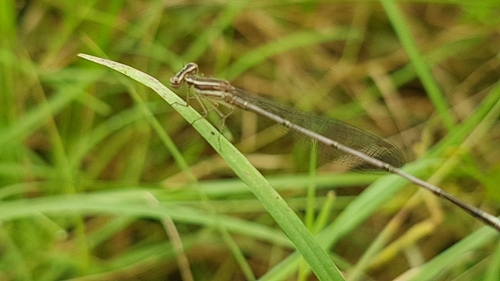
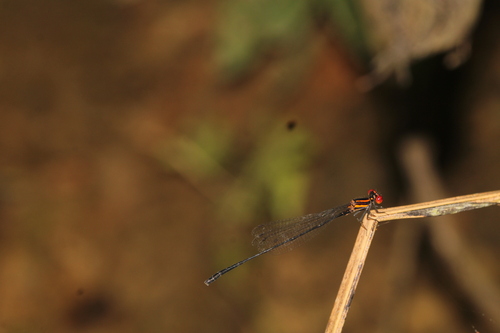
Males are mainly black with red and yellow stripes on the thorax and have small yellow spots on the abdomen. Females look like the males but their thorax stripes are paler and more yellowish.
Source: Wikipedia
Size
The hindwings measure about 19 to 20 mm and the abdomen is around 30 mm long.
Source: Wikipedia
Where it lives
They are commonly seen on the banks of large ponds and rivers, often perched among emergent water plants. Eggs are laid on vegetation or submerged roots in shallow flowing water while the pair remains in tandem.
Source: Wikipedia
Life cycle
During oviposition the pair stays together in tandem and deposits eggs on plants or submerged roots in shallow running water.
Source: Wikipedia
More photos
Questions people ask
How large is the Red-striped Black Bambootail?
Its hindwings are about 19 to 20 mm long and the abdomen is roughly 30 mm.
Source: Wikipedia
Same family (Platycnemididae)



Sources
- Wikipedia: https://en.wikipedia.org/wiki/Prodasineura_verticalis
Look it up elsewhere: GBIF · iNaturalist · BugGuide · Wikipedia
Text written 2026-10-24 from the sources above and checked sentence by sentence against them. Data fetched 2026-10-23.