 Bug FAQ
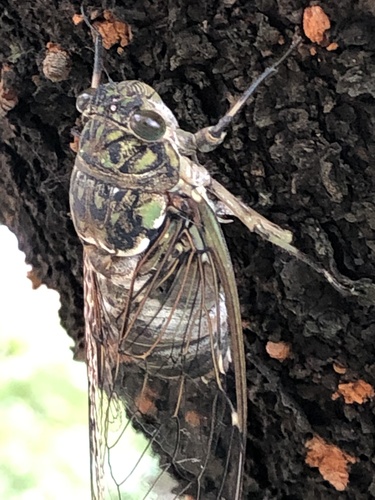
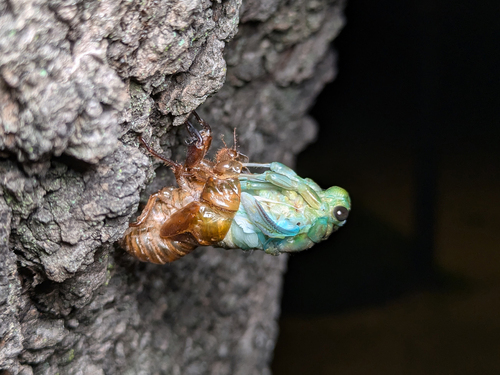
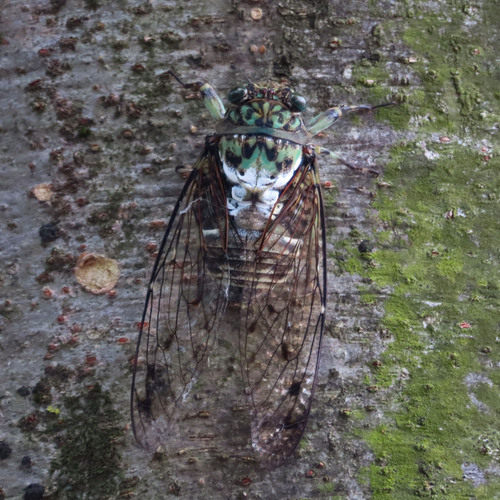
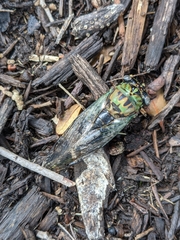
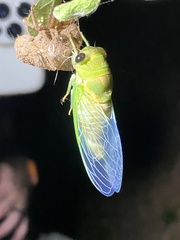
Robust Cicada
Hyalessa maculaticollis · Order: Hemiptera · Family: Cicadidae
Also called: Cham Cicada, East Asian Robust Cicada, Min-min Cicada, Mingming Cicada

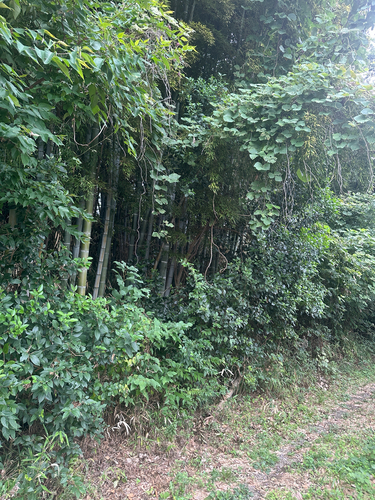
They live in eastern Japan’s flat forests and urban green areas, western Japan’s mountains, and are common in Beijing and Dalian, China.
Source: Wikipedia
Size
Adults are typically 33 to 36 mm long.
Source: Wikipedia
Where it lives
In eastern Japan they favor flat forests and urban green spaces; in western Japan they prefer higher-altitude mountainous areas. In China they are abundant around Beijing and especially Dalian.
Source: Wikipedia
When you see it
First calls have been recorded by the Japan Meteorological Agency up to 2020. The earliest recorded appearance in recent years is mid-July in Kumagaya City, Saitama Prefecture.
Source: Wikipedia
Where it comes from
They are native to China, Japan, the Korean Peninsula and maritime Russia.
Source: Wikipedia
More photos
Questions people ask
When do robust cicadas first appear each year?
The earliest sightings in recent years are around mid-July in Saitama Prefecture.
Source: Wikipedia
Where are robust cicadas commonly found?
They live in flat forests and urban green areas in eastern Japan, mountainous regions in western Japan, and are common around Beijing and Dalian in China.
Source: Wikipedia
Same family (Cicadidae)

Sources
- Wikipedia: https://en.wikipedia.org/wiki/Hyalessa_maculaticollis
Look it up elsewhere: GBIF · iNaturalist · BugGuide · Wikipedia
Text written 2026-10-24 from the sources above and checked sentence by sentence against them. Data fetched 2026-10-22.